
Polyclonal Antibodies
Polyclonal antibodies are secreted by multiple B cell lineages in the immunised host, giving a heterogeneous antiserum that recognises several epitopes on the same target rather than the single binding site of a monoclonal.1 Our range spans over 10,000 products across rabbit, goat, chicken and guinea pig hosts, validated for western blot, IHC, immunofluorescence, IP and ELISA across cancer, immunology, neuroscience and cell biology research.
Browse Polyclonal AntibodiesPolyclonal Antibody Host Species
Because a polyclonal antiserum is collected directly from an immunised animal rather than from a single hybridoma clone, the choice of host species affects the volume, epitope coverage and cross-reactivity profile of the antibody.1 Rabbit and goat make up the largest part of our polyclonal range by product count.
Two Signalling Targets Across Two Host Species
Beta‑catenin and ABCG2/BCRP sit in two different corners of cancer biology. Beta‑catenin is the effector of canonical Wnt signalling, and its stabilisation and nuclear accumulation is a defining event in colorectal and other epithelial cancers.2 ABCG2 (BCRP) is an ATP‑binding cassette efflux transporter that pumps a range of chemotherapeutic substrates out of the cell, and elevated ABCG2 expression is studied as a mechanism of multidrug resistance in tumour cells.3 Both products below are supplied with representative validation images from our polyclonal range.
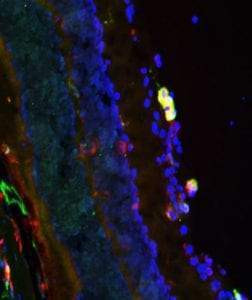
Anti‑Beta Catenin Antibody (C‑Term) (STJA0040582)
Chicken polyclonal raised against the C‑terminus of beta‑catenin, validated by immunohistochemistry on mouse lung tissue sections. Beta‑catenin couples cadherin‑based adhesion at the membrane to transcriptional activation in the nucleus once Wnt signalling stabilises it.2
View product →
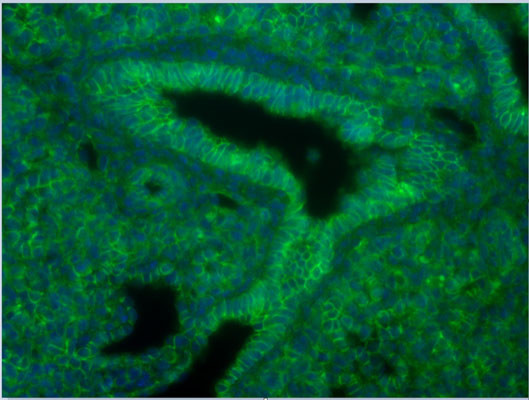
Anti‑ABCG2 Antibody (461‑510aa) (STJ97253)
Rabbit polyclonal validated by immunofluorescence on human breast cancer tissue. ABCG2 is a half‑transporter of the ABC family that effluxes xenobiotics and chemotherapeutics, and its overexpression is investigated as a resistance mechanism in solid tumours.3
View product →Polyclonal Antibodies for Cancer Research
ABCF3, ARG1 and 14‑3‑3 Beta/Zeta sit at different points in tumour biology. ABCF3 belongs to the same ABC transporter superfamily as ABCG2 and has been studied by IHC in human breast carcinoma tissue. ARG1 (arginase 1) is a marker of the M2‑like, tumour‑associated macrophage phenotype that shapes the immunosuppressive tumour microenvironment. 14‑3‑3 Beta/Zeta is a signalling scaffold protein that regulates cell cycle checkpoints and apoptosis, and its dysregulation has been reported across multiple tumour types.


Cell Biology: Organelles, Trafficking & Reporters
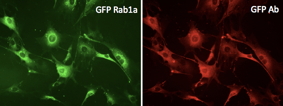
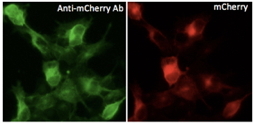
Fluorescent fusion proteins and organelle‑resident markers underpin live‑imaging and fixed‑cell studies of protein localisation and vesicle transport. Our goat polyclonal line covers GFP and RFP‑family reporters with broad cross‑reactivity to common variants, while calnexin (an ER chaperone) is available in both goat and chicken formats for endoplasmic reticulum co‑localisation work.

Loading Controls & Structural Proteins
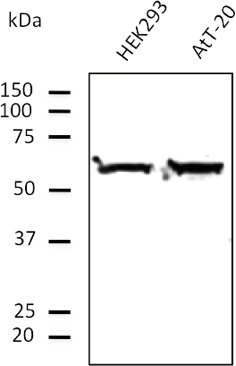
GAPDH, beta‑actin and alpha‑tubulin remain the standard housekeeping markers for normalising western blot signal across sample lanes. Our goat GAPDH clone is validated across 17 species, while a separate chicken actin polyclonal is validated on HeLa lysate.
Polyclonal Antibodies for Neuroscience
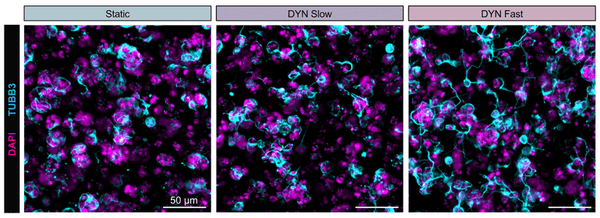
Alpha‑internexin and beta‑tubulin III mark distinct neuronal cytoskeletal compartments and are available in chicken host format for co‑labelling alongside rabbit or mouse primaries in the same section.

Polyclonal Antibodies by Application Area
Beyond the research areas above, our polyclonal antibodies cover targets across signal transduction, extracellular matrix biology, vesicle‑mediated transport and metabolic regulation. Each table below lists individual targets together with the host species available for that target; expand a target to see specific products.
Signal Transduction
Antibodies against receptor tyrosine kinases, MAPK pathway components and transcription factors, supporting studies of cell growth, differentiation and survival signalling.
| Target | Host | Application | Notes | Products |
|---|---|---|---|---|
| EGFR | Rabbit | WB, IHC, IF, IP | Key oncology target; multiple epitope regions available | |
| HER2/ERBB2 | Rabbit | WB, IHC | Monitor overexpression in aggressive cancers | |
| MAPK1/ERK2 | Rabbit | WB, IHC | Effector kinase in the RAS-RAF-MEK-ERK cascade | |
| Phospho‑NFκB (p65) | Rabbit | WB | Inflammatory signalling & transcription | |
Extracellular Matrix & Cell Adhesion
Antibodies against structural ECM glycoproteins, cytoskeletal proteins and adhesion complexes, supporting studies of tissue integrity, matrix remodelling and epithelial-mesenchymal transition.
| Target | Host | Application | Notes | Products |
|---|---|---|---|---|
| Laminin | Rabbit | WB, IHC | Key basement membrane glycoprotein | |
| E‑Cadherin | Rabbit | WB, IHC, IF | Key epithelial adhesion molecule | |
| Vinculin | Rabbit | WB, IF, ICC | Focal adhesion and force transmission | |
Vesicle‑Mediated Transport
Antibodies for tracing intracellular trafficking, endocytosis and vesicle fusion across the stages of cargo movement between organelles.
| Target | Host | Application | Notes | Products |
|---|---|---|---|---|
| LAMP1 | Rabbit | WB, IHC | Lysosome & autophagy marker | |
| Transferrin | Rabbit | WB, IHC, ELISA | Marker for receptor‑mediated endocytosis | |
| STX6 (Syntaxin 6) | Rabbit | WB, ELISA | T‑SNARE for endosomal/Golgi transport | |
Metabolism & Cellular Stress
Antibodies against metabolic and regulatory enzymes, supporting studies of lipid metabolism, energy balance and cardiovascular disease.
| Target | Host | Application | Notes | Products |
|---|---|---|---|---|
| PCSK9 | Rabbit | WB, IHC | Cholesterol regulation | |
| MMP9 | Rabbit | WB, IHC | ECM remodelling & inflammation | |
Learning and Support
Choosing between monoclonal and polyclonal antibodies?
Read our guide comparing the two formats: Monoclonal versus polyclonal antibody: which to choose?
Not sure which host species fits your assay, or need a second polyclonal for co‑labelling? Talk to us and our team can help you select the right product.
Looking for a Specific Target?
Browse the full polyclonal antibody range across goat and rabbit hosts, or contact us if a specific target is not listed.
Browse Polyclonal Antibodies1. Lipman NS, Jackson LR, Trudel LJ, Weis‑Garcia F. Monoclonal versus polyclonal antibodies: distinguishing characteristics, applications, and information resources. ILAR J. 2005;46(3):258‑268.
2. Polakis P. Wnt signaling and cancer. Genes Dev. 2000;14(15):1837‑1851.
3. Mao Q, Unadkat JD. Role of the breast cancer resistance protein (BCRP/ABCG2) in drug transport. AAPS J. 2005;7(1):E118‑E133.