
Fluorescent Protein and Epitope Tag Antibodies
Our tag antibody range detects recombinant fluorescent protein reporters, including RFP derivatives from the mFruit family and GFP and its spectral variants, alongside short peptide and fusion epitope tags such as FLAG, HA, Strep and Avi-tag, fused to a protein of interest for detection, localisation or purification independent of the target itself.
Browse Tag AntibodiesExplore Our Tag Antibody Subcategories
Jump straight to the full listing for a specific tag system, each suited to a different stage of the recombinant protein workflow, from purification through to detection and site-specific labelling.
His-Tag Antibodies
The hexahistidine tag is the most widely used affinity handle for one-step purification of recombinant protein by immobilised metal affinity chromatography, and our His-tag antibodies confirm expression and purity at every stage of that workflow.
View His-Tag Antibodies →FLAG-Tag Antibodies
An 8-residue peptide small enough to leave most fusion partners folded and functional, the FLAG tag pairs with high-affinity monoclonal and polyclonal antibodies for reliable detection, immunoprecipitation and pull-down of tagged constructs.
View FLAG-Tag Antibodies →Avi-Tag Antibodies
The 15-residue Avi-tag is site-specifically biotinylated by BirA ligase, giving a single, defined attachment point for capturing a tagged protein on streptavidin surfaces, and our Avi-tag antibodies verify tag presence ahead of that labelling step.
View Avi-Tag Antibodies →FLAG and HA: The Two Most Searched Tag Antibodies
FLAG and HA are two of the most established epitope tags in molecular biology.1,2 Both are short peptide sequences fused to a recombinant protein, chosen because they add minimal mass while still providing a well characterised, high affinity epitope for antibody detection, and both remain reliable across the widest range of expression systems and downstream applications.
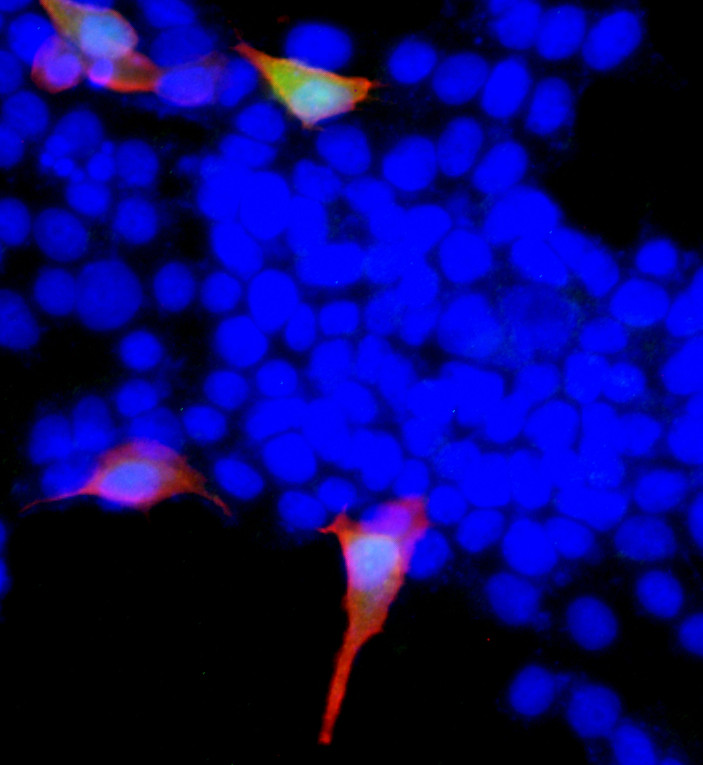
Anti-Flag-Tag Antibody [12M11] (STJA0006221)
A mouse monoclonal antibody recognising the DYKDDDDK (FLAG) epitope at the N- or C-terminus of a tagged construct.1 Validated for western blot, ELISA, immunoprecipitation and immunofluorescence, and used to detect a FLAG-tagged RPS15 construct in a study of RPS15-IGF2BP1 interactions in esophageal squamous cell carcinoma.3
View product →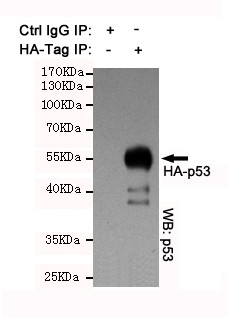
Anti-HA-Tag Antibody (STJ90107)
A rabbit polyclonal antibody raised against a synthetic HA peptide conjugated to KLH, detecting HA-tagged recombinant or overexpressed proteins.2 Validated for western blot and immunoprecipitation, and commonly paired with a second, spectrally distinct tag such as FLAG for tandem-tagging experiments.
View product →Red Fluorescent Protein (RFP) Antibodies
Red fluorescent proteins in this range originate from Discosoma coral and have been engineered into monomeric variants collectively known as the mFruit family, including mCherry, mScarlet, tdTomato, mRuby, mApple and mOrange. Early RFPs such as DsRed formed obligate tetramers that could interfere with the folding or trafficking of a fused protein of interest, while the mFruit variants carry mutations that break this self-association. DsRed antibody still sees use in developmental biology and stem cell studies, and mOrange antibody supports multiplex imaging alongside GFP, YFP or CFP. Because native RFP fluorescence can be reduced by fixation, low expression or protein misfolding, antibodies against the RFP backbone and its derivatives recover a detectable signal in western blot, immunofluorescence and immunohistochemistry.


Green Fluorescent Protein (GFP) Antibodies
GFP was isolated from the jellyfish Aequorea victoria and remains a reference fluorescent reporter for live-cell and fixed-sample imaging. The A206K mutation carried by monomeric GFP derivatives, including EGFP, mClover, mEmerald and mTurquoise, prevents the weak dimerisation seen in early constructs and improves their behaviour when fused to a protein of interest. EYFP antibody detects EYFP, YFP and CFP tag fusion proteins, and ECFP antibody detects ECFP and CFP tag protein, both used in live-cell imaging and multicolour fluorescence studies. Antibodies to the GFP tag and its spectral variants amplify signal when native fluorescence is weak or quenched, and are used across immunocytochemistry, immunofluorescence, western blot, immunoprecipitation and co-immunoprecipitation.


Epitope and Purification Tags
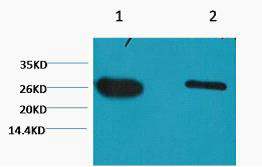
Short peptide tags such as HA, FLAG, Myc and V5 provide a defined, well characterised epitope for detection, immunoprecipitation and tandem-tagging strategies, without adding substantial mass to the protein of interest. Myc tag antibody recognises the epitope derived from the c-Myc protein and works across flow cytometry, immunofluorescence and western blot. V5 tag antibody tracks recombinant proteins in mammalian and microbial systems and is useful in co-immunoprecipitation. Larger fusion tags, including GST and MBP, are used where solubility enhancement or affinity purification is also required: GST tag antibody tracks GST-tagged proteins through purification workflows, and MBP tag antibody detects Maltose Binding Protein fusions alongside amylose-resin purification. Strep-tag II is recognised for its high specificity in one-step Strep-Tactin affinity purification. HRP-conjugated tag antibodies remove a secondary detection step in western blot where a direct, single-antibody readout is preferred.


T7 and S-Tag Antibodies
T7-tag is an 11-residue epitope encoded by the leader sequence of bacteriophage T7 gene 10, which is engineered onto the N- or C-terminus of a protein expressed from a pET vector so the construct can be tracked by immunochemical methods without a target-specific antibody. S-tag is a 15-residue peptide (KETAAAKFERQHMDS) derived from pancreatic ribonuclease A, used the same way for detection of a tagged construct independent of the protein of interest. Both remain in active use for tracking recombinant protein expression in bacterial systems, and are among the higher-volume search terms on this category alongside FLAG and HA.


Cell and Gene Therapy Research
Epitope tags fused to a chimeric antigen receptor (CAR) or engineered T cell receptor construct give researchers a defined marker for tracking transduced cells, independent of the antigen-binding domain itself.2 A 10-residue c-Myc epitope engineered into a T cell receptor allowed transduced T cells to be depleted in vivo with a tag-specific antibody, without altering antigen binding or effector function, and rescued mice from lethal autoimmune insulitis in a T cell receptor gene therapy model.4 FLAG is one of several short peptide tags used the same way, giving a construct-tracking marker that is independent of the antigen-binding domain being studied.

Why Choose Tag Antibodies from Our Range
High Specificity and Sensitivity
Minimising background and maximising reproducibility across fluorescent protein and epitope tag targets.
Validated Across Key Applications
Including WB, ELISA, IF, ICC, IP, ChIP and flow cytometry, as applicable to each product.
Full Range of Formats
Fluorescent protein antibodies and epitope tag antibodies, spanning monoclonal and polyclonal formats.
Looking for a Specific Target?
Browse the full range of fluorescent protein and epitope tag antibodies, including additional clones, conjugates and reactivity options.
Browse Tag Antibodies1. Guo XY, Gao XD, Fujita M. Sulfation of a FLAG tag mediated by SLC35B2 and TPST2 affects antibody recognition. PLoS ONE. 2021;16(5):e0250805.
2. Fritschle K, Mielke M, Seelbach OJ, et al. The V5-Epitope Tag for Cell Engineering and Its Use in Immunohistochemistry and Quantitative Flow Cytometry. Biology. 2025;14(7):890.
3. Zhao Y, Li Y, Zhu R, et al. RPS15 interacted with IGF2BP1 to promote esophageal squamous cell carcinoma development via recognizing m6A modification. Signal Transduct Target Ther. 2023;8(1):228.
4. Kieback E, Charo J, Sommermeyer D, Blankenstein T, Uckert W. A safeguard eliminates T cell receptor gene-modified autoreactive T cells after adoptive transfer. Proc Natl Acad Sci USA. 2008;105(2):623-628.