
Post-Translational Modification Antibodies
Site-specific detection of phosphorylation, acetylation, methylation and ubiquitination
Post-translational modifications are covalent changes made to a protein after synthesis, including the addition of phosphate, acetyl, methyl and ubiquitin groups to specific residues, or proteolytic cleavage of regulatory subunits. These modifications diversify protein function beyond what is encoded at the genetic level and coordinate cell signalling and chromatin regulation. Our range includes antibodies raised against individual modified residues on signalling proteins and histones, each validated to the specific modification state.
Browse PTM AntibodiesTwo of Our Most Extensively Validated PTM Antibodies
Phospho-Akt (Ser473) detects the C-terminal hydrophobic motif site of Akt, phosphorylation of which by mTORC2 is required, alongside Thr308 phosphorylation, for full Akt kinase activity within the PI3K/Akt signalling pathway. Tri-Methyl-Histone H3-Lys27 detects a repressive chromatin mark deposited by Polycomb complex activity and validated across eight applications including CUT&Tag and ChIP.
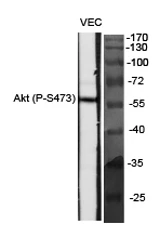
Anti-Phospho-Akt-Ser473 Antibody (STJ90166)
Detects endogenous Akt only when phosphorylated at Ser473, downstream of PI3K activation by growth factors including PDGF, EGF and insulin-like growth factor. Validated by western blot, immunohistochemistry and immunofluorescence across human, mouse, rat and chicken tissue, with citations tracked on CiteAb.

Anti-Tri-Methyl-Histone H3-Lys27 Antibody [S9MM] (STJ118639)
Detects Histone H3 tri-methylated at Lys27, a modification linked to gene repression and enriched on the inactive X chromosome. Validated by western blot, dot blot, IHC-P, IF, ICC, ELISA, ChIP and CUT&Tag, with citations tracked on CiteAb.
Phosphorylation Antibodies
Phospho-specific antibodies against Histone H3 track chromosome condensation through the cell cycle. Phosphorylation at Ser10 by AURKB is crucial for chromosome condensation and cell cycle progression during mitosis and meiosis, while phosphorylation at Thr3 by HASPIN is deposited during prophase and removed at anaphase.


Acetylation Antibodies
Site-specific antibodies against acetylated lysine residues on tubulin, chromatin regulators and metabolic enzymes are used to study cytoskeletal stability, chromatin remodelling and metabolic control. Acetylation of alpha-tubulin at Lys40 occurs on stable, long-lived microtubules and is a widely used marker of microtubule stability. DNMT1, the maintenance DNA methyltransferase, is itself regulated by lysine acetylation at multiple sites within its catalytic domain.

Microtubule stability marker.

Fatty acid synthesis regulation marker.

Bromodomain regulator, chromatin reader.

DNA methyltransferase regulation marker.
Methylation Antibodies
Antibodies against methylated lysine residues on Histone H3, and against 5-methylcytosine in genomic DNA, are used to map chromatin state and DNA methylation status. Tri-methylation at Histone H3 Lys36 is enriched across actively transcribed gene bodies and is validated here by ChIP-seq, showing enrichment at representative expressed loci. 5-Methylcytosine is the principal cytosine methylation mark in mammalian genomic DNA and is commonly used to assess global or locus-specific DNA methylation.


Ubiquitination Antibodies
Monoubiquitination of Histone H2A at Lys119 by the RING1 and RNF2/RING2 complex is a specific tag for epigenetic transcriptional repression and is enriched on the inactive X chromosome.

Learning and Support
Choosing the right modification-specific antibody
PTM antibodies are raised against a specific modified residue and generally do not recognise the unmodified form of the protein. Confirming the exact residue, modification type and species reactivity against your target of interest is essential before ordering.
Not sure which modification site or clone fits your assay? Talk to us and our team can help you select the right product.
Looking for a Specific Modification Site?
Browse the full range of post-translational modification antibodies, or contact us if a specific target, residue or modification type is not listed.
Browse PTM Antibodies