
![Anti-RECQL5 nanobody [SAA1003] (STJN000054)](https://cdn11.bigcommerce.com/s-zso2xnchw9/images/stencil/124x110/products/200667/412849/STJN000054-SDS-PAGE-1__61373.1749232397.jpg?c=1 "Anti-RECQL5 nanobody [SAA1003] (STJN000054)")
![Anti-RECQL5 nanobody [SAA1003] (STJN000054)](https://cdn11.bigcommerce.com/s-zso2xnchw9/images/stencil/1280x1280/products/200667/412849/STJN000054-SDS-PAGE-1__61373.1749232397.jpg?c=1 "Anti-RECQL5 nanobody [SAA1003] (STJN000054)")
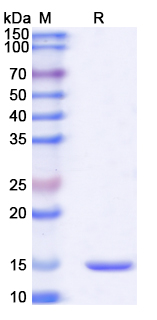
Anti-RECQL5 nanobody [SAA1003] (STJN000054)
SPECIFICATIONS
ClonalityMonoclonal
HostAlpaca
ConjugationUnconjugated
IsotypeVHH-8His-Cys-tag
General Information
| Short Description | Alpaca monoclonal nanobody anti-Atp-Dependent Dna Helicase Q5 is suitable for use in ELISA research applications. |
| Applications | ELISA |
| Host | Alpaca |
| Reactivity | Human |
| Note | STRICTLY FOR FURTHER SCIENTIFIC RESEARCH USE ONLY (RUO). MUST NOT BE USED IN DIAGNOSTIC OR THERAPEUTIC APPLICATIONS. |
Product Properties
| Clonality | Monoclonal |
| Clone ID | SAA1003 |
| Isotype | VHH-8His-Cys-tag |
| Conjugation | Unconjugated |
| Concentration | 1 mg/mL |
| Purification | Purified by Nickel column. |
| Formulation | 0.01M PBS, pH 7.4. |
| Storage Instruction | Use a manual defrost freezer and avoid repeated freeze-thaw cycles. Store at 4°C short term (1-2 weeks). Store at-20°C 12 months. Store at-80°C long term. |
Target Information
| Gene Symbol | RECQL5 |
| Gene ID | 9400 |
| Uniprot ID | RECQ5_HUMAN |
Additional Info
| Post Translational Modifications | Phosphorylated by CDK1 at Ser-727.this phosphorylation is required for RECQL5-mediated disruption of RAD51 filaments on stalled replication forks. |
| Function | DNA helicase that plays an important role in DNA replication, transcription and repair. Probably unwinds DNA in a 3'-5' direction (Probable). Binds to the RNA polymerase II subunit POLR2A during transcription elongation and suppresses transcription-associated genomic instability. Also associates with POLR1A and enforces the stability of ribosomal DNA arrays. Plays an important role in mitotic chromosome separation after cross-over events and cell cycle progress. Mechanistically, removes RAD51 filaments protecting stalled replication forks at common fragile sites and stimulates MUS81-EME1 endonuclease leading to mitotic DNA synthesis. Required for efficient DNA repair, including repair of inter-strand cross-links. Stimulates DNA decatenation mediated by TOP2A. Prevents sister chromatid exchange and homologous recombination. A core helicase fragment (residues 11-609) binds preferentially to splayed duplex, looped and ssDNA. |
| Protein Name | Atp-Dependent Dna Helicase Q5Dna 3'-5' Helicase Recq5Dna Helicase - Recq-Like Type 5Recq5Recq Protein-Like 5 |
| Database Links | |
| Cellular Localisation | Isoform Beta: NucleusNucleoplasmNucleusRecruited To Sites Of Dna DamageSuch As Single-Strand Breaks And Inter-Strand Cross-LinksAnd At Stalled Replication ForksRe-Localizes From The Nucleolus Into The Nucleus After Replicative Stress And Significantly Associates With Wrn During S-PhaseIsoform Alpha: CytoplasmIsoform Gamma: Cytoplasm |
| Alternative Nanobody Names | Anti-Atp-Dependent Dna Helicase Q5 nanobodyAnti-Dna 3'-5' Helicase Recq5 nanobodyAnti-Dna Helicase - Recq-Like Type 5 nanobodyAnti-Recq5 nanobodyAnti-Recq Protein-Like 5 nanobodyAnti-RECQL5 nanobodyAnti-RECQ5 nanobody |
Information sourced from Uniprot.org