


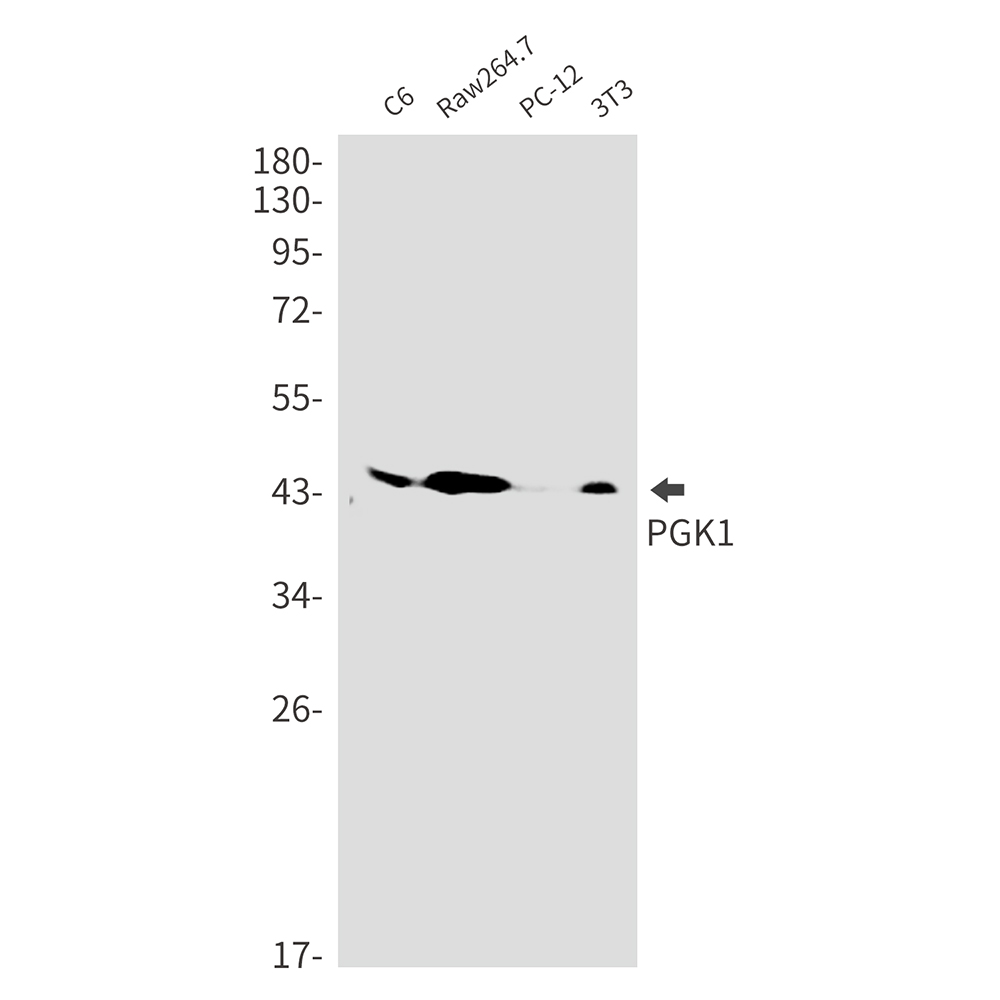
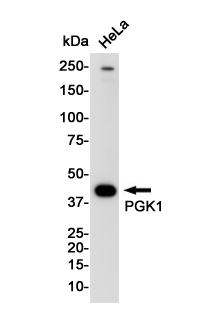
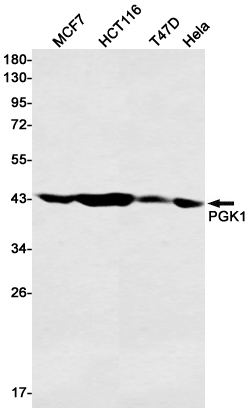
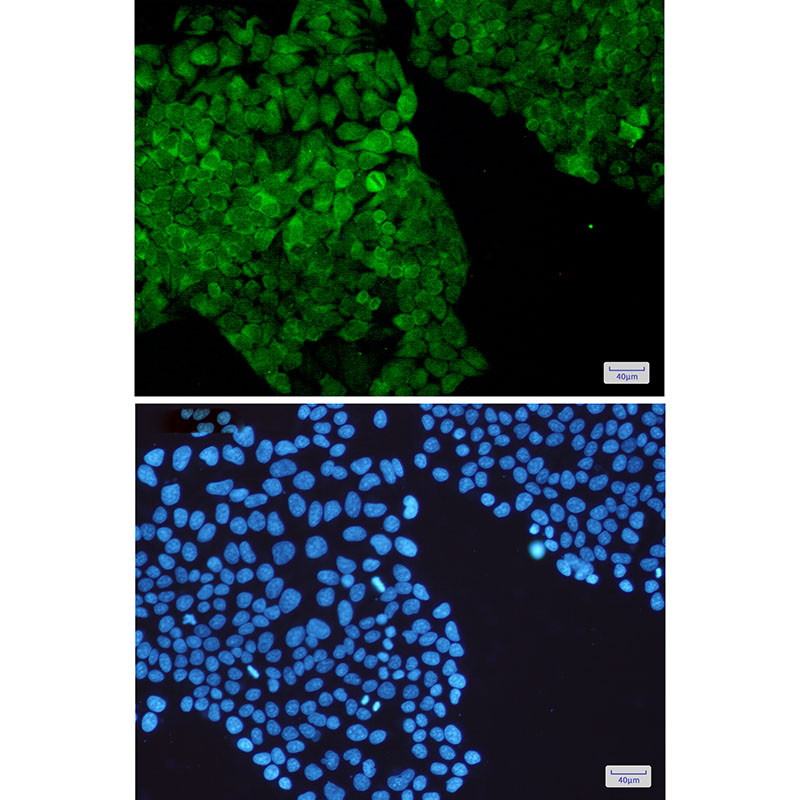

Anti-PGK1 antibody [R04-9H9] (STJA0034715)
SPECIFICATIONS
ClonalityMonoclonal
HostRabbit
ConjugationUnconjugated
IsotypeIgG
ImmunogenA synthetic peptide of human PGK1
General Information
| Short Description | Rabbit monoclonal anti-PGK1 for use in WB, ICC and IF in Human, Mouse and Rat samples. Datasheet included with dilution recommendations, and related reagents. |
| Applications | WB/ICC/IF |
| Host | Rabbit |
| Reactivity | Human/Mouse/Rat |
| Note | STRICTLY FOR FURTHER SCIENTIFIC RESEARCH USE ONLY (RUO). MUST NOT TO BE USED IN DIAGNOSTIC OR THERAPEUTIC APPLICATIONS. |
Product Properties
| Clonality | Monoclonal |
| Clone ID | R04-9H9 |
| Isotype | IgG |
| Conjugation | Unconjugated |
| Concentration | 0.3 mg/mL |
| Purification | Affinity Purified |
| Dilution Range | WB 1:500-1:1000IF 1:50-1:200 |
| Formulation | 50mM Tris-Glycine (pH 7.4) , 0.15M NaCl, 40% Glycerol, 0.01% Sodium azide and 0.05% BSA |
| Storage Instruction | Store at 4°C short term. Aliquot and store at-20°C long term. Avoid freeze/thaw cycles. |
Target Information
| Gene Symbol | PGK1 |
| Gene ID | 5230 |
| Uniprot ID | PGK1_HUMAN |
| Immunogen | A synthetic peptide of human PGK1 |
Additional Info
| Tissue Specificity | Mainly expressed in spermatogonia. Localized on the principle piece in the sperm (at protein level). Expression significantly decreased in the testis of elderly men. |
| Post Translational Modifications | Phosphorylated at Ser-203 by MAPK1/ERK2 under hypoxic conditions, which promotes its mitochondrial targeting. |
| Function | Catalyzes one of the two ATP producing reactions in the glycolytic pathway via the reversible conversion of 1,3-diphosphoglycerate to 3-phosphoglycerate. Both L- and D- forms of purine and pyrimidine nucleotides can be used as substrates, but the activity is much lower on pyrimidines. In addition to its role as a glycolytic enzyme, it seems that PGK1 acts as a polymerase alpha cofactor protein (primer recognition protein). Acts as a protein kinase when localized to the mitochondrion where it phosphorylates pyruvate dehydrogenase kinase PDK1 to inhibit pyruvate dehydrogenase complex activity and suppress the formation of acetyl-coenzyme A from pyruvate, and consequently inhibit oxidative phosphorylation and promote glycolysis. May play a role in sperm motility. |
| Protein Name | Phosphoglycerate Kinase 1Cell Migration-Inducing Gene 10 ProteinPrimer Recognition Protein 2Prp 2 |
| Database Links | Reactome: R-HSA-70171Reactome: R-HSA-70263Reactome: R-HSA-9636667 |
| Cellular Localisation | CytoplasmCytosolMitochondrion MatrixHypoxic Conditions Promote Mitochondrial TargetingTargeted To The Mitochondrion Following Phosphorylation By Mapk1/Erk2Cis-Trans Isomerization By Pin1And Binding To Mitochondrial Circrna Mcpgk1 |
| Alternative Antibody Names | Anti-Phosphoglycerate Kinase 1 antibodyAnti-Cell Migration-Inducing Gene 10 Protein antibodyAnti-Primer Recognition Protein 2 antibodyAnti-Prp 2 antibodyAnti-PGK1 antibodyAnti-PGKA antibodyAnti-MIG10 antibodyAnti-OK antibodyAnti-SW-cl.110 antibody |
Information sourced from Uniprot.org