


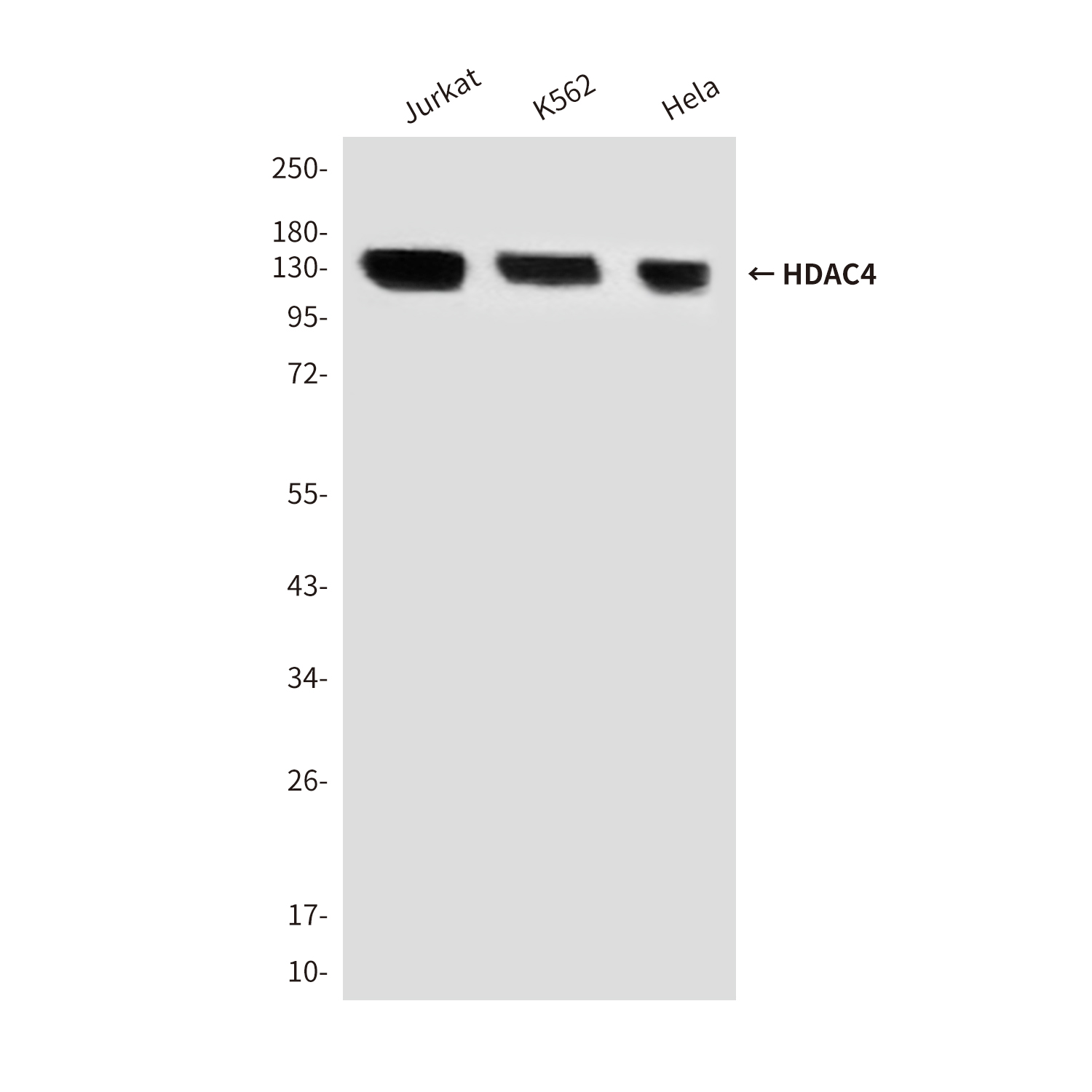
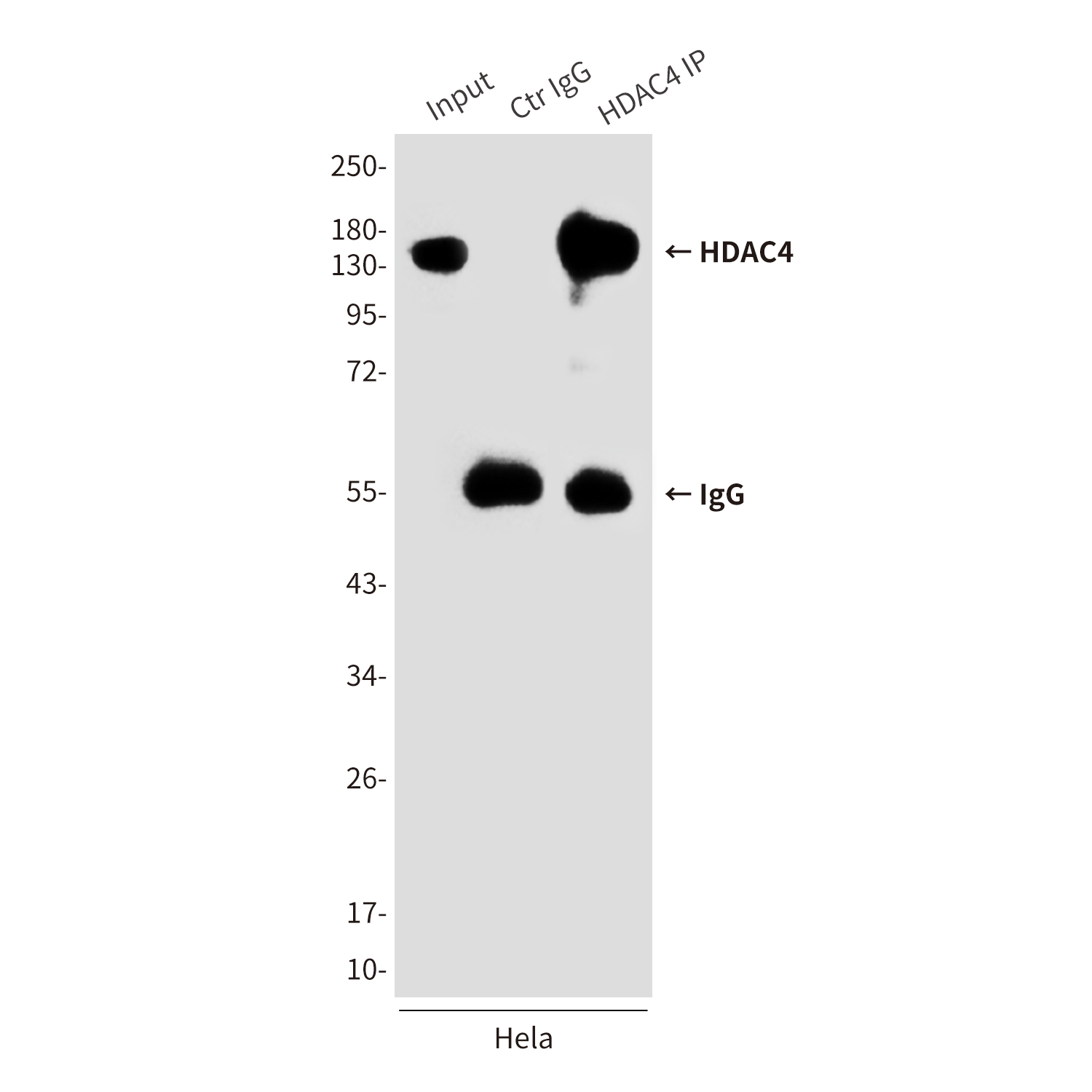
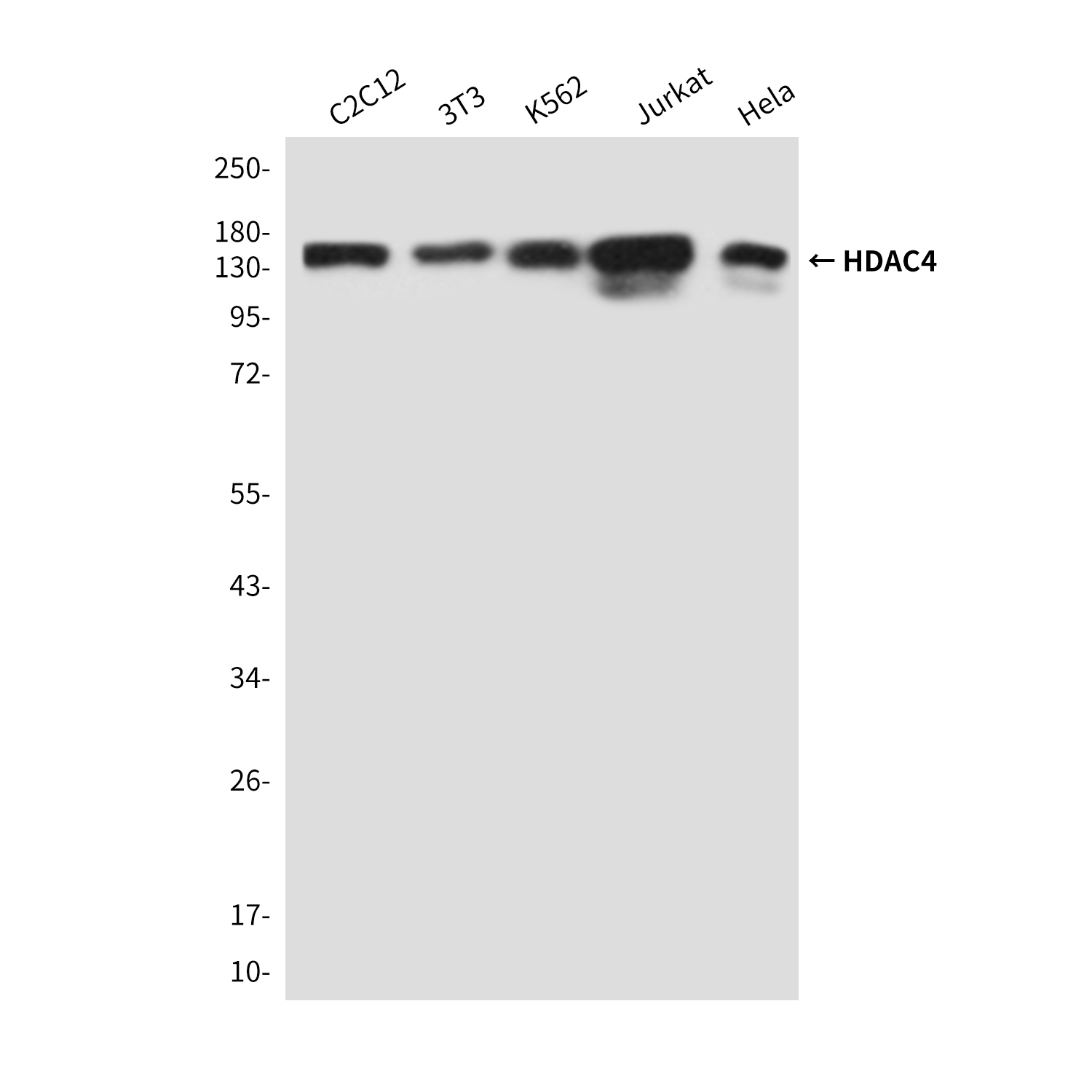

Anti-HDAC4 antibody [4A3-H7-C6] (STJA0032345)
SPECIFICATIONS
ClonalityMonoclonal
HostMouse
ConjugationUnconjugated
IsotypeIgG2a
ImmunogenPurified recombinant human HDAC4 protein fragments expressed in E.coli
General Information
| Short Description | Mouse monoclonal anti-HDAC4 for use in WB and IP in Human, Mouse, Rat and Monkey samples. Datasheet included with dilution recommendations, and related reagents. |
| Applications | WB/IP |
| Host | Mouse |
| Reactivity | Human/Mouse/Rat/Monkey |
| Note | STRICTLY FOR FURTHER SCIENTIFIC RESEARCH USE ONLY (RUO). MUST NOT TO BE USED IN DIAGNOSTIC OR THERAPEUTIC APPLICATIONS. |
Product Properties
| Clonality | Monoclonal |
| Clone ID | 4A3-H7-C6 |
| Isotype | IgG2a |
| Conjugation | Unconjugated |
| Concentration | 6.2 mg/mL |
| Purification | Affinity Purified |
| Dilution Range | WB 1:500-1:1000IP 1:20 |
| Formulation | Liquid in PBS containing 50% glycerol, 0.5% BSA and 0.02% sodium azide, pH 7.3. |
| Storage Instruction | Store at 4°C short term. Aliquot and store at-20°C long term. Avoid freeze/thaw cycles. |
Target Information
| Gene Symbol | HDAC4 |
| Gene ID | 9759 |
| Uniprot ID | HDAC4_HUMAN |
| Immunogen | Purified recombinant human HDAC4 protein fragments expressed in E.coli |
Additional Info
| Tissue Specificity | Ubiquitous. |
| Post Translational Modifications | Phosphorylated by CaMK4 at Ser-246, Ser-467 and Ser-632. Phosphorylation at other residues by CaMK2D is required for the interaction with 14-3-3. Phosphorylation at Ser-350, within the PxLPxI/L motif, impairs the binding of ANKRA2 but generates a high-affinity docking site for 14-3-3. Sumoylation on Lys-559 is promoted by the E3 SUMO-protein ligase RANBP2, and prevented by phosphorylation by CaMK4. |
| Function | Responsible for the deacetylation of lysine residues on the N-terminal part of the core histones (H2A, H2B, H3 and H4). Histone deacetylation gives a tag for epigenetic repression and plays an important role in transcriptional regulation, cell cycle progression and developmental events. Histone deacetylases act via the formation of large multiprotein complexes. Involved in muscle maturation via its interaction with the myocyte enhancer factors such as MEF2A, MEF2C and MEF2D. Involved in the MTA1-mediated epigenetic regulation of ESR1 expression in breast cancer. Deacetylates HSPA1A and HSPA1B at 'Lys-77' leading to their preferential binding to co-chaperone STUB1. |
| Protein Name | Histone Deacetylase 4Hd4 |
| Database Links | Reactome: R-HSA-2122947Reactome: R-HSA-2644606Reactome: R-HSA-2894862Reactome: R-HSA-350054Reactome: R-HSA-4090294Reactome: R-HSA-4551638Reactome: R-HSA-8941284Reactome: R-HSA-8951936 |
| Cellular Localisation | NucleusCytoplasmShuttles Between The Nucleus And The CytoplasmUpon Muscle Cells DifferentiationIt Accumulates In The Nuclei Of MyotubesSuggesting A Positive Role Of Nuclear Hdac4 In Muscle DifferentiationThe Export To Cytoplasm Depends On The Interaction With A 14-3-3 Chaperone Protein And Is Due To Its Phosphorylation At Ser-246Ser-467 And Ser-632 By Camk4 And Sik1The Nuclear Localization Probably Depends On SumoylationInteraction With Sik3 Leads To Hdac4 Retention In The Cytoplasm |
| Alternative Antibody Names | Anti-Histone Deacetylase 4 antibodyAnti-Hd4 antibodyAnti-HDAC4 antibodyAnti-KIAA0288 antibody |
Information sourced from Uniprot.org