



Anti-EPCAM antibody (100-200 aa) [ABT-EPCAM] (STJ196761)
SPECIFICATIONS
ClonalityMonoclonal
HostMouse
ConjugationUnconjugated
IsotypeIgG2bk
ImmunogenSynthesized peptide derived from the human Ep-CAM at the amino acid range 100-200
General Information
| Short Description | Mouse monoclonal anti-Epithelial cell adhesion molecule (100-200 aa) for use in WB, IHC and IF in Human samples. Datasheet included with dilution recommendations, and related reagents. |
| Applications | WB/IHC/IF |
| Host | Mouse |
| Reactivity | Human |
| Note | STRICTLY FOR FURTHER SCIENTIFIC RESEARCH USE ONLY (RUO). MUST NOT TO BE USED IN DIAGNOSTIC OR THERAPEUTIC APPLICATIONS. |
Product Properties
| Clonality | Monoclonal |
| Clone ID | ABT-EPCAM |
| Isotype | IgG2bk |
| Conjugation | Unconjugated |
| Purification | The antibody was affinity-purified from mouse ascites by affinity-chromatography using specific immunogen. |
| Dilution Range | IHC-P 1:100-500WB 1:100-2000IF 1:50-200 |
| Formulation | Liquid in PBS containing 50% Glycerol, 0.5% BSA and 0.02% Sodium Azide. |
| Storage Instruction | Store at-20°C for up to 1 year from the date of receipt, and avoid repeat freeze-thaw cycles. |
Target Information
| Gene Symbol | EPCAM |
| Gene ID | 4072 |
| Uniprot ID | EPCAM_HUMAN |
| Immunogen | Synthesized peptide derived from the human Ep-CAM at the amino acid range 100-200 |
| Immunogen Region | 100-200 aa |
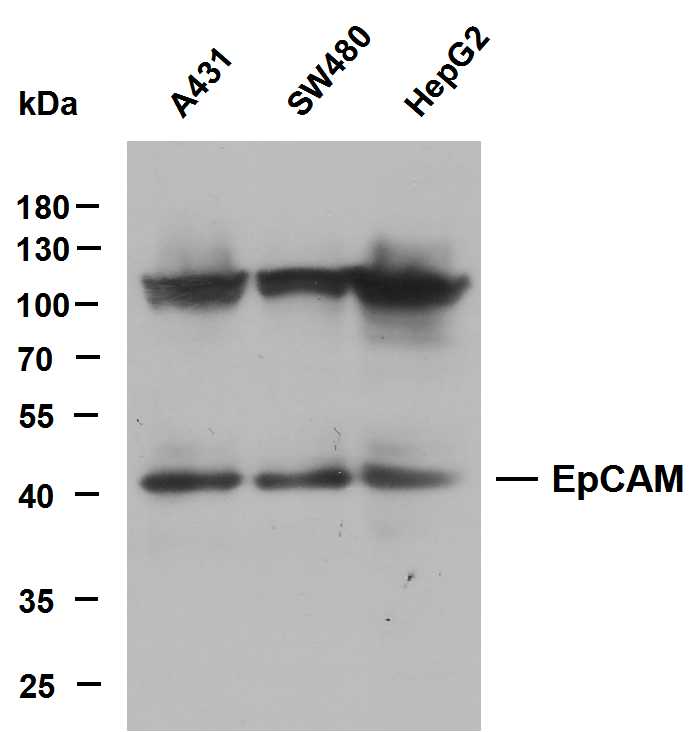
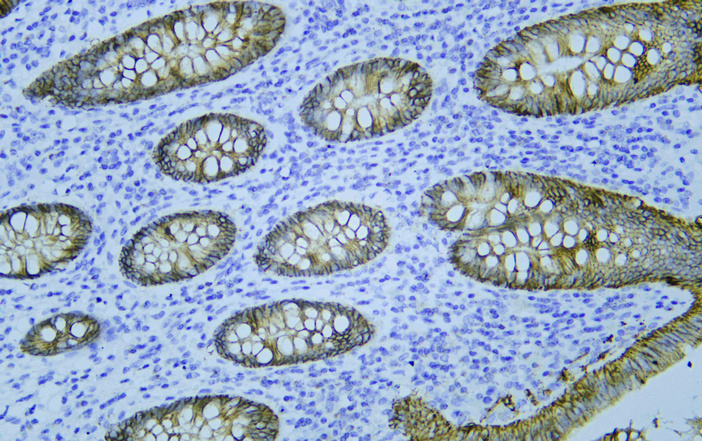
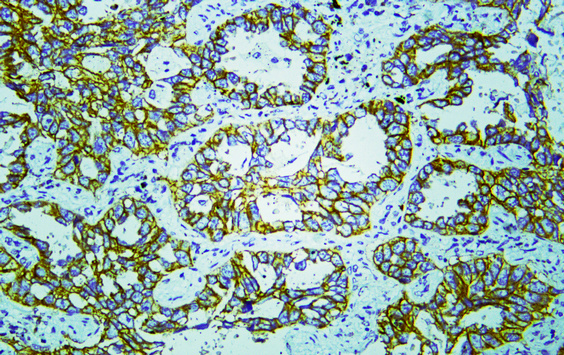
| Specificity | This antibody detects endogenous levels of human Ep-CAM. Heat-induced epitope retrieval (HIER) Citrate buffer of pH6.0 was highly recommended as antigen repair method in paraffin section |
Additional Info
| Post Translational Modifications | Hyperglycosylated in carcinoma tissue as compared with autologous normal epithelia. Glycosylation at Asn-198 is crucial for protein stability. |
| Function | May act as a physical homophilic interaction molecule between intestinal epithelial cells (IECs) and intraepithelial lymphocytes (IELs) at the mucosal epithelium for providing immunological barrier as a first line of defense against mucosal infection. Plays a role in embryonic stem cells proliferation and differentiation. Up-regulates the expression of FABP5, MYC and cyclins A and E. |
| Protein Name | Epithelial Cell Adhesion MoleculeEp-CamAdenocarcinoma-Associated AntigenCell Surface Glycoprotein Trop-1Epithelial Cell Surface AntigenEpithelial GlycoproteinEgpEpithelial Glycoprotein 314Egp314Hegp314Ks 1/4 AntigenKsaMajor Gastrointestinal Tumor-Associated Protein Ga733-2Tumor-Associated Calcium Signal Transducer 1Cd Antigen Cd326 |
| Database Links | Reactome: R-HSA-202733 |
| Cellular Localisation | Lateral Cell MembraneSingle-Pass Type I Membrane ProteinCell JunctionTight JunctionColocalizes With Cldn7 At The Lateral Cell Membrane And Tight Junction |
| Alternative Antibody Names | Anti-Epithelial Cell Adhesion Molecule antibodyAnti-Ep-Cam antibodyAnti-Adenocarcinoma-Associated Antigen antibodyAnti-Cell Surface Glycoprotein Trop-1 antibodyAnti-Epithelial Cell Surface Antigen antibodyAnti-Epithelial Glycoprotein antibodyAnti-Egp antibodyAnti-Epithelial Glycoprotein 314 antibodyAnti-Egp314 antibodyAnti-Hegp314 antibodyAnti-Ks 1/4 Antigen antibodyAnti-Ksa antibodyAnti-Major Gastrointestinal Tumor-Associated Protein Ga733-2 antibodyAnti-Tumor-Associated Calcium Signal Transducer 1 antibodyAnti-Cd Antigen Cd326 antibodyAnti-EPCAM antibodyAnti-GA733-2 antibodyAnti-M1S2 antibodyAnti-M4S1 antibodyAnti-MIC18 antibodyAnti-TACSTD1 antibodyAnti-TROP1 antibody |
Information sourced from Uniprot.org