


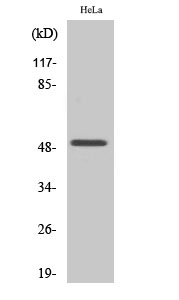
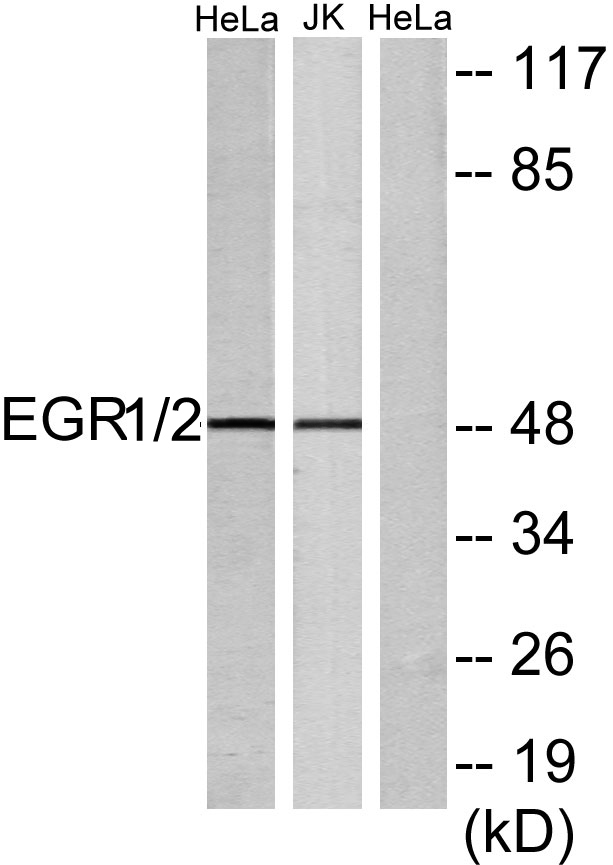
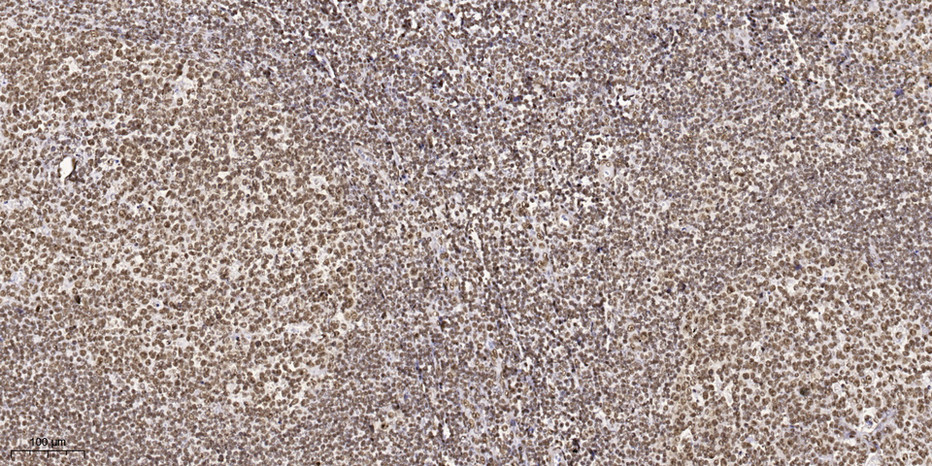

Anti-Egr-2 antibody (371-420 aa) (STJ92863)
SPECIFICATIONS
ClonalityPolyclonal
HostRabbit
ConjugationUnconjugated
IsotypeIgG
ImmunogenThe antiserum was produced against synthesized peptide derived from the human EGR1/2 at the amino acid range 371-420
General Information
| Short Description | Rabbit polyclonal anti-Early growth response protein 1 and E3 SUMO-protein ligase EGR2 (371-420 aa) for use in WB, IHC, IF and ELISA in Human, Mouse and Rat samples. Datasheet included with dilution recommendations, and related reagents. |
| Applications | WB/IHC/IF/ELISA |
| Host | Rabbit |
| Reactivity | Human/Mouse/Rat |
| Note | STRICTLY FOR FURTHER SCIENTIFIC RESEARCH USE ONLY (RUO). MUST NOT TO BE USED IN DIAGNOSTIC OR THERAPEUTIC APPLICATIONS. |
Product Properties
| Clonality | Polyclonal |
| Isotype | IgG |
| Conjugation | Unconjugated |
| Concentration | 1 mg/mL |
| Purification | The antibody was affinity-purified from rabbit antiserum by affinity-chromatography using epitope-specific immunogen. |
| Dilution Range | WB 1:500-1:2000IHC 1:100-1:300IF 1:200-1:1000ELISA 1:20000 |
| Formulation | Liquid in PBS containing 50% Glycerol, 0.5% BSA and 0.02% Sodium Azide. |
| Storage Instruction | Store at-20°C for up to 1 year from the date of receipt, and avoid repeat freeze-thaw cycles. |
Target Information
| Gene Symbol | EGR1EGR2 |
| Gene ID | 19581959 |
| Uniprot ID | EGR1_HUMANEGR2_HUMAN |
| Immunogen | The antiserum was produced against synthesized peptide derived from the human EGR1/2 at the amino acid range 371-420 |
| Immunogen Region | 371-420 aa |
| Specificity | Egr-2 Polyclonal Antibody detects endogenous levels of Egr-2 protein. |
Additional Info
| Function | Transcriptional regulator. Recognizes and binds to the DNA sequence 5'-GCG(T/G)GGGCG-3'(EGR-site) in the promoter region of target genes. Binds double-stranded target DNA, irrespective of the cytosine methylation status. Regulates the transcription of numerous target genes, and thereby plays an important role in regulating the response to growth factors, DNA damage, and ischemia. Plays a role in the regulation of cell survival, proliferation and cell death. Activates expression of p53/TP53 and TGFB1, and thereby helps prevent tumor formation. Required for normal progress through mitosis and normal proliferation of hepatocytes after partial hepatectomy. Mediates responses to ischemia and hypoxia.regulates the expression of proteins such as IL1B and CXCL2 that are involved in inflammatory processes and development of tissue damage after ischemia. Regulates biosynthesis of luteinizing hormone (LHB) in the pituitary. Regulates the amplitude of the expression rhythms of clock genes: ARNTL/BMAL1, PER2 and NR1D1 in the liver via the activation of PER1 (clock repressor) transcription. Regulates the rhythmic expression of core-clock gene ARNTL/BMAL1 in the suprachiasmatic nucleus (SCN). |
| Protein Name | Early Growth Response Protein 1Egr-1At225Nerve Growth Factor-Induced Protein ANgfi-ATranscription Factor Etr103Transcription Factor Zif268Zinc Finger Protein 225Zinc Finger Protein Krox-24 |
| Database Links | Reactome: R-HSA-8943724Reactome: R-HSA-9031628Reactome: R-HSA-909733 |
| Cellular Localisation | NucleusCytoplasm |
| Alternative Antibody Names | Anti-Early Growth Response Protein 1 antibodyAnti-Egr-1 antibodyAnti-At225 antibodyAnti-Nerve Growth Factor-Induced Protein A antibodyAnti-Ngfi-A antibodyAnti-Transcription Factor Etr103 antibodyAnti-Transcription Factor Zif268 antibodyAnti-Zinc Finger Protein 225 antibodyAnti-Zinc Finger Protein Krox-24 antibodyAnti-EGR1 antibodyAnti-KROX24 antibodyAnti-ZNF225 antibody |
Information sourced from Uniprot.org