



Human TMIGD2/CD28H protein (Recombinant) (hIgG-Tag) (STJP019554)
SPECIFICATIONS
HostHEK293 Cells
ImmunogenHuman
General Information
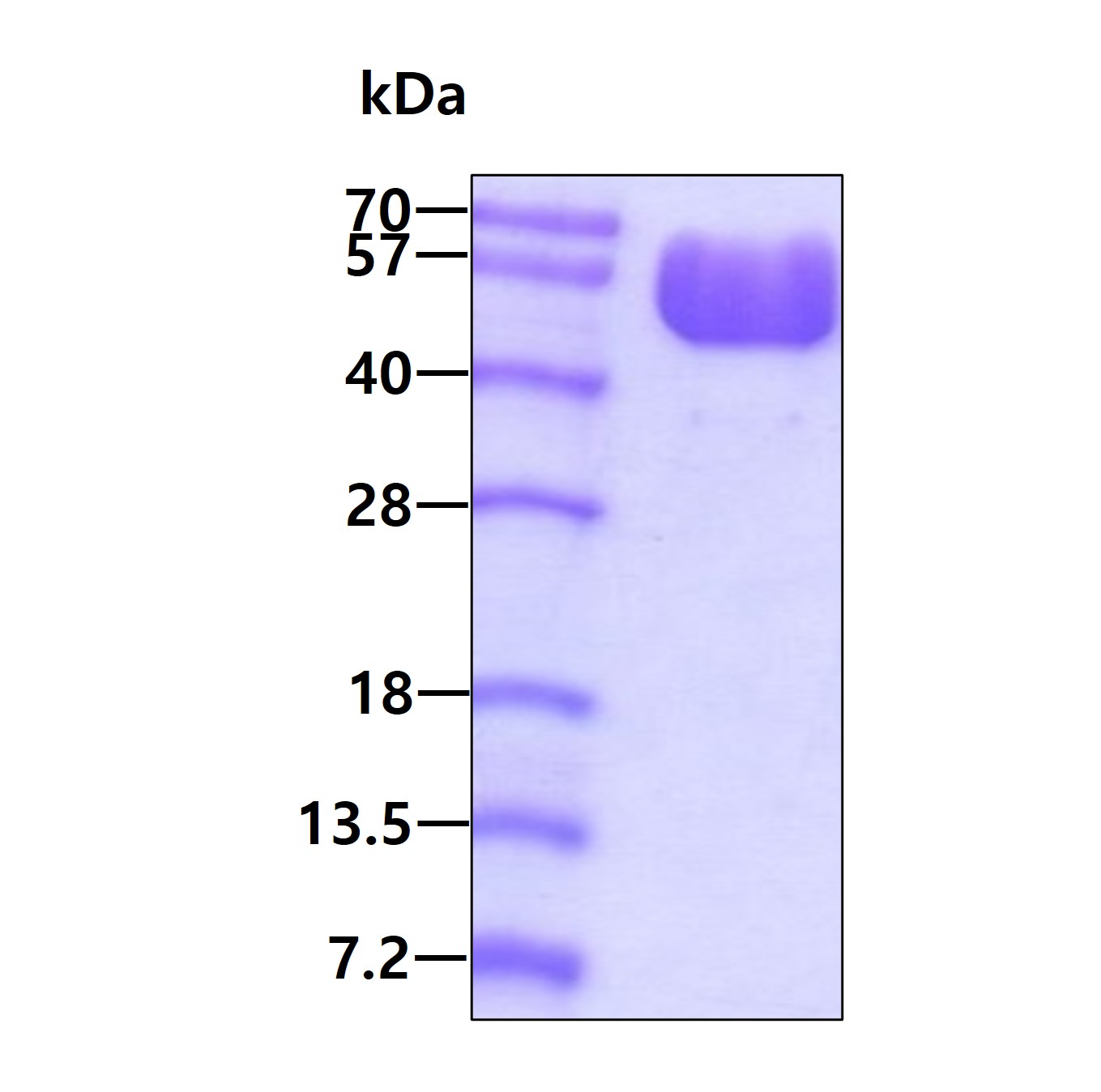
| Short Description | Recombinant-Human TMIGD2/CD28H-hIgG-Tag protein was developed from hek293 cells and has a target region of hIgG-Tag. For use in research applications. |
| Applications | SDS-PAGE/Bioactivity |
| Host | HEK293 Cells |
| Note | STRICTLY FOR FURTHER SCIENTIFIC RESEARCH USE ONLY (RUO). MUST NOT TO BE USED IN DIAGNOSTIC OR THERAPEUTIC APPLICATIONS. |
Product Properties
| Concentration | 1 mg/mL |
| Formulation | Liquid in phosphate-Buffered Saline (pH 7.4) containing 10% Glycerol |
| Storage Instruction | For short term storage, keep at +2C to +8C for up to 1 week. For long term storage, aliquot and store at-20C, and avoid repeat freeze-thaw cycles. |
| Endotoxin | <1 EU per 1ug of protein (determined by LAL method) |
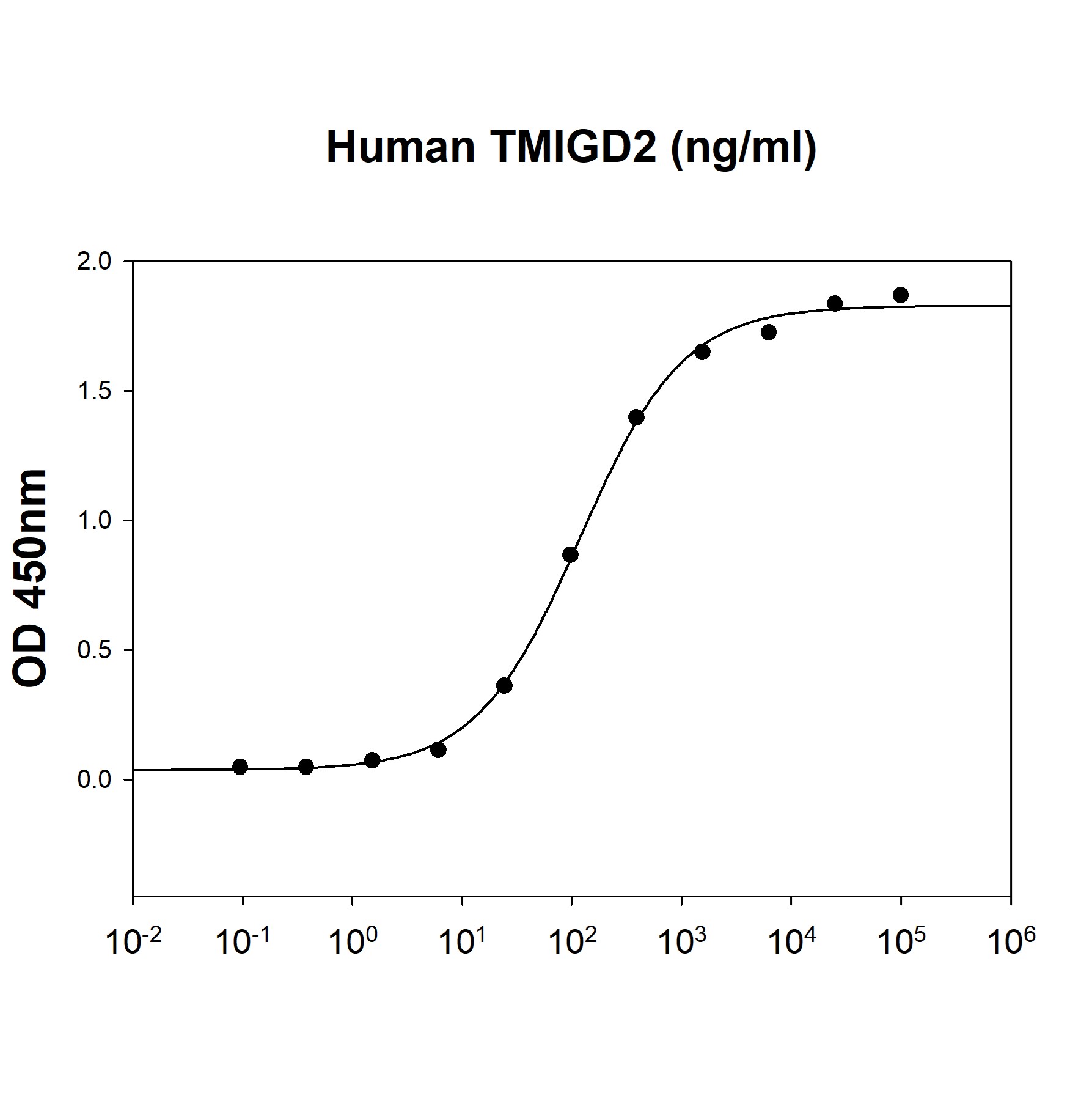
| Immunoreactivity | Measured by its binding ability in a functional ELISA with Human HHLA2. The ED50 range ≤ 200 ng/ml. |
Target Information
| Gene Symbol | TMIGD2 |
| Gene ID | 126259 |
| Uniprot ID | TMIG2_HUMAN |
| Accession Number | NP_653216.2 |
| Immunogen | Human |
| Immunogen Region | 23-150aa |
| Immunogen Sequence | LSVQQGPNLL QVRQGSQATL VCQVDQATAW ERLRVKWTKD GAILCQPYIT NGSLSLGVCG PQGRLSWQAP SHLTLQLDPV SLNHSGAYVC WAAVEIPELE EAEGNITRLF VDPDDPTQNR NRIASFPG |
Additional Info
| Tissue Specificity | Widely expressed, mainly by epithelial and endothelial cells, including bronchial epithelial cells of lung, breast glandular and lobular epithelia cells, urothelium of the bladder, skin epidermis, epithelium of gastrointestinal, rectum, endometrial glands of the uterus, ureter, fallopian tube epithelium, colonic epithelium, small bowl epithelium, stomach epithelium, including both chief and parietal cells, trophoblastic epithelium of placenta, and pancreatic acinar cells (at protein level). Consistently expressed in veins and arteries (at protein level). Not detected in thyroid, cerebellum, cerebral cortex and thymus (at protein level). Expressed in lymphoid organs, with highest levels in thymus, spleen, peripheral blood lymphocytes and liver. In the thymus, expressed in CD4+ and CD8+ single- and double-positive cells, but not in immature CD4- and CD8- double-negative cells (at protein level). In peripheral blood mononuclear cells, highly expressed on CD56+ or CD16+ natural killer cells and CD3+ T-cells(at protein level). Not detected on B-cells(at protein level). Expressed in tonsils (at protein level). |
| Post Translational Modifications | N-glycosylated. |
| Function | Plays a role in cell-cell interaction, cell migration, and angiogenesis. Through interaction with HHLA2, costimulates T-cells in the context of TCR-mediated activation. Enhances T-cell proliferation and cytokine production via an AKT-dependent signaling cascade. |
| Protein Name | Transmembrane And Immunoglobulin Domain-Containing Protein 2Cd28 HomologImmunoglobulin And Proline-Rich Receptor 1Igpr-1 |
| Database Links | |
| Cellular Localisation | Cell MembraneSingle-Pass Type I Membrane Protein |
| Alternative Protein Names | Transmembrane And Immunoglobulin Domain-Containing Protein 2 proteinCd28 Homolog proteinImmunoglobulin And Proline-Rich Receptor 1 proteinIgpr-1 proteinTMIGD2 proteinCD28H proteinIGPR1 proteinUNQ3059 proteinPRO9879 protein |
Information sourced from Uniprot.org