

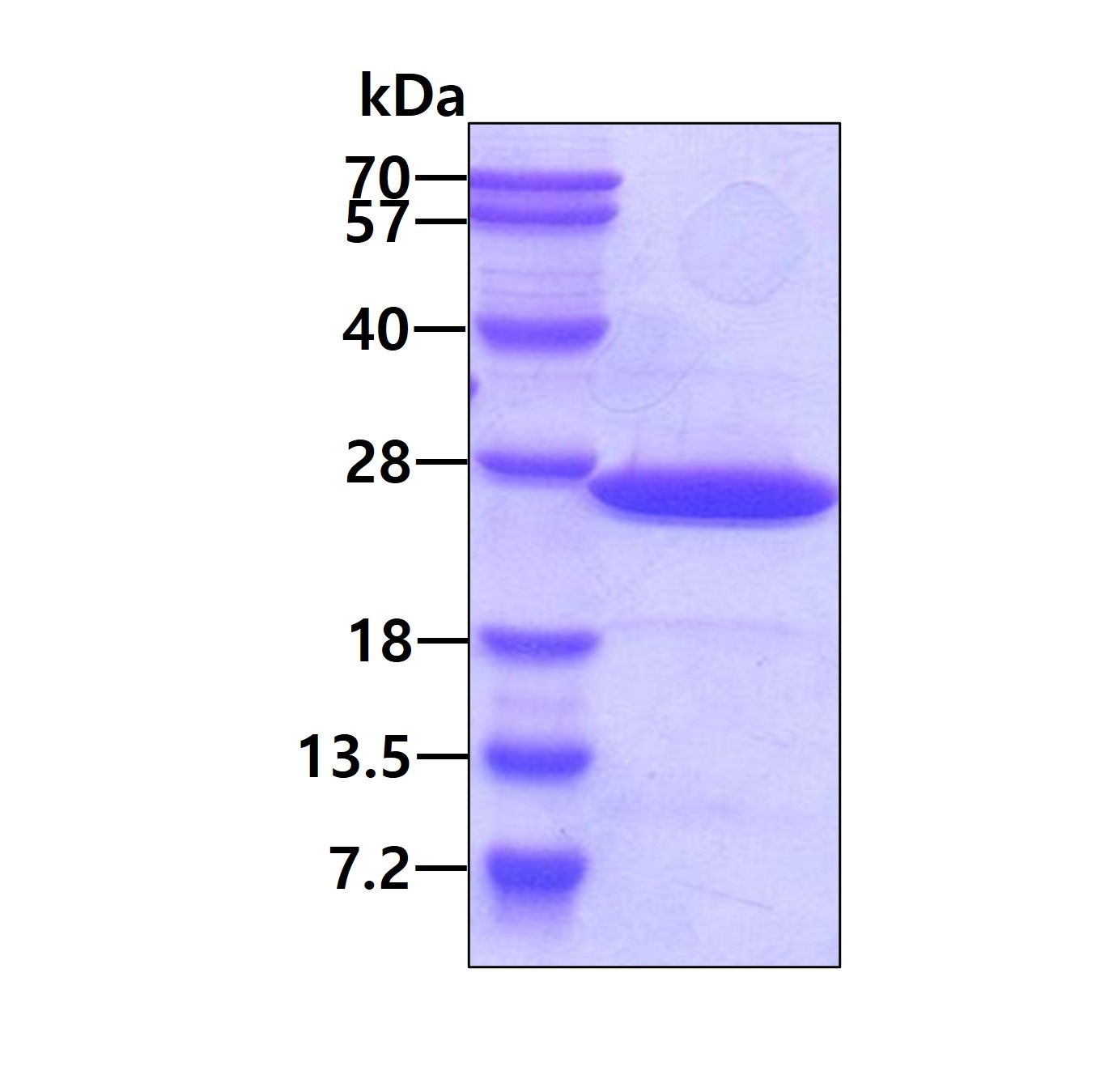

Human RANGRF protein (Recombinant) (His-Tag) (STJP017729)
SPECIFICATIONS
HostE.coli
ImmunogenHuman
General Information
| Short Description | Recombinant-Human RANGRF-His-Tag protein was developed from e.coli and has a target region of His-Tag. For use in research applications. |
| Applications | SDS-PAGE |
| Host | E.coli |
| Note | STRICTLY FOR FURTHER SCIENTIFIC RESEARCH USE ONLY (RUO). MUST NOT TO BE USED IN DIAGNOSTIC OR THERAPEUTIC APPLICATIONS. |
Product Properties
| Concentration | 1 mg/mL |
| Formulation | Liquid in 20mM Tris-HCl buffer (pH 8.0) containing 10% Glycerol 0.15M NaCl, 1mM DTT |
| Storage Instruction | For short term storage, keep at +2C to +8C for up to 1 week. For long term storage, aliquot and store at-20C, and avoid repeat freeze-thaw cycles. |
Target Information
| Gene Symbol | RANGRF |
| Gene ID | 29098 |
| Uniprot ID | MOG1_HUMAN |
| Accession Number | NP_057576 |
| Immunogen | Human |
| Immunogen Region | 1-186aa |
| Immunogen Sequence |
Additional Info
| Tissue Specificity | Isoform 1 and isoform 2 are ubiquitously expressed. Detected in heart and brain. |
| Function | May regulate the intracellular trafficking of RAN. Promotes guanine nucleotide release from RAN and inhibits binding of new GTP by preventing the binding of the RAN guanine nucleotide exchange factor RCC1. Regulates the levels of GTP-bound RAN in the nucleus, and thereby plays a role in the regulation of RAN-dependent mitotic spindle dynamics. Enhances the expression of SCN5A at the cell membrane in cardiomyocytes. |
| Protein Name | Ran Guanine Nucleotide Release FactorRangnrfRan-Binding Protein Mog1 |
| Database Links | Reactome: R-HSA-5576892 |
| Cellular Localisation | NucleusCytoplasmPerinuclear RegionCell MembranePeripheral Membrane ProteinCytoplasmic SideMay Shuttle Between The Nucleus And Cytoplasm |
| Alternative Protein Names | Ran Guanine Nucleotide Release Factor proteinRangnrf proteinRan-Binding Protein Mog1 proteinRANGRF proteinMOG1 proteinRANGNRF proteinHSPC165 proteinHSPC236 proteinMDS5 protein |
Information sourced from Uniprot.org