

Human GID8 protein (Recombinant) (His-Tag) (STJP019154)
SPECIFICATIONS
HostE.coli
ImmunogenHuman
General Information
| Short Description | Recombinant-Human GID8-His-Tag protein was developed from e.coli and has a target region of His-Tag. For use in research applications. |
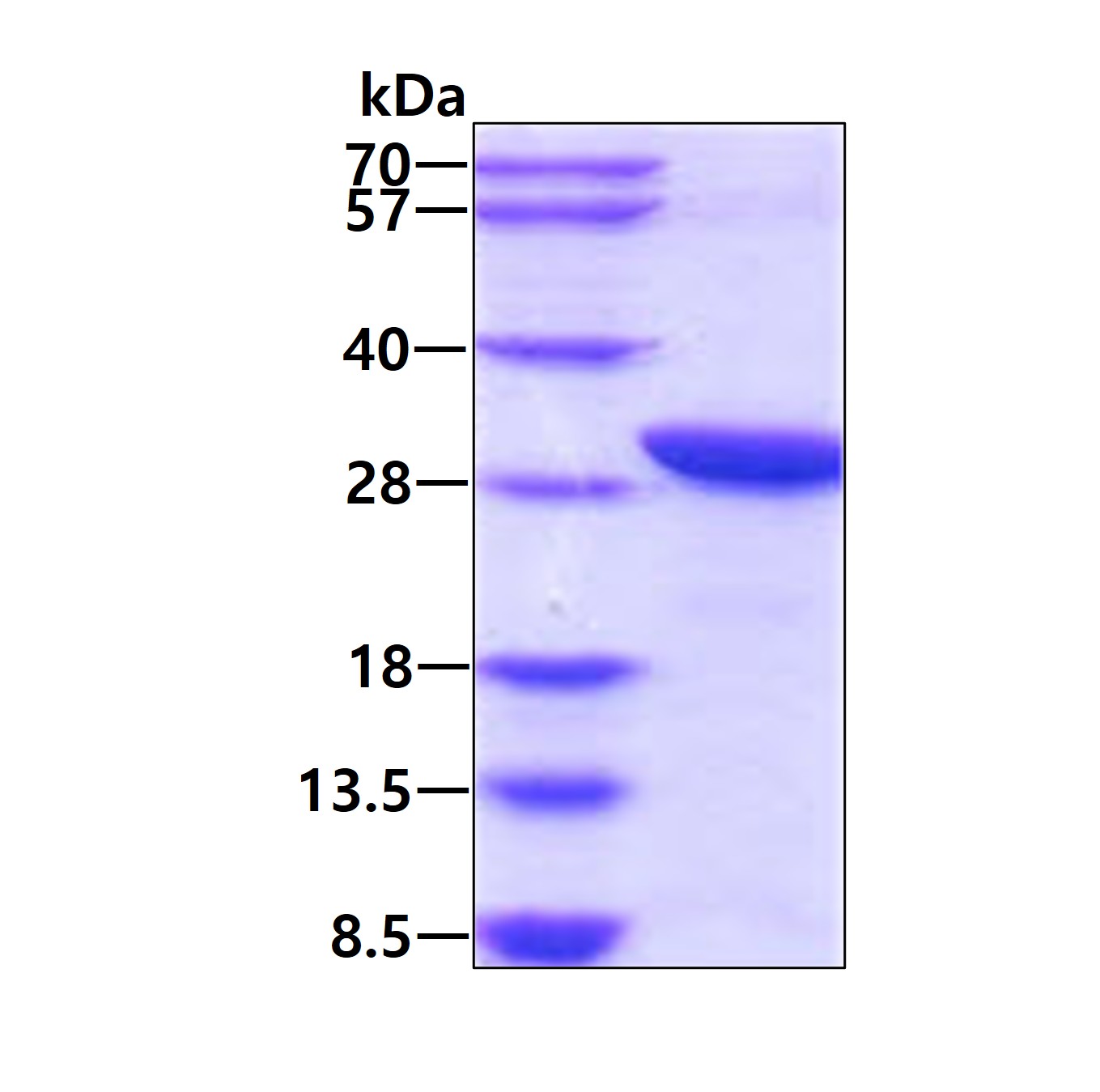
| Applications | SDS-PAGE |
| Host | E.coli |
| Note | STRICTLY FOR FURTHER SCIENTIFIC RESEARCH USE ONLY (RUO). MUST NOT TO BE USED IN DIAGNOSTIC OR THERAPEUTIC APPLICATIONS. |
Product Properties
| Concentration | 1 mg/mL |
| Formulation | Liquid in phosphate-Buffered Saline (pH 7.4) containing 20% Glycerol, 1mM DTT |
| Storage Instruction | For short term storage, keep at +2C to +8C for up to 1 week. For long term storage, aliquot and store at-20C, and avoid repeat freeze-thaw cycles. |
Target Information
| Gene Symbol | GID8 |
| Gene ID | 54994 |
| Uniprot ID | GID8_HUMAN |
| Accession Number | NP_060366 |
| Immunogen | Human |
| Immunogen Region | 1-228aa |
| Immunogen Sequence |
Additional Info
| Tissue Specificity | Up-regulated in colorectal cancer tissues (at protein level). |
| Post Translational Modifications | Polyubiquitinated through 'Lys-48'-polyubiquitin chains, leading to proteasomal degradation in the absence of Wnt stimulation. |
| Function | Core component of the CTLH E3 ubiquitin-protein ligase complex that selectively accepts ubiquitin from UBE2H and mediates ubiquitination and subsequent proteasomal degradation of the transcription factor HBP1. Acts as a positive regulator of Wnt signaling pathway by promoting beta-catenin (CTNNB1) nuclear accumulation. |
| Protein Name | Glucose-Induced Degradation Protein 8 HomologTwo Hybrid-Associated Protein 1 With RanbpmTwa1 |
| Database Links | Reactome: R-HSA-9861718 |
| Cellular Localisation | CytoplasmNucleusLocalizes In The Cytoplasm In The Absence Of Wnt Stimulation And In The Nucleus In The Presence Of Wnt Stimulation |
| Alternative Protein Names | Glucose-Induced Degradation Protein 8 Homolog proteinTwo Hybrid-Associated Protein 1 With Ranbpm proteinTwa1 proteinGID8 proteinC20orf11 proteinTWA1 protein |
Information sourced from Uniprot.org