

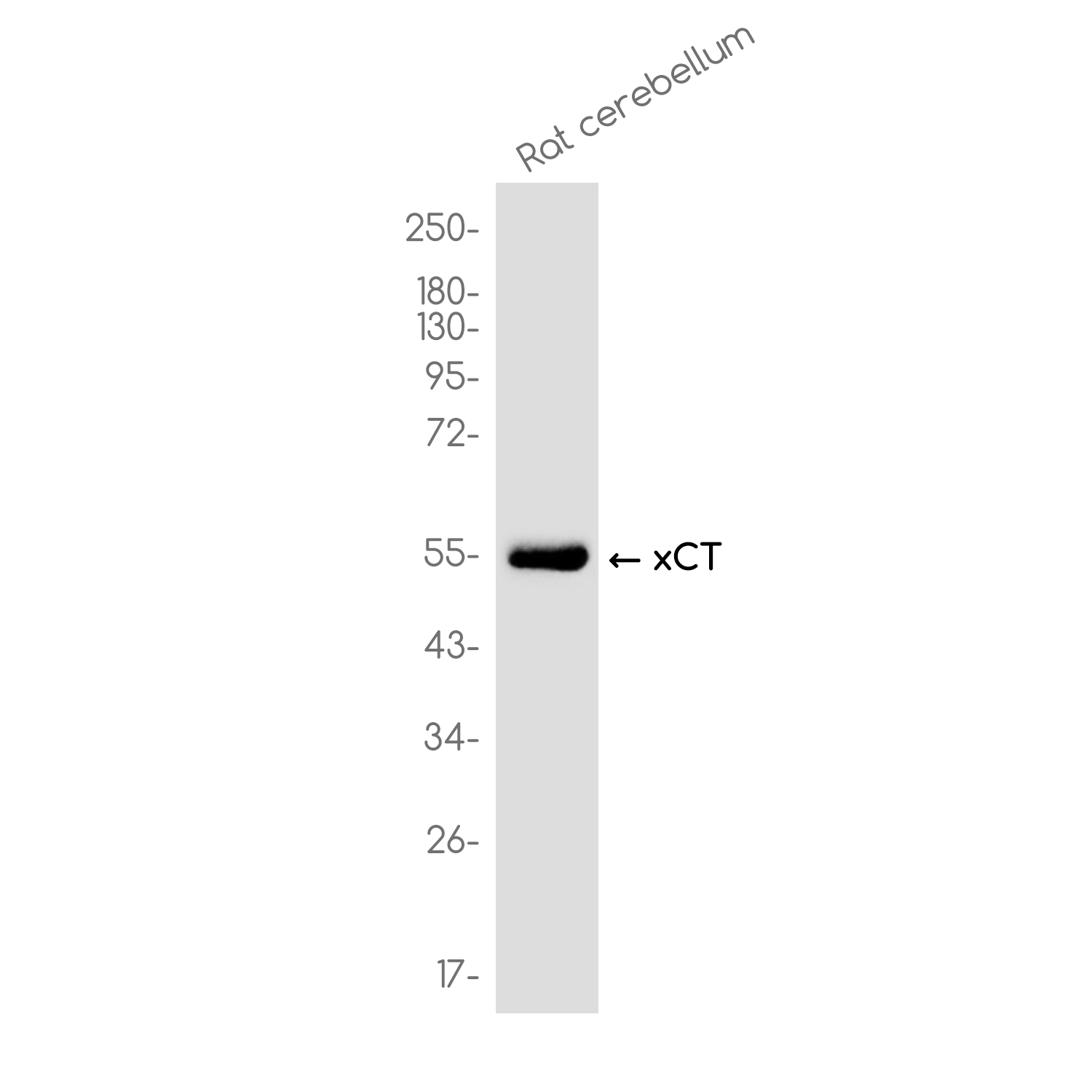

Anti-xCT antibody [R02-3I7] (STJA0036541)
SPECIFICATIONS
ClonalityMonoclonal
HostRabbit
ConjugationUnconjugated
IsotypeIgG
ImmunogenA synthesized peptide derived from human xCT
General Information
| Short Description | Rabbit monoclonal anti-xCT for use in WB and IP in Human, Mouse and Rat samples. Datasheet included with dilution recommendations, and related reagents. |
| Applications | WB/IP |
| Host | Rabbit |
| Reactivity | Human/Mouse/Rat |
| Note | STRICTLY FOR FURTHER SCIENTIFIC RESEARCH USE ONLY (RUO). MUST NOT TO BE USED IN DIAGNOSTIC OR THERAPEUTIC APPLICATIONS. |
Product Properties
| Clonality | Monoclonal |
| Clone ID | R02-3I7 |
| Isotype | IgG |
| Conjugation | Unconjugated |
| Purification | Affinity Chromatography |
| Dilution Range | WB 1:500-1:1000IP 1:50 |
| Formulation | Rabbit IgG in phosphate buffered saline, pH 7.4, 150mM NaCl, 0.02% sodium azide and 50% glycerol. |
| Storage Instruction | Store at 4°C short term. Aliquot and store at-20°C long term. Avoid freeze/thaw cycles. |
Target Information
| Gene Symbol | SLC7A11 |
| Gene ID | 23657 |
| Uniprot ID | XCT_HUMAN |
| Immunogen | A synthesized peptide derived from human xCT |
Additional Info
| Tissue Specificity | Expressed in term placenta and primary term cytotrophoblast. Expressed mainly in the brain, but also in pancreas. |
| Post Translational Modifications | Ubiquitinated by TRIM26.leading to proteasomal degradation. |
| Function | Heterodimer with SLC3A2, that functions as an antiporter by mediating the exchange of extracellular anionic L-cystine and intracellular L-glutamate across the cellular plasma membrane. Provides L-cystine for the maintenance of the redox balance between extracellular L-cystine and L-cysteine and for the maintenance of the intracellular levels of glutathione that is essential for cells protection from oxidative stress. The transport is sodium-independent, electroneutral with a stoichiometry of 1:1, and is drove by the high intracellular concentration of L-glutamate and the intracellular reduction of L-cystine. In addition, mediates the import of L-kynurenine leading to anti-ferroptotic signaling propagation required to maintain L-cystine and glutathione homeostasis. Moreover, mediates N-acetyl-L-cysteine uptake into the placenta leading to subsequently down-regulation of pathways associated with oxidative stress, inflammation and apoptosis. In vitro can also transport L-aspartate. May participate in astrocyte and meningeal cell proliferation during development and can provide neuroprotection by promoting glutathione synthesis and delivery from non-neuronal cells such as astrocytes and meningeal cells to immature neurons. Controls the production of pheomelanin pigment directly. |
| Protein Name | Cystine/Glutamate TransporterAmino Acid Transport System Xc-Calcium Channel Blocker Resistance Protein Ccbr1Solute Carrier Family 7 Member 11Xct |
| Database Links | Reactome: R-HSA-210991Reactome: R-HSA-352230Reactome: R-HSA-9818027 |
| Cellular Localisation | Cell MembraneMulti-Pass Membrane ProteinCell ProjectionMicrovillus MembraneLocalized To The Microvillous Membrane Of The Placental Syncytiotrophoblast |
| Alternative Antibody Names | Anti-Cystine/Glutamate Transporter antibodyAnti-Amino Acid Transport System Xc- antibodyAnti-Calcium Channel Blocker Resistance Protein Ccbr1 antibodyAnti-Solute Carrier Family 7 Member 11 antibodyAnti-Xct antibodyAnti-SLC7A11 antibody |
Information sourced from Uniprot.org