

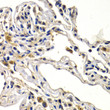


Anti-WNT3A antibody (1-352) (STJ115562)
SPECIFICATIONS
ClonalityPolyclonal
HostRabbit
ConjugationUnconjugated
IsotypeIgG
General Information
| Short Description | Rabbit polyclonal WNT3A (1-352) antibody for use in IHC-P and ELISA in human and rat samples. Datasheet included with dilution recommendations, and related reagents. |
| Applications | IHC-P/ELISA |
| Host | Rabbit |
| Reactivity | Human/Rat |
| Note | STRICTLY FOR FURTHER SCIENTIFIC RESEARCH USE ONLY (RUO). MUST NOT TO BE USED IN DIAGNOSTIC OR THERAPEUTIC APPLICATIONS. |
Product Properties
| Clonality | Polyclonal |
| Isotype | IgG |
| Conjugation | Unconjugated |
| Concentration | Lot specific |
| Purification | Affinity purification |
| Dilution Range | IHC-P:1:50-1:200ELISA:Recommended starting concentration is 1 Mu g/mL. Please optimize the concentration based on your specific assay requirements. |
| Formulation | PBS with 0.02% Sodium Azide, 50% Glycerol, pH 7.3. |
| Storage Instruction | Store at-20°C for up to 1 year from the date of receipt, and avoid repeat freeze-thaw cycles. |
Target Information
| Gene Symbol | WNT3A |
| Gene ID | 89780 |
| Uniprot ID | WNT3A_HUMAN |
| Immunogen Region | 1-352 |
| Immunogen Sequence | MAPLGYFLLLCSLKQALGSY PIWWSLAVGPQYSSLGSQPI LCASIPGLVPKQLRFCRNYV EIMPSVAEGIKIGIQECQHQ FRGRRWNCTTVHDSLAIFGP VLDKATRESAFVHAIASAGV AFAVTRSCAEGTAAICGCSS RHQGSPGKGWKWGGCSEDIE FGGMVSREFADARENRPDAR SAMNRHNNEAGRQAIASHMH LKCKCHGLSGSCEVKTCWWS QPDFRAIGDFLKDKYDSAS |
| Specificity | Recombinant fusion protein containing a sequence corresponding to amino acids 1-352 of human WNT3A (NP_149122.1). |
Additional Info
| Tissue Specificity | Moderately expressed in placenta and at low levels in adult lung, spleen, and prostate. |
| Post Translational Modifications | Palmitoleoylation by PORCN is required for efficient binding to frizzled receptors. Palmitoleoylation is required for proper trafficking to cell surface, vacuolar acidification is critical to release palmitoleoylated WNT3A from WLS in secretory vesicles. Depalmitoleoylated by NOTUM, leading to inhibit Wnt signaling pathway, possibly by promoting disulfide bond formation and oligomerization. Proteolytic processing by TIKI1 and TIKI2 promotes oxidation and formation of large disulfide-bond oligomers, leading to inactivation of WNT3A. Disulfide bonds have critical and distinct roles in secretion and activity. Loss of each conserved cysteine in WNT3A results in high molecular weight oxidized Wnt oligomers, which are formed through inter-Wnt disulfide bonding. |
| Function | Ligand for members of the frizzled family of seven transmembrane receptors (Probable). Functions in the canonical Wnt signaling pathway that results in activation of transcription factors of the TCF/LEF family. Required for normal embryonic mesoderm development and formation of caudal somites. Required for normal morphogenesis of the developing neural tube. Mediates self-renewal of the stem cells at the bottom on intestinal crypts (in vitro). |
| Protein Name | Protein Wnt-3a |
| Database Links | Reactome: R-HSA-201681Reactome: R-HSA-3238698Reactome: R-HSA-373080Reactome: R-HSA-3772470Reactome: R-HSA-4641262Reactome: R-HSA-4641263Reactome: R-HSA-5340588Reactome: R-HSA-9793380Reactome: R-HSA-9832991Reactome: R-HSA-9834899Reactome: R-HSA-9856649 |
| Cellular Localisation | SecretedExtracellular SpaceExtracellular Matrix |
| Alternative Antibody Names | Anti-Protein Wnt-3a antibodyAnti-WNT3A antibody |
Information sourced from Uniprot.org