


Anti-VEGFA antibody (288-299) (STJ72887)
SPECIFICATIONS
ClonalityPolyclonal
HostGoat
ConjugationUnconjugated
IsotypeIgG
General Information
| Short Description | Goat polyclonal antibody anti-VEGFA (288-299) is suitable for use in ELISA, Western Blot and Immunohistochemistry research applications. |
| Applications | Pep-ELISA/WB/IHC |
| Host | Goat |
| Reactivity | Human/Dog/Pig |
| Note | STRICTLY FOR FURTHER SCIENTIFIC RESEARCH USE ONLY (RUO). MUST NOT TO BE USED IN DIAGNOSTIC OR THERAPEUTIC APPLICATIONS. |
Product Properties
| Clonality | Polyclonal |
| Isotype | IgG |
| Conjugation | Unconjugated |
| Concentration | 0.5 mg/mL |
| Purification | Purified from goat serum by ammonium sulphate precipitation followed by antigen affinity chromatography using the immunizing peptide. |
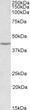
| Dilution Range | Peptide ELISA: antibody detection limit dilution 1:128000.WB: Approx 45kDa band observed in lysates of cell line HEK293 (calculated MW of 45.5kDa according to NP_001020537.2). Recommended concentration: 0.1-0.3µg/ml. Primary incubation was 1 hou |
| Formulation | 0.5 mg/ml in Tris saline, 0.02% sodium azide, pH7.3 with 0.5% bovine serum albumin. NA |
| Storage Instruction | Store at-20°C on receipt and minimise freeze-thaw cycles. |
Target Information
| Gene Symbol | VEGFA |
| Gene ID | 7422 |
| Uniprot ID | VEGFA_HUMAN |
| Accession Number | NP_001020537.2; NP_003367.4; NP_001020538.2; NP_001020539.2; etc. |
| Immunogen Region | 288-299 |
| Immunogen Sequence | RIKPHQGQHIGE |
| Specificity | This antibody is expected to recognize all reported isoforms. |
Additional Info
| Post Translational Modifications | Vascular endothelial growth factor A, long form: Produced by use of an alternative upstream CUG codon and post-translationally processed into the N-terminal N-VEGF form and the C-terminal secreted VEGFA form. |
| Function | N-VEGF: Participates in the induction of key genes involved in the response to hypoxia and in the induction of angiogenesis such as HIF1A. Involved in protecting cells from hypoxia-mediated cell death. VEGFA: Growth factor active in angiogenesis, vasculogenesis and endothelial cell growth. Induces endothelial cell proliferation, promotes cell migration, inhibits apoptosis and induces permeabilization of blood vessels. Binds to the FLT1/VEGFR1 and KDR/VEGFR2 receptors, heparan sulfate and heparin. Binds to the NRP1/neuropilin-1 receptor. Binding to NRP1 initiates a signaling pathway needed for motor neuron axon guidance and cell body migration, including for the caudal migration of facial motor neurons from rhombomere 4 to rhombomere 6 during embryonic development. Also binds the DEAR/FBXW7-AS1 receptor. Isoform VEGF165B: Binds to the KDR receptor but does not activate downstream signaling pathways, does not activate angiogenesis and inhibits tumor growth. |
| Protein Name | Vascular Endothelial Growth Factor A - Long FormL-VegfVascular Permeability FactorVpf Cleaved Into - N-Vegf - Vegfa |
| Database Links | Reactome: R-HSA-114608Reactome: R-HSA-1234158Reactome: R-HSA-194138Reactome: R-HSA-194313Reactome: R-HSA-195399Reactome: R-HSA-4420097 P15692-4Reactome: R-HSA-5218921 P15692-4Reactome: R-HSA-6785807Reactome: R-HSA-8866910Reactome: R-HSA-9679191 P15692-4 |
| Cellular Localisation | N-Vegf: CytoplasmNucleusCytoplasmic In Normoxic Conditions And Localizes To The Nucleus Under Hypoxic ConditionsVegfa: SecretedIsoform L-Vegf189: Endoplasmic ReticulumGolgi ApparatusSecretedExtracellular SpaceExtracellular MatrixIsoform Vegf121: SecretedIsoform Vegf165: SecretedIsoform Vegf189: SecretedCell-Associated After Secretion And Is Bound Avidly By Heparin And The Extracellular MatrixAlthough It May Be Released As A Soluble Form By HeparinHeparinase Or Plasmin |
| Alternative Antibody Names | Anti-Vascular Endothelial Growth Factor A - Long Form antibodyAnti-L-Vegf antibodyAnti-Vascular Permeability Factor antibodyAnti-Vpf Cleaved Into - N-Vegf - Vegfa antibodyAnti-VEGFA antibodyAnti-VEGF antibody |
Information sourced from Uniprot.org