


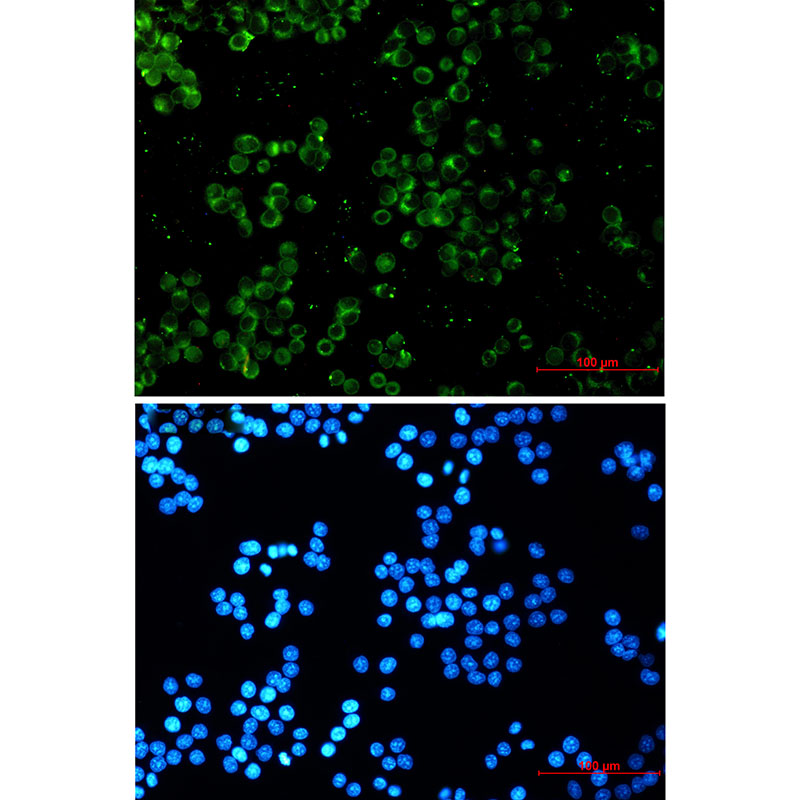
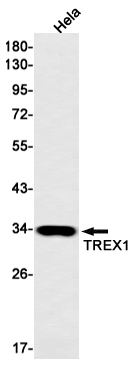
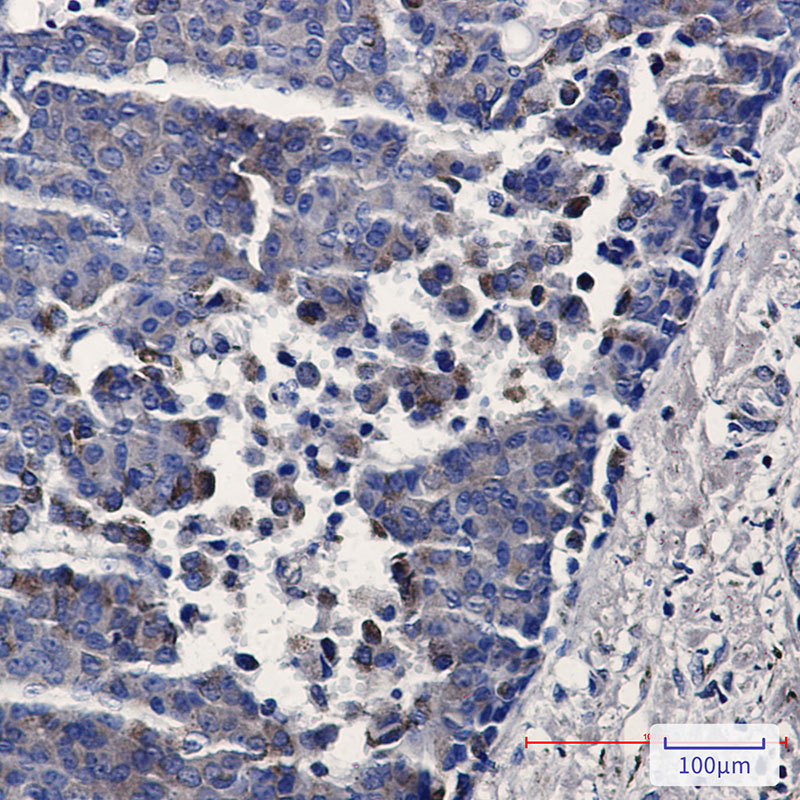

Anti-TREX1 antibody [R05-1D6] (STJA0033838)
SPECIFICATIONS
ClonalityMonoclonal
HostRabbit
ConjugationUnconjugated
IsotypeIgG
ImmunogenRecombinant protein of human TREX1
General Information
| Short Description | Rabbit monoclonal anti-TREX1 for use in WB, IHC-F, IHC-P, ICC and IF in Human samples. Datasheet included with dilution recommendations, and related reagents. |
| Applications | WB/IHC-F/IHC-P/ICC/IF |
| Host | Rabbit |
| Reactivity | Human |
| Note | STRICTLY FOR FURTHER SCIENTIFIC RESEARCH USE ONLY (RUO). MUST NOT TO BE USED IN DIAGNOSTIC OR THERAPEUTIC APPLICATIONS. |
Product Properties
| Clonality | Monoclonal |
| Clone ID | R05-1D6 |
| Isotype | IgG |
| Conjugation | Unconjugated |
| Concentration | 0.3 mg/mL |
| Purification | Affinity Purified |
| Dilution Range | WB 1:500-1:1000IHC 1:50-1:100IF 1:50-1:200 |
| Formulation | 50mM Tris-Glycine (pH 7.4) , 0.15M NaCl, 40% Glycerol, 0.01% Sodium azide and 0.05% BSA |
| Storage Instruction | Store at 4°C short term. Aliquot and store at-20°C long term. Avoid freeze/thaw cycles. |
Target Information
| Gene Symbol | TREX1 |
| Gene ID | 11277 |
| Uniprot ID | TREX1_HUMAN |
| Immunogen | Recombinant protein of human TREX1 |
Additional Info
| Tissue Specificity | Detected in thymus, spleen, liver, brain, heart, small intestine and colon. |
| Post Translational Modifications | Ubiquitinated, but not targeted to proteasomal degradation. Ubiquitination may be important for interaction with UBQLN1. |
| Function | Major cellular 3'-to-5' DNA exonuclease which digests single-stranded DNA (ssDNA) and double-stranded DNA (dsDNA) with mismatched 3' termini. Prevents cell-intrinsic initiation of autoimmunity. Acts by metabolizing DNA fragments from endogenous retroelements, including L1, LTR and SINE elements. Plays a key role in degradation of DNA fragments at cytosolic micronuclei arising from genome instability: its association with the endoplasmic reticulum membrane directs TREX1 to ruptured micronuclei, leading to micronuclear DNA degradation. Micronuclear DNA degradation is required to limit CGAS activation and subsequent inflammation. Unless degraded, these DNA fragments accumulate in the cytosol and activate the cGAS-STING innate immune signaling, leading to the production of type I interferon. Prevents chronic ATM-dependent checkpoint activation, by processing ssDNA polynucleotide species arising from the processing of aberrant DNA replication intermediates. Inefficiently degrades oxidized DNA, such as that generated upon antimicrobial reactive oxygen production or upon absorption of UV light. During GZMA-mediated cell death, contributes to DNA damage in concert with NME1. NME1 nicks one strand of DNA and TREX1 removes bases from the free 3' end to enhance DNA damage and prevent DNA end reannealing and rapid repair. |
| Protein Name | Three-Prime Repair Exonuclease 13'-5' Exonuclease Trex1Deoxyribonuclease IiiDnase Iii |
| Database Links | Reactome: R-HSA-3248023Reactome: R-HSA-3270619 |
| Cellular Localisation | NucleusCytoplasmCytosolEndoplasmic Reticulum MembranePeripheral Membrane ProteinRetained In The Cytoplasm Through The C-Terminal RegionLocalization To The Endoplasmic Reticulum Membrane Is Required To Direct Trex1 To Ruptured MicronucleiIn Response To Dna DamageTranslocates To The Nucleus Where It Is Specifically Recruited To Replication FociTranslocation To The Nucleus Also Occurs During Gzma-Mediated Cell Death |
| Alternative Antibody Names | Anti-Three-Prime Repair Exonuclease 1 antibodyAnti-3'-5' Exonuclease Trex1 antibodyAnti-Deoxyribonuclease Iii antibodyAnti-Dnase Iii antibodyAnti-TREX1 antibody |
Information sourced from Uniprot.org