


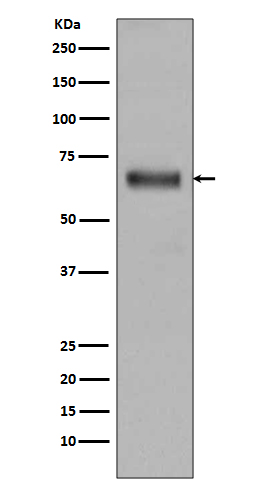
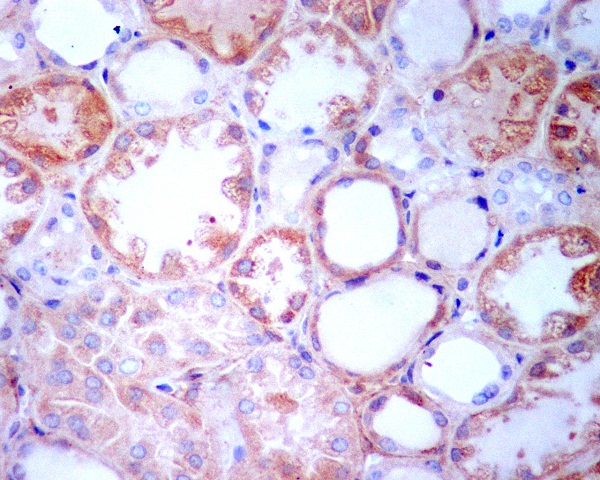

Anti-TGFBI antibody [R07-2D3] (STJA0035729)
SPECIFICATIONS
ClonalityMonoclonal
HostRabbit
ConjugationUnconjugated
IsotypeIgG
ImmunogenA synthesized peptide derived from human TGFBI
General Information
| Short Description | Rabbit monoclonal anti-TGFBI for use in WB, IHC-P, ICC and IF in Human, Mouse and Rat samples. Datasheet included with dilution recommendations, and related reagents. |
| Applications | WB/IHC-P/ICC/IF |
| Host | Rabbit |
| Reactivity | Human/Mouse/Rat |
| Note | STRICTLY FOR FURTHER SCIENTIFIC RESEARCH USE ONLY (RUO). MUST NOT TO BE USED IN DIAGNOSTIC OR THERAPEUTIC APPLICATIONS. |
Product Properties
| Clonality | Monoclonal |
| Clone ID | R07-2D3 |
| Isotype | IgG |
| Conjugation | Unconjugated |
| Purification | Affinity Chromatography |
| Dilution Range | WB 1:500-1:1000IHC 1:50-1:100IF 1:50-1:200 |
| Formulation | Rabbit IgG in phosphate buffered saline, pH 7.4, 150mM NaCl, 0.02% sodium azide and 50% glycerol. |
| Storage Instruction | Store at 4°C short term. Aliquot and store at-20°C long term. Avoid freeze/thaw cycles. |
Target Information
| Gene Symbol | TGFBI |
| Gene ID | 7045 |
| Uniprot ID | BGH3_HUMAN |
| Immunogen | A synthesized peptide derived from human TGFBI |
Additional Info
| Tissue Specificity | Highly expressed in the corneal epithelium. Expressed in heart, placenta, lung, liver, skeletal muscle, kidney and pancreas. |
| Post Translational Modifications | Gamma-carboxylation is controversial. Gamma-carboxyglutamated.gamma-carboxyglutamate residues are formed by vitamin K dependent carboxylation.these residues may be required for binding to calcium. According to a more recent report, does not contain vitamin K-dependent gamma-carboxyglutamate residues. The EMI domain contains 2 expected intradomain disulfide bridges (Cys-49-Cys85 and Cys-84-Cys-97) and one unusual interdomain disulfide bridge to the second FAS1 domain (Cys-74-Cys-339). This arrangement violates the predicted disulfide bridge pattern of an EMI domain. |
| Function | Plays a role in cell adhesion. May play a role in cell-collagen interactions. |
| Protein Name | Transforming Growth Factor-Beta-Induced Protein Ig-H3Beta Ig-H3Kerato-EpithelinRgd-Containing Collagen-Associated ProteinRgd-Cap |
| Database Links | Reactome: R-HSA-977225 |
| Cellular Localisation | SecretedExtracellular SpaceExtracellular MatrixMay Be Associated Both With Microfibrils And With The Cell Surface |
| Alternative Antibody Names | Anti-Transforming Growth Factor-Beta-Induced Protein Ig-H3 antibodyAnti-Beta Ig-H3 antibodyAnti-Kerato-Epithelin antibodyAnti-Rgd-Containing Collagen-Associated Protein antibodyAnti-Rgd-Cap antibodyAnti-TGFBI antibodyAnti-BIGH3 antibody |
Information sourced from Uniprot.org