


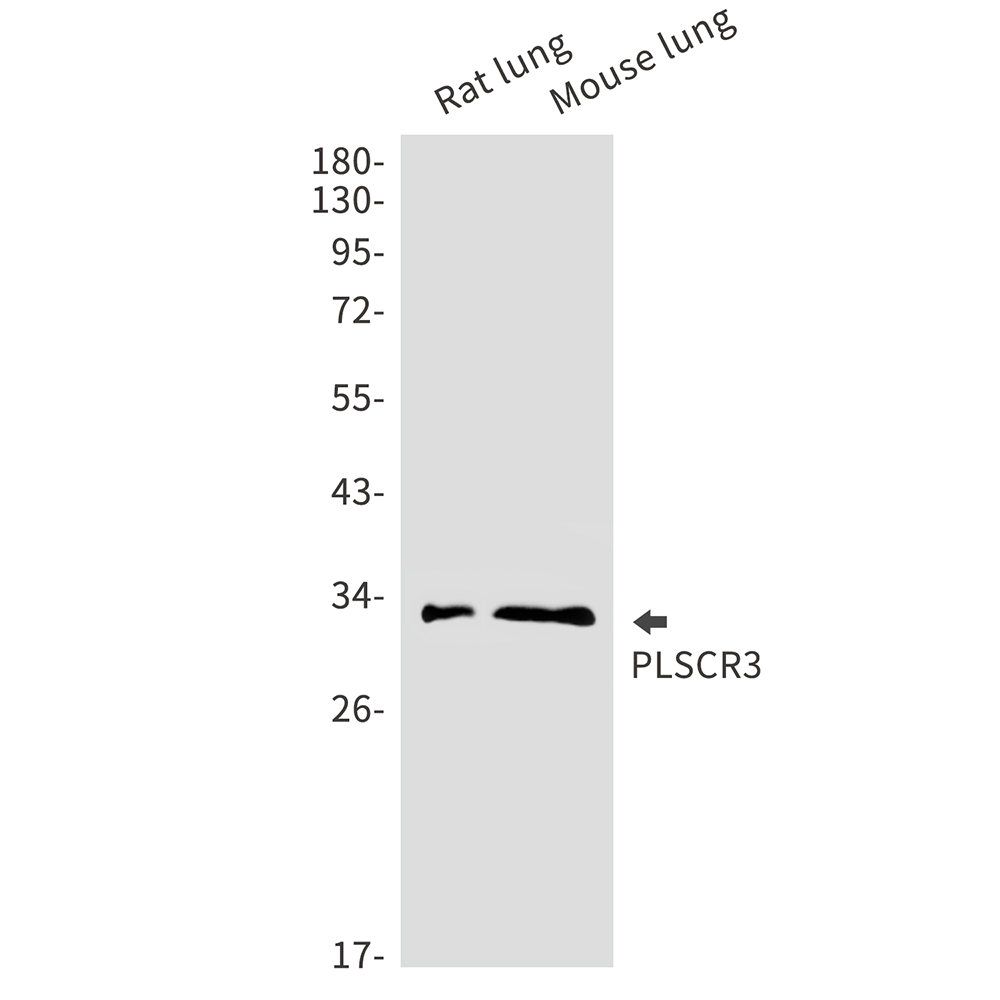
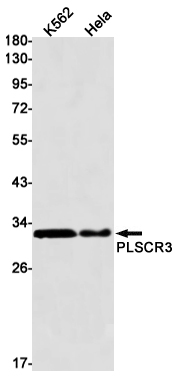

Anti-PLSCR3 antibody [R02-1B9] (STJA0034737)
SPECIFICATIONS
ClonalityMonoclonal
HostRabbit
ConjugationUnconjugated
IsotypeIgG
ImmunogenA synthetic peptide of human PLSCR3
General Information
| Short Description | Rabbit monoclonal anti-PLSCR3 for use in WB in Human, Mouse and Rat samples. Datasheet included with dilution recommendations, and related reagents. |
| Applications | WB |
| Host | Rabbit |
| Reactivity | Human/Mouse/Rat |
| Note | STRICTLY FOR FURTHER SCIENTIFIC RESEARCH USE ONLY (RUO). MUST NOT TO BE USED IN DIAGNOSTIC OR THERAPEUTIC APPLICATIONS. |
Product Properties
| Clonality | Monoclonal |
| Clone ID | R02-1B9 |
| Isotype | IgG |
| Conjugation | Unconjugated |
| Concentration | 0.3 mg/mL |
| Purification | Affinity Purified |
| Dilution Range | WB 1:500-1:1000 |
| Formulation | 50mM Tris-Glycine (pH 7.4) , 0.15M NaCl, 40% Glycerol, 0.01% Sodium azide and 0.05% BSA |
| Storage Instruction | Store at 4°C short term. Aliquot and store at-20°C long term. Avoid freeze/thaw cycles. |
Target Information
| Gene Symbol | PLSCR3 |
| Gene ID | 57048 |
| Uniprot ID | PLS3_HUMAN |
| Immunogen | A synthetic peptide of human PLSCR3 |
Additional Info
| Tissue Specificity | Expressed in heart, placenta, lung, liver, skeletal muscle, kidney, pancreas, spleen, thymus, prostate, uterus, small intestine and peripheral blood lymphocytes. Not detected in testis, brain and liver. |
| Post Translational Modifications | Phosphorylation at Thr-21 by PKC/PRKCD upon apoptotic stimuli enhances phospholipid scramblase activity. Palmitoylation regulates its localization to the cell membrane or the nucleus.trafficking to the cell membrane is dependent upon palmitoylation whereas in the absence of palmitoylation, localizes to the nucleus. |
| Function | Catalyzes calcium-induced ATP-independent rapid bidirectional and non-specific movement of the phospholipids (lipid scrambling or lipid flip-flop) between the inner and outer membrane of the mitochondria. Plays an important role in mitochondrial respiratory function, morphology, and apoptotic response. Mediates the translocation of cardiolipin from the mitochondrial inner membrane to outer membrane enhancing t-Bid induced cytochrome c release and apoptosis. Enhances TNFSF10-induced apoptosis by regulating the distribution of cardiolipin in the mitochondrial membrane resulting in increased release of apoptogenic factors and consequent amplification of the activity of caspases. Regulates cardiolipin de novo biosynthesis and its resynthesis. |
| Protein Name | Phospholipid Scramblase 3Pl Scramblase 3Ca(2+-Dependent Phospholipid Scramblase 3 |
| Database Links | |
| Cellular Localisation | Mitochondrion MembraneSingle-Pass Type Ii Membrane ProteinMitochondrion Inner MembraneNucleusPalmitoylation Regulates Its Localization To The Cell Membrane Or The NucleusTrafficking To The Cell Membrane Is Dependent Upon Palmitoylation Whereas In The Absence Of PalmitoylationLocalizes To The Nucleus |
| Alternative Antibody Names | Anti-Phospholipid Scramblase 3 antibodyAnti-Pl Scramblase 3 antibodyAnti-Ca(2+-Dependent Phospholipid Scramblase 3 antibodyAnti-PLSCR3 antibody |
Information sourced from Uniprot.org