


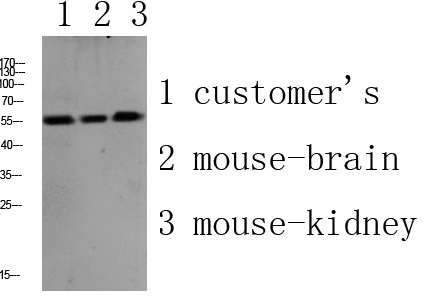
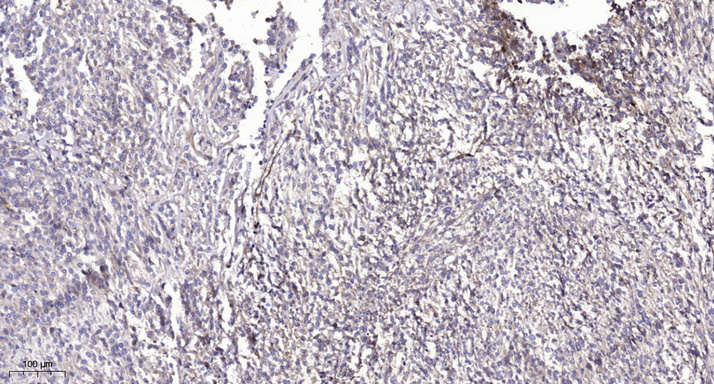

Anti-PLD4 antibody (STJ99651)
SPECIFICATIONS
ClonalityPolyclonal
HostRabbit
ConjugationUnconjugated
IsotypeIgG
ImmunogenSynthesized peptide derived from the human PLD4 Polyclonal
General Information
| Short Description | Rabbit polyclonal anti-5 3 exonuclease PLD4 for use in WB and IHC in Human, Mouse and Rat samples. Datasheet included with dilution recommendations, and related reagents. |
| Applications | WB/IHC |
| Host | Rabbit |
| Reactivity | Human/Mouse/Rat |
| Note | STRICTLY FOR FURTHER SCIENTIFIC RESEARCH USE ONLY (RUO). MUST NOT TO BE USED IN DIAGNOSTIC OR THERAPEUTIC APPLICATIONS. |
Product Properties
| Clonality | Polyclonal |
| Isotype | IgG |
| Conjugation | Unconjugated |
| Concentration | 1 mg/mL |
| Purification | The antibody was affinity-purified from rabbit antiserum by affinity-chromatography using epitope-specific immunogen. |
| Dilution Range | WB 1:500-2000IHC-P 1:50-300 |
| Formulation | Liquid in PBS containing 50% Glycerol, 0.5% BSA and 0.02% Sodium Azide. |
| Storage Instruction | Store at-20°C for up to 1 year from the date of receipt, and avoid repeat freeze-thaw cycles. |
Target Information
| Gene Symbol | PLD4 |
| Gene ID | 122618 |
| Uniprot ID | PLD4_HUMAN |
| Immunogen | Synthesized peptide derived from the human PLD4 Polyclonal |
| Specificity | This antibody detects endogenous levels of PLD4. |
Additional Info
| Post Translational Modifications | Highly N-glycosylated. |
| Function | 5'->3' exonuclease that hydrolyzes the phosphodiester bond of single-stranded DNA (ssDNA) and RNA molecules to form nucleoside 3'-monophosphates and 5'-end 5'-hydroxy deoxyribonucleotide/ribonucleotide fragments. Partially redundant with PLD3, can cleave all four nucleotides displaying higher efficiency for ssDNA and RNA fragments initiated with uridine and guanosine residues and lower efficiency for cytidine-initiated substrates. As a result, it does not always degrade polynucleotides to the single nucleotide level, it can stall at specific sites sparing certain fragments from exonucleolytic degradation. Processes self and pathogenic ssDNA and RNA molecules that reach the endolysosomal compartment via phagocytosis or autophagy and may serve as 'danger' signals for recognition by innate immune receptors such as toll-like receptors (TLRs). Degrades mitochondrial CpG-rich ssDNA fragments to prevent TLR9 activation and autoinflammatory response, but it can cleave viral RNA to generate ligands for TLR7 activation and initiate antiviral immune responses. In plasmacytoid dendritic cells, it cooperates with endonuclease RNASET2 to release 2',3'-cyclic guanosine monophosphate (2',3'-cGMP), a potent stimulatory ligand for TLR7. Produces 2',3'-cGMPs and cytidine-rich RNA fragments that occupy TLR7 ligand-binding pockets and trigger a signaling-competent state. Can exert polynucleotide phosphatase activity toward 5'-phosphorylated ssDNA substrates although at a slow rate. Transphosphatidylase that catalyzes the exchange with R to S stereo-inversion of the glycerol moiety between (S,R)-lysophosphatidylglycerol (LPG) and monoacylglycerol (MAG) substrates to yield (S,S)-bis(monoacylglycero)phosphate (BMP). Can synthesize a variety of (S,S)-BMPs representing the main phospholipid constituent of lysosomal intralumenal vesicle (ILV) membranes that bind acid hydrolases for lipid degradation. Regulates the homeostasis and interorganellar communication of the endolysosomal system with an overall impact on cellular removal of dysfunctional organelles via autophagy as well as proper protein and lipid turnover. May play a role in myotube formation in response to ER stress. |
| Protein Name | 5'-3' Exonuclease Pld4(S -S-Bis(Monoacylglycerophosphate Synthase Pld4Phospholipase D Family Member 4Phospholipase D4 |
| Database Links | Reactome: R-HSA-1483148Reactome: R-HSA-1855204Reactome: R-HSA-2029485 |
| Cellular Localisation | Endoplasmic Reticulum MembraneSingle-Pass Type Ii Membrane ProteinGolgi ApparatusTrans-Golgi Network MembraneNucleusEarly EndosomeCytoplasmic VesiclePhagosomeLysosomeActivation Of Microglia Induces Translocation Of Pld4 From The Nucleus To The Phagosomes |
| Alternative Antibody Names | Anti-5'-3' Exonuclease Pld4 antibodyAnti-(S -S-Bis(Monoacylglycerophosphate Synthase Pld4 antibodyAnti-Phospholipase D Family Member 4 antibodyAnti-Phospholipase D4 antibodyAnti-PLD4 antibodyAnti-C14orf175 antibodyAnti-UNQ2488 antibodyAnti-PRO5775 antibody |
Information sourced from Uniprot.org