


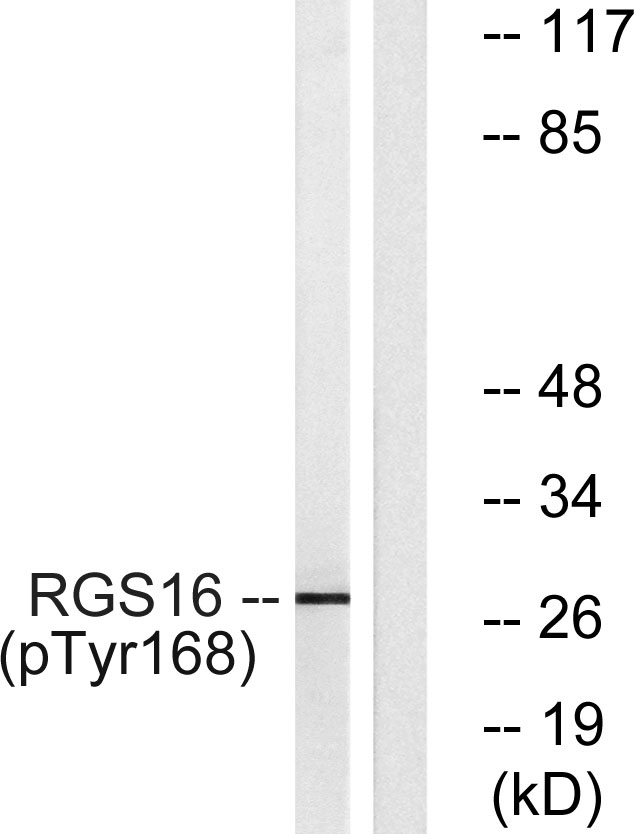
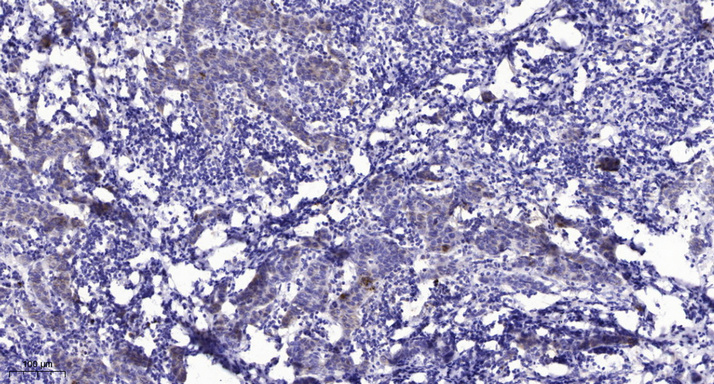


Anti-Phospho-RGS16-Tyr168 antibody (141-190 aa) (STJ90557)
SPECIFICATIONS
ClonalityPolyclonal
HostRabbit
ConjugationUnconjugated
IsotypeIgG
ImmunogenThe antiserum was produced against synthesized peptide derived from the human RGS16 around the phosphorylation site of Tyr168 at the amino acid range 141-190
General Information
| Short Description | Rabbit polyclonal anti-Phospho-Regulator of G-protein signaling 16-Tyr168 (141-190 aa) for use in WB, ELISA and IHC in Human, Mouse, Rat and Monkey samples. Datasheet included with dilution recommendations, and related reagents. |
| Applications | WB/ELISA/IHC |
| Host | Rabbit |
| Reactivity | Human/Mouse/Rat/Monkey |
| Note | STRICTLY FOR FURTHER SCIENTIFIC RESEARCH USE ONLY (RUO). MUST NOT TO BE USED IN DIAGNOSTIC OR THERAPEUTIC APPLICATIONS. |
Product Properties
| Clonality | Polyclonal |
| Isotype | IgG |
| Conjugation | Unconjugated |
| Concentration | 1 mg/mL |
| Purification | The antibody was affinity-purified from rabbit antiserum by affinity-chromatography using epitope-specific immunogen. |
| Dilution Range | WB 1:500-2000IHC-P 1:50-300ELISA 2000-20000 |
| Formulation | Liquid in PBS containing 50% Glycerol, 0.5% BSA and 0.02% Sodium Azide. |
| Storage Instruction | Store at-20°C for up to 1 year from the date of receipt, and avoid repeat freeze-thaw cycles. |
Target Information
| Gene Symbol | RGS16 |
| Gene ID | 6004 |
| Uniprot ID | RGS16_HUMAN |
| Immunogen | The antiserum was produced against synthesized peptide derived from the human RGS16 around the phosphorylation site of Tyr168 at the amino acid range 141-190 |
| Immunogen Region | 141-190 aa |
| Specificity | Phospho-RGS16 (Y168) Polyclonal Antibody detects endogenous levels of RGS16 protein only when phosphorylated at Y168. |
Additional Info
| Post Translational Modifications | Palmitoylated on Cys-2 and/or Cys-12. Phosphorylated. Phosphorylation at Tyr-168 by EGFR enhances GTPase accelerating (GAP) activity toward GNAI1. |
| Function | Regulates G protein-coupled receptor signaling cascades. Inhibits signal transduction by increasing the GTPase activity of G protein alpha subunits, thereby driving them into their inactive GDP-bound form. Plays an important role in the phototransduction cascade by regulating the lifetime and effective concentration of activated transducin alpha. May regulate extra and intracellular mitogenic signals. |
| Protein Name | Regulator Of G-Protein Signaling 16Rgs16A28-Rgs14pRetinal-Specific RgsRgs-RHrgs-RRetinally Abundant Regulator Of G-Protein Signaling |
| Database Links | Reactome: R-HSA-416476Reactome: R-HSA-418594Reactome: R-HSA-418597 |
| Cellular Localisation | MembraneLipid-Anchor |
| Alternative Antibody Names | Anti-Regulator Of G-Protein Signaling 16 antibodyAnti-Rgs16 antibodyAnti-A28-Rgs14p antibodyAnti-Retinal-Specific Rgs antibodyAnti-Rgs-R antibodyAnti-Hrgs-R antibodyAnti-Retinally Abundant Regulator Of G-Protein Signaling antibodyAnti-RGS16 antibodyAnti-RGSR antibody |
Information sourced from Uniprot.org