


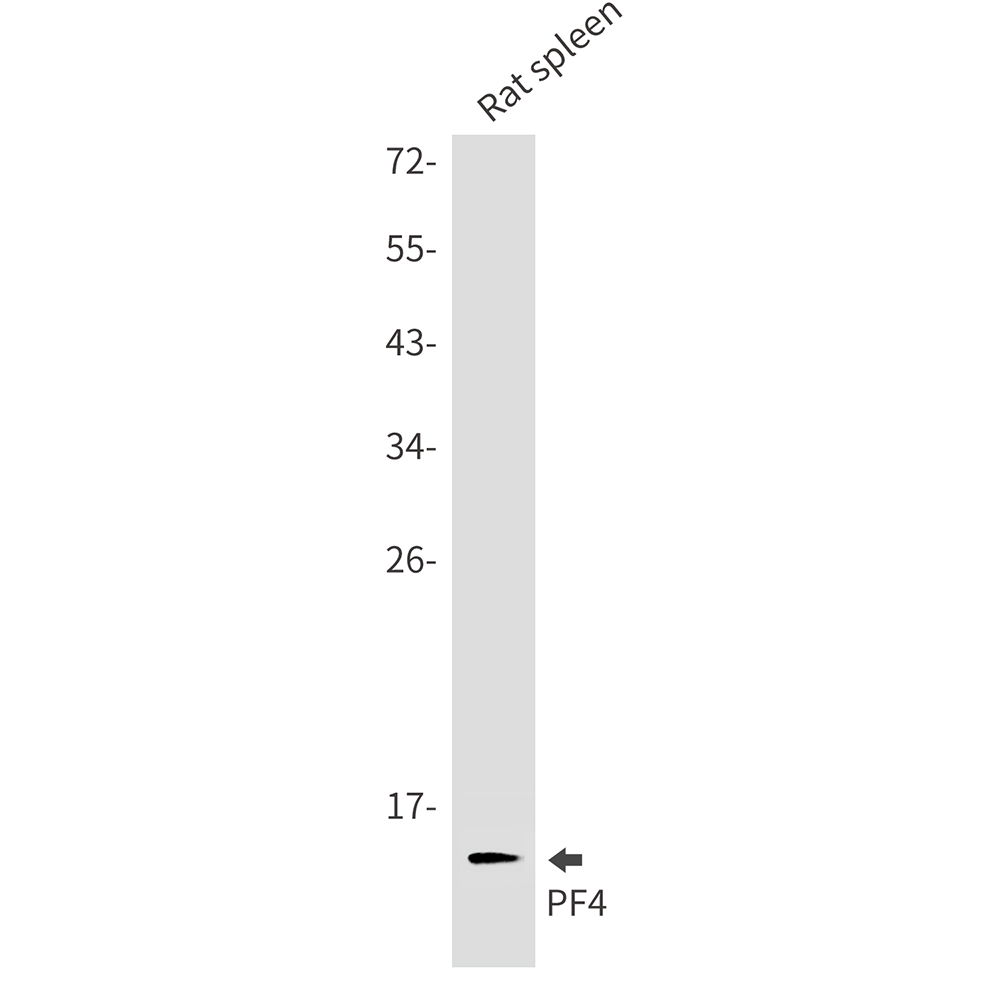
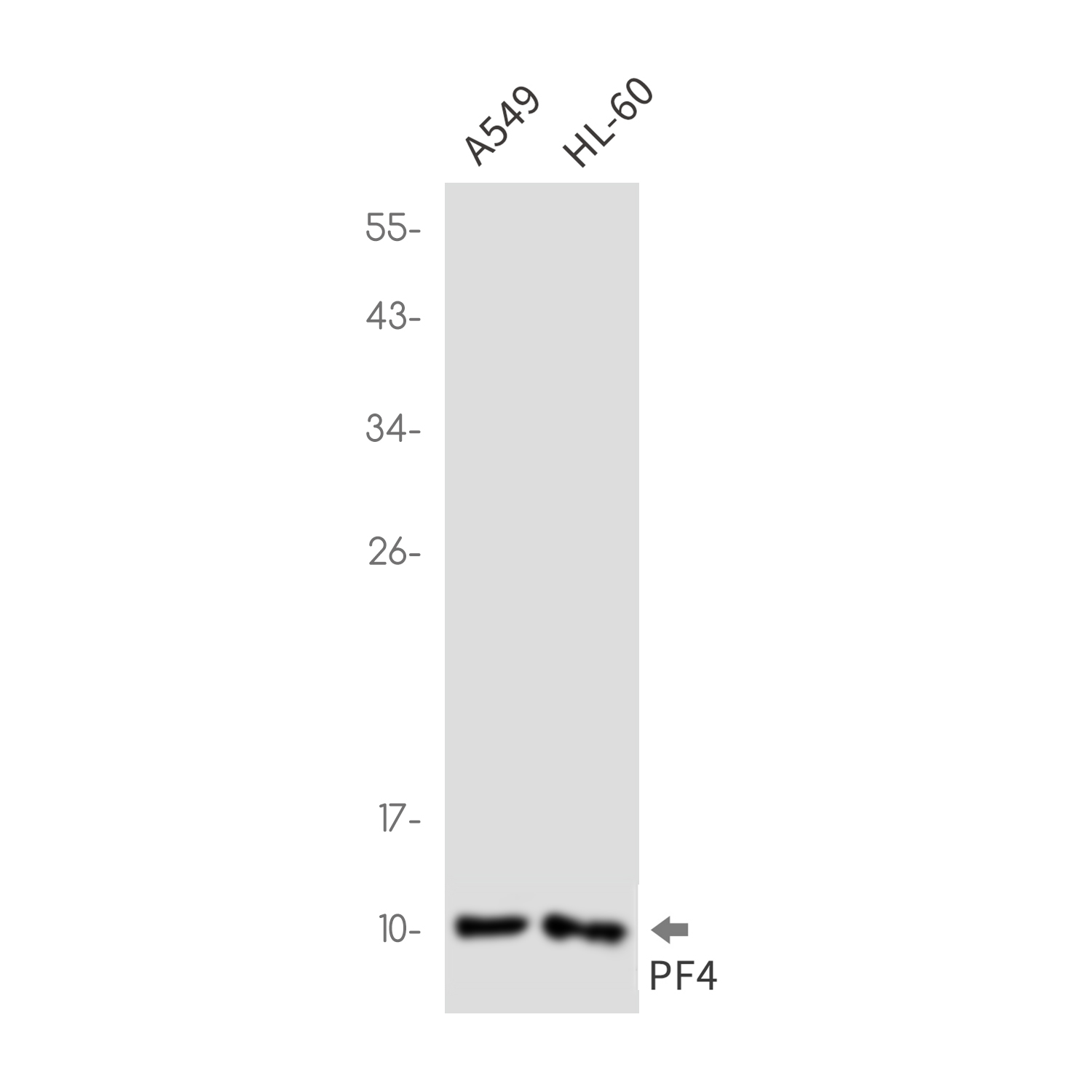


Anti-PF4 antibody (87-100 aa) [R02-1E3] (STJA0012533)
SPECIFICATIONS
ClonalityMonoclonal
HostRabbit
ConjugationUnconjugated
IsotypeIgG
ImmunogenA synthetic peptide of human PF4
General Information
| Short Description | Rabbit monoclonal anti-PF4 (87-100 aa) for use in WB, IHC-P and IP in Human and Rat samples. Datasheet included with dilution recommendations, and related reagents. |
| Applications | WB/IHC-P/IP |
| Host | Rabbit |
| Reactivity | Human/Rat |
| Note | STRICTLY FOR FURTHER SCIENTIFIC RESEARCH USE ONLY (RUO). MUST NOT TO BE USED IN DIAGNOSTIC OR THERAPEUTIC APPLICATIONS. |
Product Properties
| Clonality | Monoclonal |
| Clone ID | R02-1E3 |
| Isotype | IgG |
| Conjugation | Unconjugated |
| Concentration | 0.3 mg/mL |
| Purification | Affinity Purified |
| Dilution Range | WB 1:500-1:1000IHC 1:50-1:100IP 1:20 |
| Formulation | 50mM Tris-Glycine (pH7.4) , 0.15M NaCl, 40% Glycerol, 0.01% Sodium azide and 0.05% BSA |
| Storage Instruction | Store at 4°C short term. Aliquot and store at-20°C long term. Avoid freeze/thaw cycles. |
Target Information
| Gene Symbol | PF4 |
| Gene ID | 5196 |
| Uniprot ID | PLF4_HUMAN |
| Immunogen | A synthetic peptide of human PF4 |
| Immunogen Region | 87-100 aa |
Additional Info
| Function | Chemokine released during platelet aggregation that plays a role in different biological processes including hematopoiesis, cell proliferation, differentiation, and activation. Acts via different functional receptors including CCR1, CXCR3A or CXCR3B. Upon interaction with CXCR3A receptor, induces activated T-lymphocytes migration mediated via downstream Ras/extracellular signal-regulated kinase (ERK) signaling. Neutralizes the anticoagulant effect of heparin by binding more strongly to heparin than to the chondroitin-4-sulfate chains of the carrier molecule. Plays a role in the inhibition of hematopoiesis and in the maintenance of hematopoietic stem cell (HSC) quiescence. Chemotactic for neutrophils and monocytes via CCR1. Inhibits endothelial cell proliferation. In cooperation with toll-like receptor 8/TLR8, induces chromatin remodeling and activates inflammatory gene expression via the TBK1-IRF5 axis. In addition, induces myofibroblast differentiation and collagen synthesis in different precursor cells, including endothelial cells, by stimulating endothelial-to-mesenchymal transition. Interacts with thrombomodulin/THBD to enhance the activation of protein C and thus potentiates its anticoagulant activity. |
| Protein Name | Platelet Factor 4Pf-4C-X-C Motif Chemokine 4IroplactOncostatin-A Cleaved Into - Platelet Factor 4 - Short FormEndothelial Cell Growth Inhibitor |
| Database Links | Reactome: R-HSA-114608Reactome: R-HSA-140875Reactome: R-HSA-202733Reactome: R-HSA-380108Reactome: R-HSA-418594Reactome: R-HSA-8936459 |
| Cellular Localisation | Secreted |
| Alternative Antibody Names | Anti-Platelet Factor 4 antibodyAnti-Pf-4 antibodyAnti-C-X-C Motif Chemokine 4 antibodyAnti-Iroplact antibodyAnti-Oncostatin-A Cleaved Into - Platelet Factor 4 - Short Form antibodyAnti-Endothelial Cell Growth Inhibitor antibodyAnti-PF4 antibodyAnti-CXCL4 antibodyAnti-SCYB4 antibody |
Information sourced from Uniprot.org