


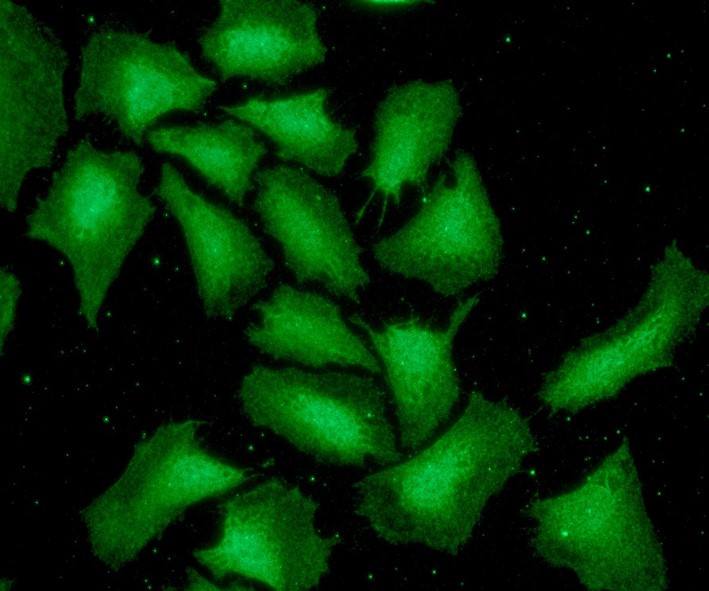
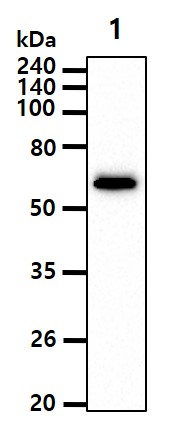
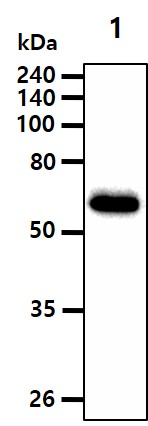
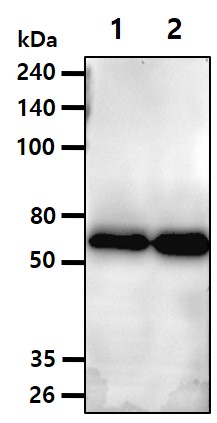
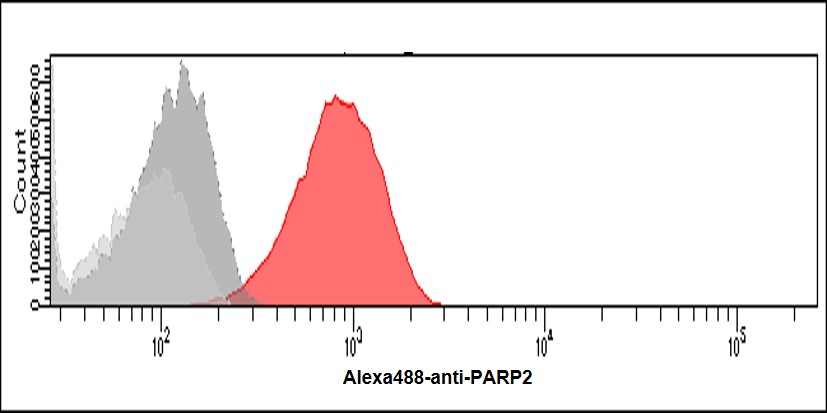

Anti-PARP2 antibody (233-583aa) [AT29G4] (STJA0041951)
SPECIFICATIONS
ClonalityMonoclonal
HostMouse
ConjugationUnconjugated
IsotypeIgG2bk
ImmunogenRecombinant human PARP2 (233-583aa) purified from E. coli
General Information
| Short Description | Mouse monoclonal anti-PARP2 (233-583aa) for use in ELISA, WB, ICC, IF and FACS in Human samples. Datasheet included with dilution recommendations, and related reagents. |
| Applications | ELISA/WB/ICC/IF/FACS |
| Host | Mouse |
| Reactivity | Human |
| Note | STRICTLY FOR FURTHER SCIENTIFIC RESEARCH USE ONLY (RUO). MUST NOT TO BE USED IN DIAGNOSTIC OR THERAPEUTIC APPLICATIONS. |
Product Properties
| Clonality | Monoclonal |
| Clone ID | AT29G4 |
| Isotype | IgG2bk |
| Conjugation | Unconjugated |
| Concentration | 1 mg/mL |
| Purification | By protein-A affinity chromatography |
| Formulation | Liquid in phosphate-Buffered Saline (pH 7.4) with 0.02% Sodium Azide, 10% Glycerol |
| Storage Instruction | For short term storage, keep at +2C to +8C for up to 1 week. For long term storage, aliquot and store at-20C, and avoid repeat freeze-thaw cycles. |
Target Information
| Gene Symbol | PARP2 |
| Gene ID | 10038 |
| Uniprot ID | PARP2_HUMAN |
| Accession Number | NP_005475 |
| Immunogen | Recombinant human PARP2 (233-583aa) purified from E. coli |
| Immunogen Region | 233-583aa |
Additional Info
| Tissue Specificity | Widely expressed, mainly in actively dividing tissues. The highest levels are in the brain, heart, pancreas, skeletal muscle and testis.also detected in kidney, liver, lung, placenta, ovary and spleen.levels are low in leukocytes, colon, small intestine, prostate and thymus. |
| Post Translational Modifications | Auto poly-ADP-ribosylated on serine residues, leading to dissociation of the PARP2-HPF1 complex from chromatin. Poly-ADP-ribosylated by PARP1. Acetylation reduces DNA binding and enzymatic activity. Proteolytically cleaved by caspase-8 (CASP8) in response to apoptosis, leading to its inactivation. |
| Function | Poly-ADP-ribosyltransferase that mediates poly-ADP-ribosylation of proteins and plays a key role in DNA repair. Mediates glutamate, aspartate or serine ADP-ribosylation of proteins: the ADP-D-ribosyl group of NAD(+) is transferred to the acceptor carboxyl group of target residues and further ADP-ribosyl groups are transferred to the 2'-position of the terminal adenosine moiety, building up a polymer with an average chain length of 20-30 units. Serine ADP-ribosylation of proteins constitutes the primary form of ADP-ribosylation of proteins in response to DNA damage. Mediates glutamate and aspartate ADP-ribosylation of target proteins in absence of HPF1. Following interaction with HPF1, catalyzes serine ADP-ribosylation of target proteins.HPF1 conferring serine specificity by completing the PARP2 active site. PARP2 initiates the repair of double-strand DNA breaks: recognizes and binds DNA breaks within chromatin and recruits HPF1, licensing serine ADP-ribosylation of target proteins, such as histones, thereby promoting decompaction of chromatin and the recruitment of repair factors leading to the reparation of DNA strand breaks. HPF1 initiates serine ADP-ribosylation but restricts the polymerase activity of PARP2 in order to limit the length of poly-ADP-ribose chains. Specifically mediates formation of branched poly-ADP-ribosylation. Branched poly-ADP-ribose chains are specifically recognized by some factors, such as APLF. In addition to proteins, also able to ADP-ribosylate DNA: preferentially acts on 5'-terminal phosphates at DNA strand breaks termini in nicked duplex. |
| Protein Name | Poly Adp-Ribose Polymerase 2Parp-2Hparp-2Adp-Ribosyltransferase Diphtheria Toxin-Like 2Artd2Dna Adp-Ribosyltransferase Parp2Nad(+ Adp-Ribosyltransferase 2Adprt-2PolyAdp-Ribose Synthase 2Padprt-2Protein Poly-Adp-Ribosyltransferase Parp2 |
| Database Links | Reactome: R-HSA-110362Reactome: R-HSA-5685939Reactome: R-HSA-5696394Reactome: R-HSA-5696395Reactome: R-HSA-5696400 |
| Cellular Localisation | NucleusChromosomeRecruited To Dna Damage Sites In A Parp1-Dependent Process: Recognizes And Binds Poly-Adp-Ribose Chains Produced By Parp1 At Dna Damage Sites Via Its N-TerminusLeading To Its Recruitment |
| Alternative Antibody Names | Anti-Poly Adp-Ribose Polymerase 2 antibodyAnti-Parp-2 antibodyAnti-Hparp-2 antibodyAnti-Adp-Ribosyltransferase Diphtheria Toxin-Like 2 antibodyAnti-Artd2 antibodyAnti-Dna Adp-Ribosyltransferase Parp2 antibodyAnti-Nad(+ Adp-Ribosyltransferase 2 antibodyAnti-Adprt-2 antibodyAnti-PolyAdp-Ribose Synthase 2 antibodyAnti-Padprt-2 antibodyAnti-Protein Poly-Adp-Ribosyltransferase Parp2 antibodyAnti-PARP2 antibodyAnti-ADPRT2 antibodyAnti-ADPRTL2 antibody |
Information sourced from Uniprot.org