
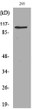


Anti-NRP1 antibody (321-370 aa) (STJ96817)
SPECIFICATIONS
ClonalityPolyclonal
HostRabbit
ConjugationUnconjugated
IsotypeIgG
ImmunogenThe antiserum was produced against synthesized peptide derived from the Internal region of human NRP1 at the amino acid range 321-370
General Information
| Short Description | Rabbit polyclonal anti-Neuropilin-1 (321-370 aa) for use in WB, IHC, IF and ELISA in Human, Mouse and Rat samples. Datasheet included with dilution recommendations, and related reagents. |
| Applications | WB/IHC/IF/ELISA |
| Host | Rabbit |
| Reactivity | Human/Mouse/Rat |
| Note | STRICTLY FOR FURTHER SCIENTIFIC RESEARCH USE ONLY (RUO). MUST NOT TO BE USED IN DIAGNOSTIC OR THERAPEUTIC APPLICATIONS. |
Product Properties
| Clonality | Polyclonal |
| Isotype | IgG |
| Conjugation | Unconjugated |
| Concentration | 1 mg/mL |
| Purification | The antibody was affinity-purified from rabbit antiserum by affinity-chromatography using epitope-specific immunogen. |
| Dilution Range | WB 1:500-1:2000IHC-P 1:100-1:300ELISA 1:20000IF 1:50-200 |
| Formulation | Liquid in PBS containing 50% Glycerol, 0.5% BSA and 0.02% Sodium Azide. |
| Storage Instruction | Store at-20°C for up to 1 year from the date of receipt, and avoid repeat freeze-thaw cycles. |
Target Information
| Gene Symbol | NRP1 |
| Gene ID | 8829 |
| Uniprot ID | NRP1_HUMAN |
| Immunogen | The antiserum was produced against synthesized peptide derived from the Internal region of human NRP1 at the amino acid range 321-370 |
| Immunogen Region | 321-370 aa |
| Specificity | Neuropilin Polyclonal Antibody detects endogenous levels of Neuropilin protein. |
Additional Info
| Function | Cell-surface receptor involved in the development of the cardiovascular system, in angiogenesis, in the formation of certain neuronal circuits and in organogenesis outside the nervous system. Mediates the chemorepulsant activity of semaphorins. Recognizes a C-end rule (CendR) motif R/KXXR/K on its ligands which causes cellular internalization and vascular leakage. It binds to semaphorin 3A, the PLGF-2 isoform of PGF, the VEGF165 isoform of VEGFA and VEGFB. Coexpression with KDR results in increased VEGF165 binding to KDR as well as increased chemotaxis. Regulates VEGF-induced angiogenesis. Binding to VEGFA initiates a signaling pathway needed for motor neuron axon guidance and cell body migration, including for the caudal migration of facial motor neurons from rhombomere 4 to rhombomere 6 during embryonic development. Regulates mitochondrial iron transport via interaction with ABCB8/MITOSUR. (Microbial infection) Acts as a host factor for human coronavirus SARS-CoV-2 infection. Recognizes and binds to CendR motif RRAR on SARS-CoV-2 spike protein S1 which enhances SARS-CoV-2 infection. Isoform 2: Binds VEGF-165 and may inhibit its binding to cells. May induce apoptosis by sequestering VEGF-165. May bind as well various members of the semaphorin family. Its expression has an averse effect on blood vessel number and integrity. |
| Protein Name | Neuropilin-1Vascular Endothelial Cell Growth Factor 165 ReceptorCd Antigen Cd304 |
| Database Links | Reactome: R-HSA-194306Reactome: R-HSA-376176Reactome: R-HSA-399954Reactome: R-HSA-399955Reactome: R-HSA-399956Reactome: R-HSA-445144Reactome: R-HSA-447041Reactome: R-HSA-9694614 |
| Cellular Localisation | Isoform 2: SecretedMitochondrion MembraneSingle-Pass Type I Membrane ProteinCell MembraneCytoplasm |
| Alternative Antibody Names | Anti-Neuropilin-1 antibodyAnti-Vascular Endothelial Cell Growth Factor 165 Receptor antibodyAnti-Cd Antigen Cd304 antibodyAnti-NRP1 antibodyAnti-NRP antibodyAnti-VEGF165R antibody |
Information sourced from Uniprot.org