


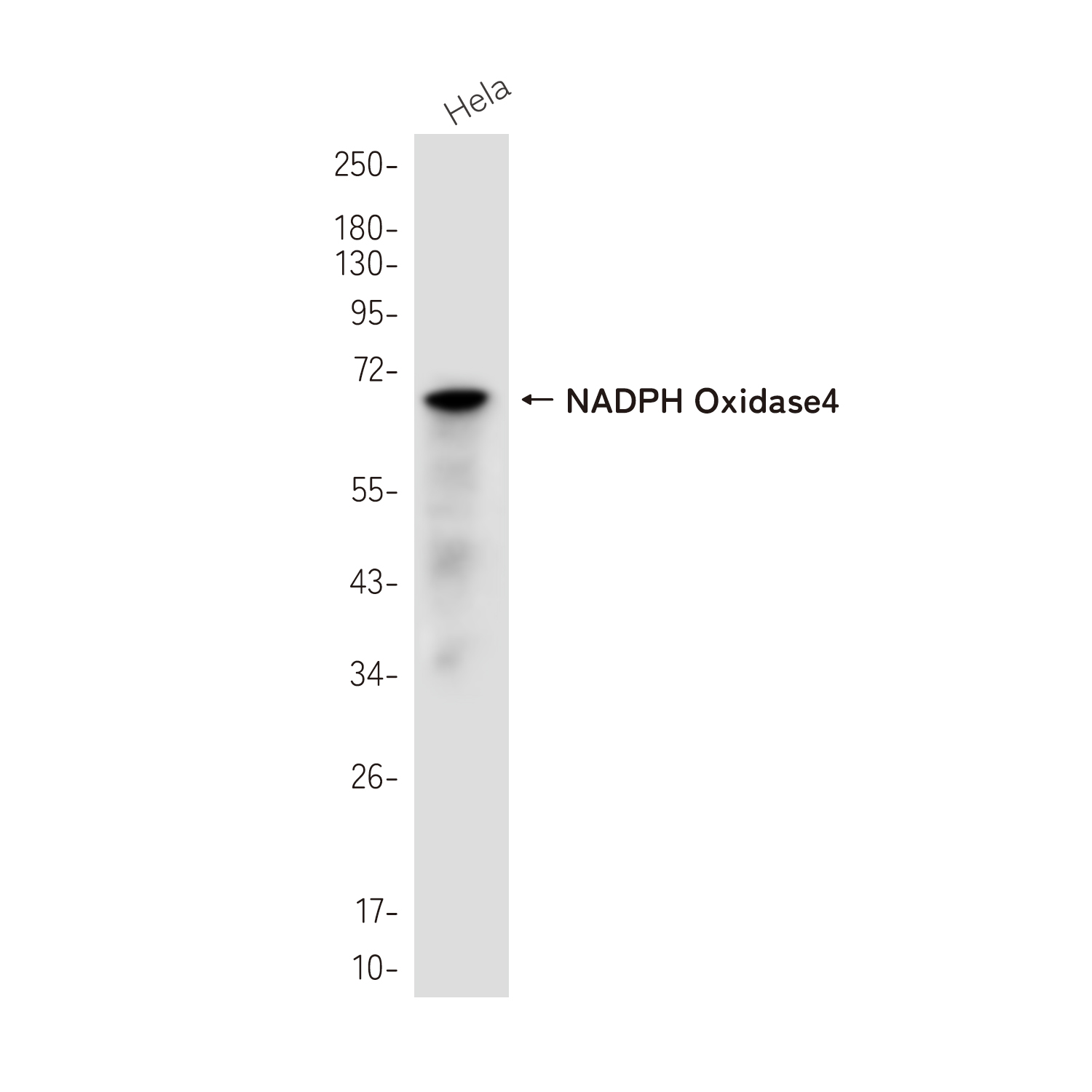
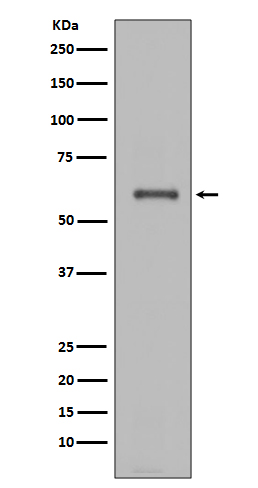
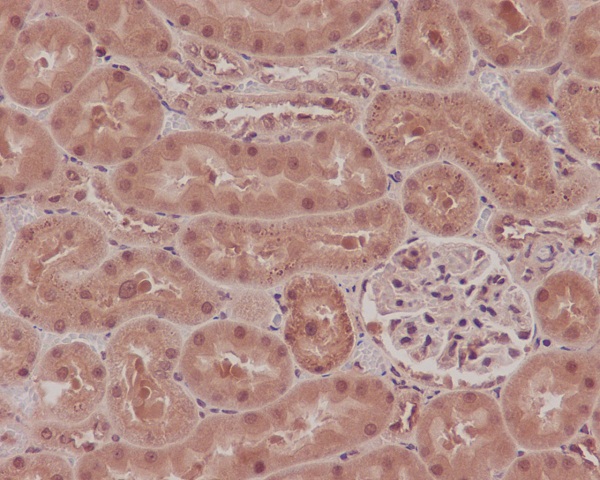


Anti-NADPH Oxidase 4 antibody [R02-7B4] (STJA0035849)
SPECIFICATIONS
ClonalityMonoclonal
HostRabbit
ConjugationUnconjugated
IsotypeIgG
ImmunogenA synthesized peptide derived from human NOX4
General Information
| Short Description | Rabbit monoclonal anti-NADPH Oxidase 4 for use in WB, IHC-P, ICC, IF and IP in Human, Mouse and Rat samples. Datasheet included with dilution recommendations, and related reagents. |
| Applications | WB/IHC-P/ICC/IF/IP |
| Host | Rabbit |
| Reactivity | Human/Mouse/Rat |
| Note | STRICTLY FOR FURTHER SCIENTIFIC RESEARCH USE ONLY (RUO). MUST NOT TO BE USED IN DIAGNOSTIC OR THERAPEUTIC APPLICATIONS. |
Product Properties
| Clonality | Monoclonal |
| Clone ID | R02-7B4 |
| Isotype | IgG |
| Conjugation | Unconjugated |
| Purification | Affinity Chromatography |
| Dilution Range | WB 1:500-1:1000IHC 1:50-1:100IF 1:50-1:200IP 1:50 |
| Formulation | Rabbit IgG in phosphate buffered saline, pH 7.4, 150mM NaCl, 0.02% sodium azide and 50% glycerol. |
| Storage Instruction | Store at 4°C short term. Aliquot and store at-20°C long term. Avoid freeze/thaw cycles. |
Target Information
| Gene Symbol | NOX4 |
| Gene ID | 50507 |
| Uniprot ID | NOX4_HUMAN |
| Immunogen | A synthesized peptide derived from human NOX4 |
Additional Info
| Tissue Specificity | Expressed by distal tubular cells in kidney cortex and in endothelial cells (at protein level). Widely expressed. Strongly expressed in kidney and to a lower extent in heart, adipocytes, hepatoma, endothelial cells, skeletal muscle, brain, several brain tumor cell lines and airway epithelial cells. |
| Post Translational Modifications | Deubiquitinated by USP19. Isoform 4: N-glycosylated and glycosylation is required for its proper function. Isoform 3: N-glycosylated. |
| Function | NADPH oxidase that catalyzes predominantly the reduction of oxygen to H2O2. Can also catalyze to a smaller extent, the reduction of oxygen to superoxide. May function as an oxygen sensor regulating the KCNK3/TASK-1 potassium channel and HIF1A activity. May regulate insulin signaling cascade. May play a role in apoptosis, bone resorption and lipolysaccharide-mediated activation of NFKB. May produce superoxide in the nucleus and play a role in regulating gene expression upon cell stimulation. Promotes ferroptosis, reactive oxygen species production and reduced glutathione (GSH) levels by activating NLRP3 inflammasome activation and cytokine release. Isoform 4: NADPH oxidase that catalyzes the generation of superoxide from molecular oxygen utilizing NADPH as an electron donor. Involved in redox signaling in vascular cells. Modulates the nuclear activation of ERK1/2 and the ELK1 transcription factor, and is capable of inducing nuclear DNA damage. Isoform 3: Lacks superoxide-generating NADPH oxidase activity. |
| Protein Name | Nadph Oxidase 4Kidney Oxidase-1Kox-1Kidney Superoxide-Producing Nadph OxidaseRenal Nad(Ph-Oxidase |
| Database Links | Reactome: R-HSA-3299685Reactome: R-HSA-9702518Reactome: R-HSA-9703465 |
| Cellular Localisation | CytoplasmEndoplasmic Reticulum MembraneMulti-Pass Membrane ProteinCell MembraneCell JunctionFocal AdhesionNucleusIsoform 4: NucleusNucleolusPerinuclear RegionIsoform 3: CytoplasmIsoform 5: CytoplasmIsoform 6: Cytoplasm |
| Alternative Antibody Names | Anti-Nadph Oxidase 4 antibodyAnti-Kidney Oxidase-1 antibodyAnti-Kox-1 antibodyAnti-Kidney Superoxide-Producing Nadph Oxidase antibodyAnti-Renal Nad(Ph-Oxidase antibodyAnti-NOX4 antibodyAnti-RENOX antibody |
Information sourced from Uniprot.org