



Anti-MECOM antibody (1-50 aa) (STJ95218)
SPECIFICATIONS
ClonalityPolyclonal
HostRabbit
ConjugationUnconjugated
IsotypeIgG
ImmunogenThe antiserum was produced against synthesized peptide derived from the human MECOM at the amino acid range 1-50
General Information
| Short Description | Rabbit polyclonal anti-Histone-lysine N-methyltransferase MECOM (1-50 aa) for use in WB, IHC, IF and ELISA in Human, Rat and Mouse samples. Datasheet included with dilution recommendations, and related reagents. |
| Applications | WB/IHC/IF/ELISA |
| Host | Rabbit |
| Reactivity | Human/Rat/Mouse |
| Note | STRICTLY FOR FURTHER SCIENTIFIC RESEARCH USE ONLY (RUO). MUST NOT TO BE USED IN DIAGNOSTIC OR THERAPEUTIC APPLICATIONS. |
Product Properties
| Clonality | Polyclonal |
| Isotype | IgG |
| Conjugation | Unconjugated |
| Concentration | 1 mg/mL |
| Purification | The antibody was affinity-purified from rabbit antiserum by affinity-chromatography using epitope-specific immunogen. |
| Dilution Range | WB 1:500-1:2000IHC 1:100-1:300ELISA 1:20000IF 1:50-200 |
| Formulation | Liquid in PBS containing 50% Glycerol, 0.5% BSA and 0.02% Sodium Azide. |
| Storage Instruction | Store at-20°C for up to 1 year from the date of receipt, and avoid repeat freeze-thaw cycles. |
Target Information
| Immunogen | The antiserum was produced against synthesized peptide derived from the human MECOM at the amino acid range 1-50 |
| Immunogen Region | 1-50 aa |
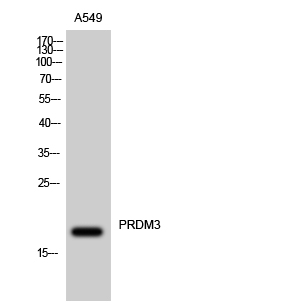
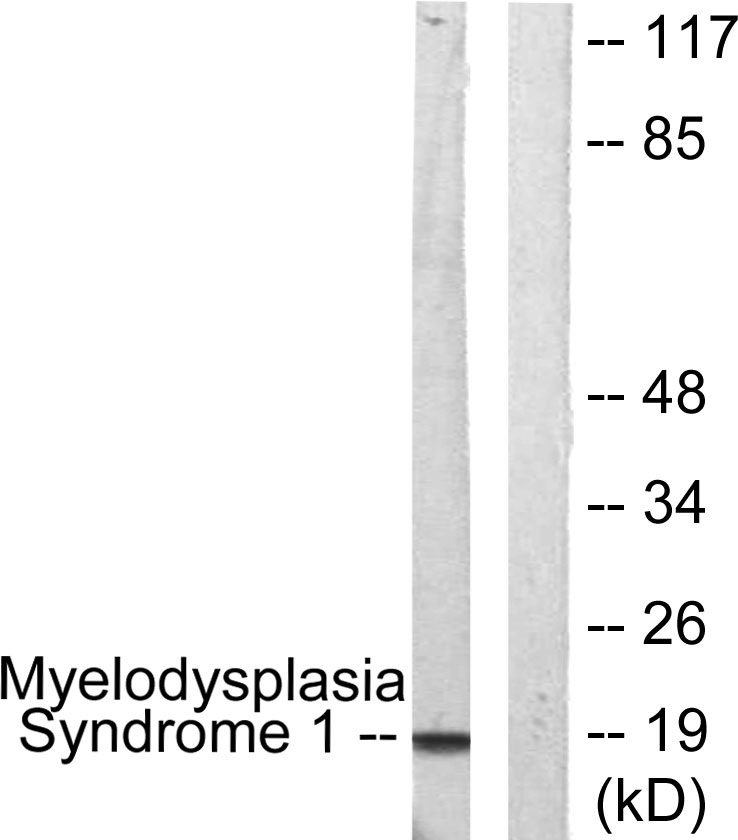
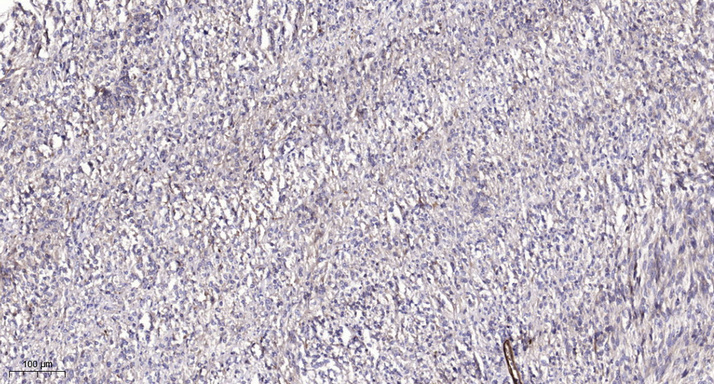
| Specificity | PRDM3 Polyclonal Antibody detects endogenous levels of PRDM3 protein. |
Additional Info
| Function | Isoform 1: Functions as a transcriptional regulator binding to DNA sequences in the promoter region of target genes and regulating positively or negatively their expression. Oncogene which plays a role in development, cell proliferation and differentiation. May also play a role in apoptosis through regulation of the JNK and TGF-beta signaling. Involved in hematopoiesis. Isoform 7: Displays histone methyltransferase activity and monomethylates 'Lys-9' of histone H3 (H3K9me1) in vitro. Probably catalyzes the monomethylation of free histone H3 in the cytoplasm which is then transported to the nucleus and incorporated into nucleosomes where SUV39H methyltransferases use it as a substrate to catalyze histone H3 'Lys-9' trimethylation. Likely to be one of the primary histone methyltransferases along with PRDM16 that direct cytoplasmic H3K9me1 methylation. |
| Protein Name | Histone-Lysine N-Methyltransferase MecomEcotropic Virus Integration Site 1 Protein HomologEvi-1Mds1 And Evi1 Complex Locus ProteinMyelodysplasia Syndrome 1 ProteinMyelodysplasia Syndrome-Associated Protein 1 |
| Database Links | Reactome: R-HSA-3214841Reactome: R-HSA-8943724 |
| Cellular Localisation | NucleusNucleus SpeckleCytoplasm |
| Alternative Antibody Names | Anti-Histone-Lysine N-Methyltransferase Mecom antibodyAnti-Ecotropic Virus Integration Site 1 Protein Homolog antibodyAnti-Evi-1 antibodyAnti-Mds1 And Evi1 Complex Locus Protein antibodyAnti-Myelodysplasia Syndrome 1 Protein antibodyAnti-Myelodysplasia Syndrome-Associated Protein 1 antibodyAnti-MECOM antibodyAnti-EVI1 antibodyAnti-MDS1 antibodyAnti-PRDM3 antibody |
Information sourced from Uniprot.org