


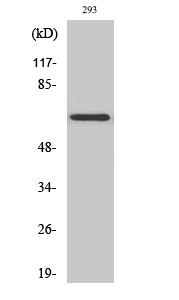
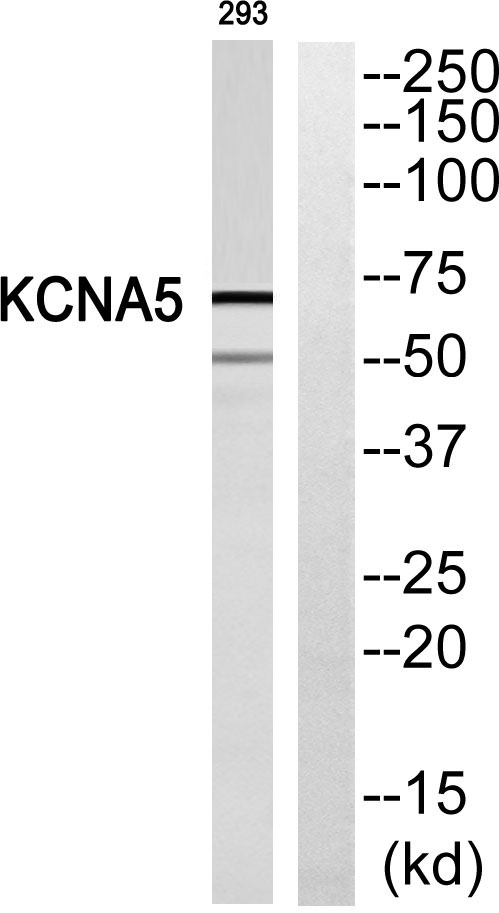
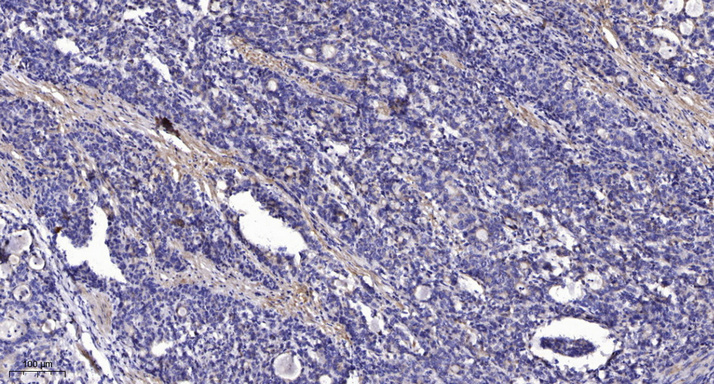

Anti-KCNA5 antibody (253-302 aa) (STJ93872)
SPECIFICATIONS
ClonalityPolyclonal
HostRabbit
ConjugationUnconjugated
IsotypeIgG
ImmunogenThe antiserum was produced against synthesized peptide derived from the human KCNA5 at the amino acid range 253-302
General Information
| Short Description | Rabbit polyclonal anti-Potassium voltage-gated channel subfamily A member 5 (253-302 aa) for use in WB, ELISA and IHC in Human, Mouse and Rat samples. Datasheet included with dilution recommendations, and related reagents. |
| Applications | WB/ELISA/IHC |
| Host | Rabbit |
| Reactivity | Human/Mouse/Rat |
| Note | STRICTLY FOR FURTHER SCIENTIFIC RESEARCH USE ONLY (RUO). MUST NOT TO BE USED IN DIAGNOSTIC OR THERAPEUTIC APPLICATIONS. |
Product Properties
| Clonality | Polyclonal |
| Isotype | IgG |
| Conjugation | Unconjugated |
| Concentration | 1 mg/mL |
| Purification | The antibody was affinity-purified from rabbit antiserum by affinity-chromatography using epitope-specific immunogen. |
| Dilution Range | WB 1:500-2000IHC-P 1:50-300ELISA 2000-20000 |
| Formulation | Liquid in PBS containing 50% Glycerol, 0.5% BSA and 0.02% Sodium Azide. |
| Storage Instruction | Store at-20°C for up to 1 year from the date of receipt, and avoid repeat freeze-thaw cycles. |
Target Information
| Gene Symbol | KCNA5 |
| Gene ID | 3741 |
| Uniprot ID | KCNA5_HUMAN |
| Immunogen | The antiserum was produced against synthesized peptide derived from the human KCNA5 at the amino acid range 253-302 |
| Immunogen Region | 253-302 aa |
| Specificity | KV1.5 Polyclonal Antibody detects endogenous levels of KV1.5 protein. |
Additional Info
| Post Translational Modifications | Glycosylated. Sumoylated on Lys-221, and Lys-536, preferentially with SUMO3. Sumoylation regulates the voltage sensitivity of the channel. |
| Function | Voltage-gated potassium channel that mediates transmembrane potassium transport in excitable membranes. Forms tetrameric potassium-selective channels through which potassium ions pass in accordance with their electrochemical gradient. The channel alternates between opened and closed conformations in response to the voltage difference across the membrane. Can form functional homotetrameric channels and heterotetrameric channels that contain variable proportions of KCNA1, KCNA2, KCNA4, KCNA5, and possibly other family members as well.channel properties depend on the type of alpha subunits that are part of the channel. Channel properties are modulated by cytoplasmic beta subunits that regulate the subcellular location of the alpha subunits and promote rapid inactivation. Homotetrameric channels display rapid activation and slow inactivation. Required for normal electrical conduction including formation of the infranodal ventricular conduction system and normal action potential configuration, as a result of its interaction with XIRP2. May play a role in regulating the secretion of insulin in normal pancreatic islets. Isoform 2: Exhibits a faster depolarization rate, reduced voltage-dependent recovery from inactivation and an excessive cumulative inactivation. |
| Protein Name | Potassium Voltage-Gated Channel Subfamily A Member 5Hpcn1Voltage-Gated Potassium Channel Hk2Voltage-Gated Potassium Channel Subunit Kv1.5 |
| Database Links | Reactome: R-HSA-1296072Reactome: R-HSA-5576890 |
| Cellular Localisation | Cell MembraneMulti-Pass Membrane Protein |
| Alternative Antibody Names | Anti-Potassium Voltage-Gated Channel Subfamily A Member 5 antibodyAnti-Hpcn1 antibodyAnti-Voltage-Gated Potassium Channel Hk2 antibodyAnti-Voltage-Gated Potassium Channel Subunit Kv1.5 antibodyAnti-KCNA5 antibody |
Information sourced from Uniprot.org