


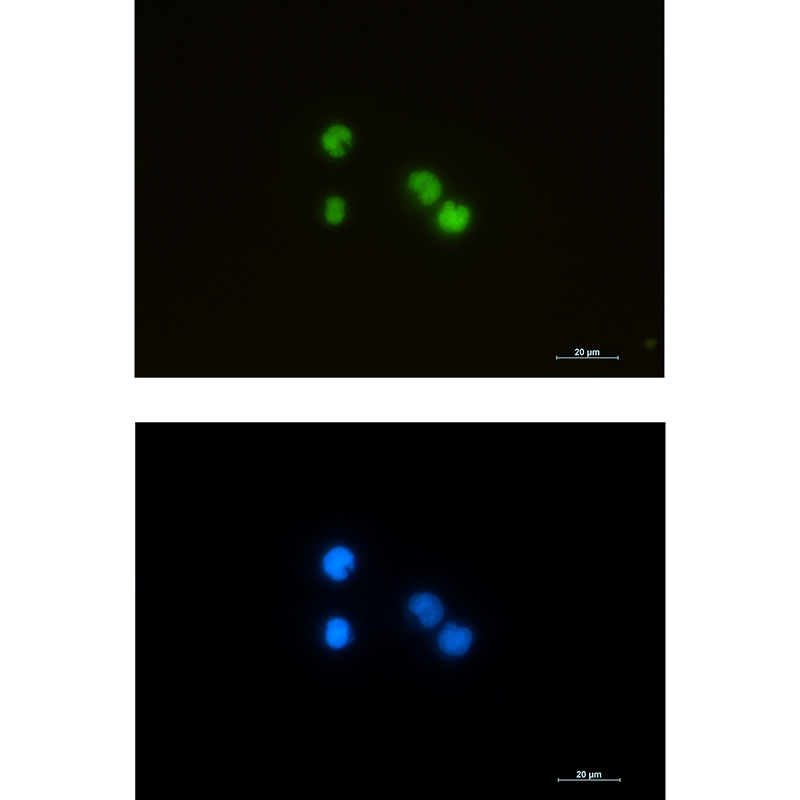
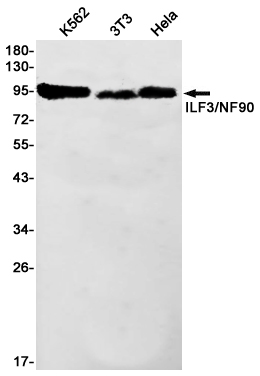
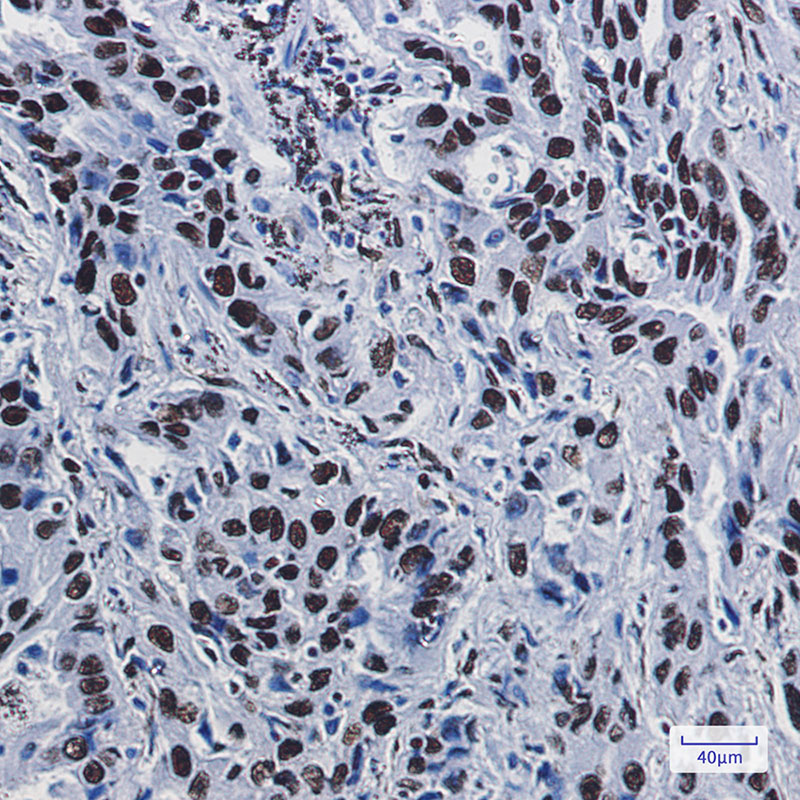

Anti-ILF3 antibody [R04-9E8] (STJA0034468)
SPECIFICATIONS
ClonalityMonoclonal
HostRabbit
ConjugationUnconjugated
IsotypeIgG
ImmunogenA synthetic peptide of human ILF3
General Information
| Short Description | Rabbit monoclonal anti-ILF3 for use in WB, IHC-F, IHC-P, ICC, IF and IP in Human and Mouse samples. Datasheet included with dilution recommendations, and related reagents. |
| Applications | WB/IHC-F/IHC-P/ICC/IF/IP |
| Host | Rabbit |
| Reactivity | Human/Mouse |
| Note | STRICTLY FOR FURTHER SCIENTIFIC RESEARCH USE ONLY (RUO). MUST NOT TO BE USED IN DIAGNOSTIC OR THERAPEUTIC APPLICATIONS. |
Product Properties
| Clonality | Monoclonal |
| Clone ID | R04-9E8 |
| Isotype | IgG |
| Conjugation | Unconjugated |
| Concentration | 0.3 mg/mL |
| Purification | Affinity Purified |
| Dilution Range | WB 1:500-1:1000IHC 1:50-1:100IF 1:50-1:200IP 1:20 |
| Formulation | 50mM Tris-Glycine (pH 7.4) , 0.15M NaCl, 40% Glycerol, 0.01% Sodium azide and 0.05% BSA |
| Storage Instruction | Store at 4°C short term. Aliquot and store at-20°C long term. Avoid freeze/thaw cycles. |
Target Information
| Gene Symbol | ILF3 |
| Gene ID | 3609 |
| Uniprot ID | ILF3_HUMAN |
| Immunogen | A synthetic peptide of human ILF3 |
Additional Info
| Tissue Specificity | Ubiquitous. |
| Post Translational Modifications | Phosphorylated at Thr-188 and Thr-315 by PKR in response to certain RNA viruses. This phosphorylation results in the dissociation of ILF2 from the ILF2-ILF3 complex resulting in a cytoplasmic sequestration of ILF3 where it can bind to viral RNAs and impede viral replication. Methylated by protein arginine N-methyltransferase 1. Ubiquitinated at Lys-297 in a TRIM47-dependent manner.this 'Lys-48'-linked ubiquitination promotes ILF3 degradation. |
| Function | RNA-binding protein that plays an essential role in the biogenesis of circular RNAs (circRNAs) which are produced by back-splicing circularization of pre-mRNAs. Within the nucleus, promotes circRNAs processing by stabilizing the regulatory elements residing in the flanking introns of the circularized exons. Plays thereby a role in the back-splicing of a subset of circRNAs. As a consequence, participates in a wide range of transcriptional and post-transcriptional processes. Binds to poly-U elements and AU-rich elements (AREs) in the 3'-UTR of target mRNAs. Upon viral infection, ILF3 accumulates in the cytoplasm and participates in the innate antiviral response. Mechanistically, ILF3 becomes phosphorylated and activated by the double-stranded RNA-activated protein kinase/PKR which releases ILF3 from cellular mature circRNAs. In turn, unbound ILF3 molecules are able to interact with and thus inhibit viral mRNAs. (Microbial infection) Plays a positive role in HIV-1 virus production by binding to and thereby stabilizing HIV-1 RNA, together with ILF3. |
| Protein Name | Interleukin Enhancer-Binding Factor 3Double-Stranded Rna-Binding Protein 76Drbp76M-Phase Phosphoprotein 4Mpp4Nuclear Factor Associated With DsrnaNfarNuclear Factor Of Activated T-Cells 90 KdaNf-At-90Translational Control Protein 80Tcp80 |
| Database Links | Reactome: R-HSA-9762293Reactome: R-HSA-9833482 |
| Cellular Localisation | NucleusNucleolusCytoplasmLocalizes In The Cytoplasm In Response To Viral InfectionThe Unphosphorylated Form Is Retained In The Nucleus By Ilf2Phosphorylation At Thr-188 And Thr-315 Causes The Dissociation Of Ilf2 From The Ilf2-Ilf3 Complex Resulting In A Cytoplasmic Sequestration Of Ilf3Localized In Cytoplasmic Mrnp Granules Containing Untranslated Mrnas |
| Alternative Antibody Names | Anti-Interleukin Enhancer-Binding Factor 3 antibodyAnti-Double-Stranded Rna-Binding Protein 76 antibodyAnti-Drbp76 antibodyAnti-M-Phase Phosphoprotein 4 antibodyAnti-Mpp4 antibodyAnti-Nuclear Factor Associated With Dsrna antibodyAnti-Nfar antibodyAnti-Nuclear Factor Of Activated T-Cells 90 Kda antibodyAnti-Nf-At-90 antibodyAnti-Translational Control Protein 80 antibodyAnti-Tcp80 antibodyAnti-ILF3 antibodyAnti-DRBF antibodyAnti-MPHOSPH4 antibodyAnti-NF90 antibody |
Information sourced from Uniprot.org