



Anti-IL-33 antibody (112-270aa) [4E9] (STJA0041507)
SPECIFICATIONS
ClonalityMonoclonal
HostMouse
ConjugationUnconjugated
IsotypeIgG2bk
ImmunogenRecombinant human IL-33 (112-270aa) purified from E. coli
General Information
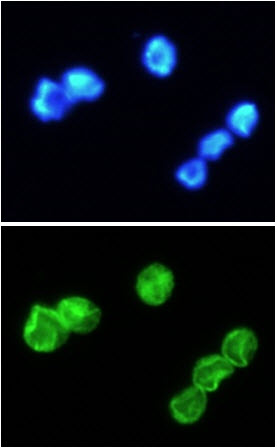
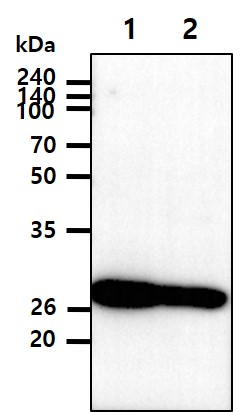
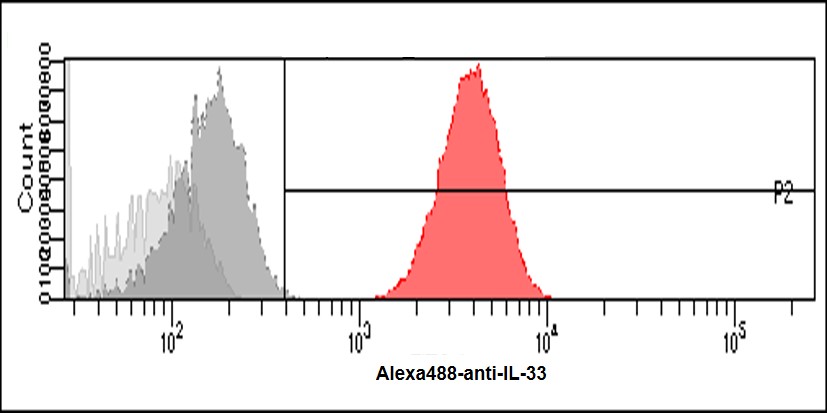
| Short Description | Mouse monoclonal anti-IL-33 (112-270aa) for use in ELISA, WB, ICC, IF and FACS in Human samples. Datasheet included with dilution recommendations, and related reagents. |
| Applications | ELISA/WB/ICC/IF/FACS |
| Host | Mouse |
| Reactivity | Human |
| Note | STRICTLY FOR FURTHER SCIENTIFIC RESEARCH USE ONLY (RUO). MUST NOT TO BE USED IN DIAGNOSTIC OR THERAPEUTIC APPLICATIONS. |
Product Properties
| Clonality | Monoclonal |
| Clone ID | 4E9 |
| Isotype | IgG2bk |
| Conjugation | Unconjugated |
| Concentration | 1 mg/mL |
| Purification | By protein-G affinity chromatography |
| Formulation | Liquid in phosphate-Buffered Saline (pH 7.4) with 0.02% Sodium Azide, 10% Glycerol |
| Storage Instruction | For short term storage, keep at +2C to +8C for up to 1 week. For long term storage, aliquot and store at-20C, and avoid repeat freeze-thaw cycles. |
Target Information
| Gene Symbol | IL33 |
| Gene ID | 90865 |
| Uniprot ID | IL33_HUMAN |
| Accession Number | NP_254274 |
| Immunogen | Recombinant human IL-33 (112-270aa) purified from E. coli |
| Immunogen Region | 112-270aa |
Additional Info
| Tissue Specificity | Expressed at high level in high endothelial venules found in tonsils, Peyer patches and mesenteric lymph nodes. Almost undetectable in placenta. |
| Post Translational Modifications | The full-length protein can be released from cells and is able to signal via the IL1RL1/ST2 receptor. However, proteolytic processing by CELA1, CSTG/cathepsin G and ELANE/neutrophil elastase produces C-terminal peptides that are more active than the unprocessed full length protein. May also be proteolytically processed by calpains. Proteolytic cleavage mediated by apoptotic caspases including CASP3 and CASP7 results in IL33 inactivation. In vitro proteolytic cleavage by CASP1 was reported but could not be confirmed in vivo suggesting that IL33 is probably not a direct substrate for that caspase. |
| Function | Cytokine that binds to and signals through the IL1RL1/ST2 receptor which in turn activates NF-kappa-B and MAPK signaling pathways in target cells. Involved in the maturation of Th2 cells inducing the secretion of T-helper type 2-associated cytokines. Also involved in activation of mast cells, basophils, eosinophils and natural killer cells. Acts as an enhancer of polarization of alternatively activated macrophages. Acts as a chemoattractant for Th2 cells, and may function as an 'alarmin', that amplifies immune responses during tissue injury. Induces rapid UCP2-dependent mitochondrial rewiring that attenuates the generation of reactive oxygen species and preserves the integrity of Krebs cycle required for persistent production of itaconate and subsequent GATA3-dependent differentiation of inflammation-resolving alternatively activated macrophages. In quiescent endothelia the uncleaved form is constitutively and abundantly expressed, and acts as a chromatin-associated nuclear factor with transcriptional repressor properties, it may sequester nuclear NF-kappaB/RELA, lowering expression of its targets. This form is rapidely lost upon angiogenic or pro-inflammatory activation. |
| Protein Name | Interleukin-33Il-33Interleukin-1 Family Member 11Il-1f11Nuclear Factor From High Endothelial VenulesNf-Hev Cleaved Into - Interleukin-3395-270 - Interleukin-3399-270 - Interleukin-33109-270 |
| Database Links | Reactome: R-HSA-1257604Reactome: R-HSA-5689880Reactome: R-HSA-6811558Reactome: R-HSA-9014843 |
| Cellular Localisation | NucleusChromosomeCytoplasmCytoplasmic VesicleSecretory VesicleSecretedSecreted And Released In The Extracellular Milieu By Passing Through The Gasdermin-D (Gsdmd) Pore Following Cleavage By Cela1Associates With Heterochromatin And Mitotic ChromosomesThe Secretion Is Dependent On Protein Unfolding And Facilitated By The Cargo Receptor Tmed10It Results In Protein Translocation From The Cytoplasm Into The Ergic (Endoplasmic Reticulum-Golgi Intermediate Compartment) Followed By Vesicle Entry And Secretion |
| Alternative Antibody Names | Anti-Interleukin-33 antibodyAnti-Il-33 antibodyAnti-Interleukin-1 Family Member 11 antibodyAnti-Il-1f11 antibodyAnti-Nuclear Factor From High Endothelial Venules antibodyAnti-Nf-Hev Cleaved Into - Interleukin-33 antibodyAnti-95-270 - Interleukin-33 antibodyAnti-99-270 - Interleukin-33 antibodyAnti-109-270 antibodyAnti-IL33 antibodyAnti-C9orf26 antibodyAnti-IL1F11 antibodyAnti-NFHEV antibody |
Information sourced from Uniprot.org