



Anti-IFN-beta 1/IFNB1 antibody (22-187aa) [AT4F8] (STJA0041960)
SPECIFICATIONS
ClonalityMonoclonal
HostMouse
ConjugationUnconjugated
IsotypeIgG1k
ImmunogenRecombinant human IFN-beta (22-187aa) purified from E. coli
General Information
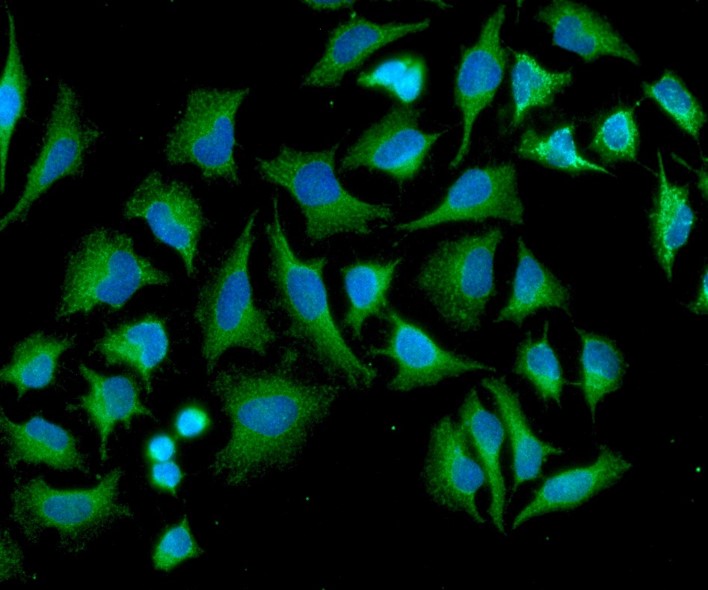
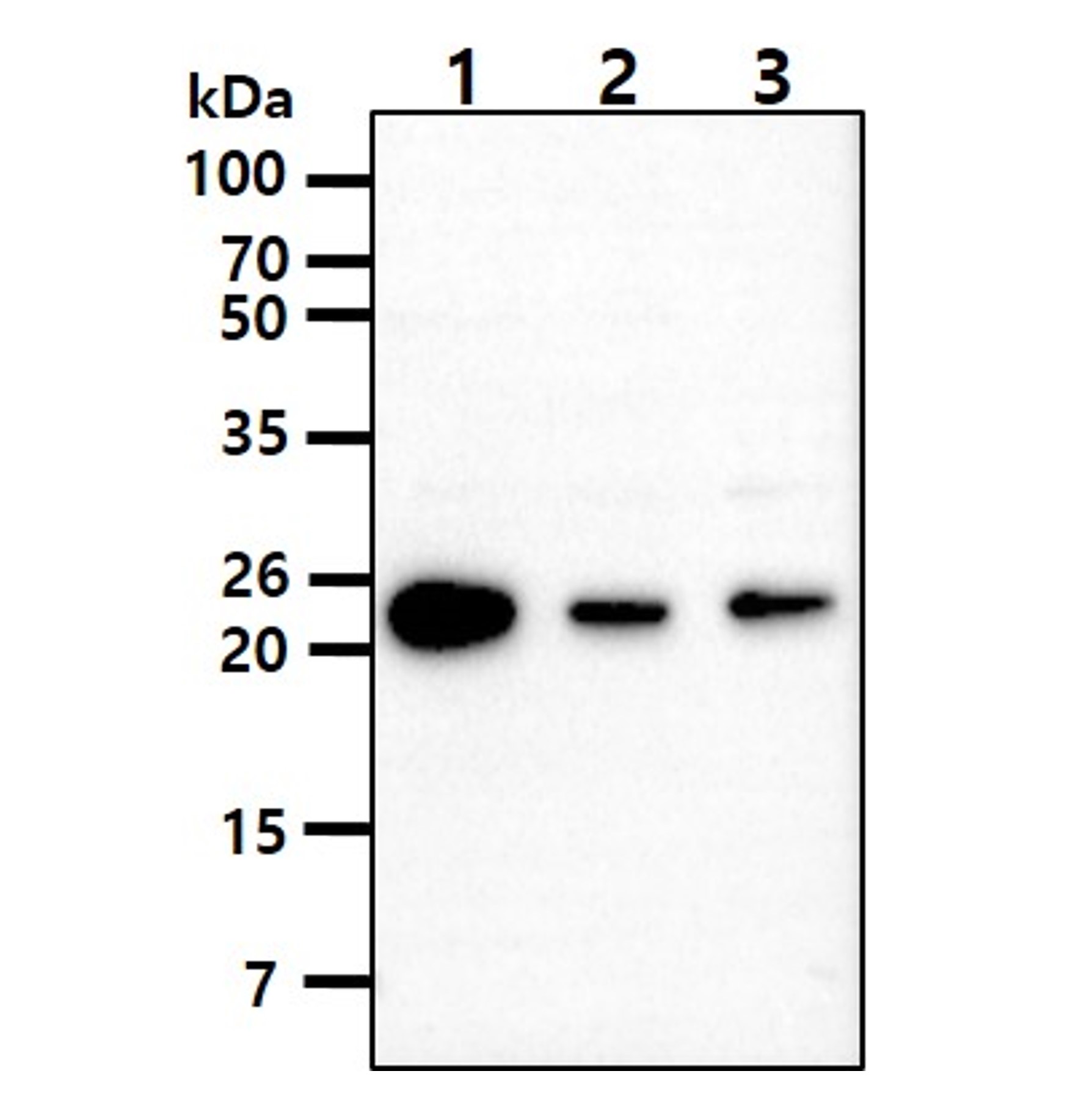
| Short Description | Mouse monoclonal anti-IFN-beta 1/IFNB1 (22-187aa) for use in ELISA, WB, ICC and IF in Human samples. Datasheet included with dilution recommendations, and related reagents. |
| Applications | ELISA/WB/ICC/IF |
| Host | Mouse |
| Reactivity | Human |
| Note | STRICTLY FOR FURTHER SCIENTIFIC RESEARCH USE ONLY (RUO). MUST NOT TO BE USED IN DIAGNOSTIC OR THERAPEUTIC APPLICATIONS. |
Product Properties
| Clonality | Monoclonal |
| Clone ID | AT4F8 |
| Isotype | IgG1k |
| Conjugation | Unconjugated |
| Concentration | 1 mg/mL |
| Purification | By protein-A affinity chromatography |
| Formulation | Liquid in phosphate-Buffered Saline (pH 7.4) with 0.02% Sodium Azide, 10% Glycerol |
| Storage Instruction | For short term storage, keep at +2C to +8C for up to 1 week. For long term storage, aliquot and store at-20C, and avoid repeat freeze-thaw cycles. |
Target Information
| Gene Symbol | IFNB1 |
| Gene ID | 3456 |
| Uniprot ID | IFNB_HUMAN |
| Accession Number | NP_002167 |
| Immunogen | Recombinant human IFN-beta (22-187aa) purified from E. coli |
| Immunogen Region | 22-187aa |
Additional Info
| Function | Type I interferon cytokine that plays a key role in the innate immune response to infection, developing tumors and other inflammatory stimuli. Signals via binding to high-affinity (IFNAR2) and low-affinity (IFNAR1) heterodimeric receptor, activating the canonical Jak-STAT signaling pathway resulting in transcriptional activation or repression of interferon-regulated genes that encode the effectors of the interferon response, such as antiviral proteins, regulators of cell proliferation and differentiation, and immunoregulatory proteins. Signals mostly via binding to a IFNAR1-IFNAR2 heterodimeric receptor, but can also function with IFNAR1 alone and independently of Jak-STAT pathways. Elicits a wide variety of responses, including antiviral and antibacterial activities, and can regulate the development of B-cells, myelopoiesis and lipopolysaccharide (LPS)-inducible production of tumor necrosis factor. Plays a role in neuronal homeostasis by regulating dopamine turnover and protecting dopaminergic neurons: acts by promoting neuronal autophagy and alpha-synuclein clearance, thereby preventing dopaminergic neuron loss. IFNB1 is more potent than interferon-alpha (IFN-alpha) in inducing the apoptotic and antiproliferative pathways required for control of tumor cell growth. |
| Protein Name | Interferon BetaIfn-BetaFibroblast Interferon |
| Database Links | Reactome: R-HSA-2559580Reactome: R-HSA-909733Reactome: R-HSA-912694Reactome: R-HSA-918233Reactome: R-HSA-933541Reactome: R-HSA-9705671Reactome: R-HSA-983231Reactome: R-HSA-9833109 |
| Cellular Localisation | Secreted |
| Alternative Antibody Names | Anti-Interferon Beta antibodyAnti-Ifn-Beta antibodyAnti-Fibroblast Interferon antibodyAnti-IFNB1 antibodyAnti-IFB antibodyAnti-IFNB antibody |
Information sourced from Uniprot.org