
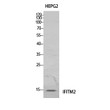

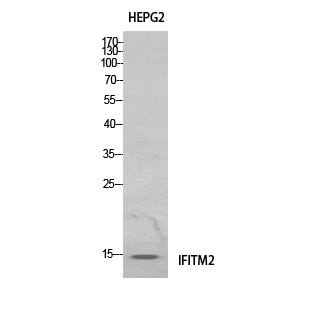
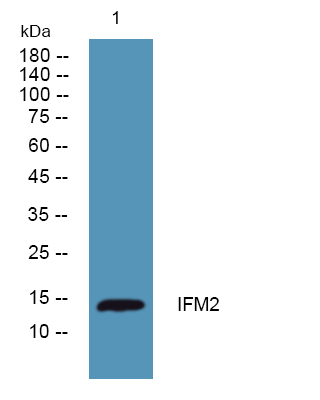

Anti-IFITM2 antibody (1-50 aa) (STJ96897)
SPECIFICATIONS
ClonalityPolyclonal
HostRabbit
ConjugationUnconjugated
IsotypeIgG
ImmunogenThe antiserum was produced against synthesized peptide derived from the Internal region of human IFITM2 at the amino acid range 1-50
General Information
| Short Description | Rabbit polyclonal anti-Interferon-induced transmembrane protein 2 (1-50 aa) for use in WB and ELISA in Human, Rat and Mouse samples. Datasheet included with dilution recommendations, and related reagents. |
| Applications | WB/ELISA |
| Host | Rabbit |
| Reactivity | Human/Rat/Mouse |
| Note | STRICTLY FOR FURTHER SCIENTIFIC RESEARCH USE ONLY (RUO). MUST NOT TO BE USED IN DIAGNOSTIC OR THERAPEUTIC APPLICATIONS. |
Product Properties
| Clonality | Polyclonal |
| Isotype | IgG |
| Conjugation | Unconjugated |
| Concentration | 1 mg/mL |
| Purification | The antibody was affinity-purified from rabbit antiserum by affinity-chromatography using epitope-specific immunogen. |
| Dilution Range | WB 1:500-1:2000ELISA 1:20000 |
| Formulation | Liquid in PBS containing 50% Glycerol, 0.5% BSA and 0.02% Sodium Azide. |
| Storage Instruction | Store at-20°C for up to 1 year from the date of receipt, and avoid repeat freeze-thaw cycles. |
Target Information
| Gene Symbol | IFITM2 |
| Gene ID | 10581 |
| Uniprot ID | IFM2_HUMAN |
| Immunogen | The antiserum was produced against synthesized peptide derived from the Internal region of human IFITM2 at the amino acid range 1-50 |
| Immunogen Region | 1-50 aa |
| Specificity | IFITM2 Polyclonal Antibody detects endogenous levels of IFITM2 protein. |
Additional Info
| Function | IFN-induced antiviral protein which inhibits the entry of viruses to the host cell cytoplasm, permitting endocytosis, but preventing subsequent viral fusion and release of viral contents into the cytosol. Active against multiple viruses, including influenza A virus, SARS coronaviruses (SARS-CoV and SARS-CoV-2), Marburg virus (MARV), Ebola virus (EBOV), Dengue virus (DNV), West Nile virus (WNV), human immunodeficiency virus type 1 (HIV-1), hepatitis C virus (HCV) and vesicular stomatitis virus (VSV). Can inhibit: influenza virus hemagglutinin protein-mediated viral entry, MARV and EBOV GP1,2-mediated viral entry, SARS-CoV and SARS-CoV-2 S protein-mediated viral entry and VSV G protein-mediated viral entry. Induces cell cycle arrest and mediates apoptosis by caspase activation and in p53-independent manner. In hepatocytes, IFITM proteins act in a coordinated manner to restrict HCV infection by targeting the endocytosed HCV virion for lysosomal degradation. IFITM2 and IFITM3 display anti-HCV activity that may complement the anti-HCV activity of IFITM1 by inhibiting the late stages of HCV entry, possibly in a coordinated manner by trapping the virion in the endosomal pathway and targeting it for degradation at the lysosome. |
| Protein Name | Interferon-Induced Transmembrane Protein 2Dispanin Subfamily A Member 2cDspa2cInterferon-Inducible Protein 1-8d |
| Database Links | Reactome: R-HSA-909733 |
| Cellular Localisation | Cell MembraneSingle-Pass Type Ii Membrane ProteinLysosome MembraneLate Endosome Membrane |
| Alternative Antibody Names | Anti-Interferon-Induced Transmembrane Protein 2 antibodyAnti-Dispanin Subfamily A Member 2c antibodyAnti-Dspa2c antibodyAnti-Interferon-Inducible Protein 1-8d antibodyAnti-IFITM2 antibody |
Information sourced from Uniprot.org