



Anti-IFITM1 antibody [R07-7F8] (STJA0034453)
SPECIFICATIONS
ClonalityMonoclonal
HostRabbit
ConjugationUnconjugated
IsotypeIgG
ImmunogenA synthetic peptide of human IFITM1
General Information
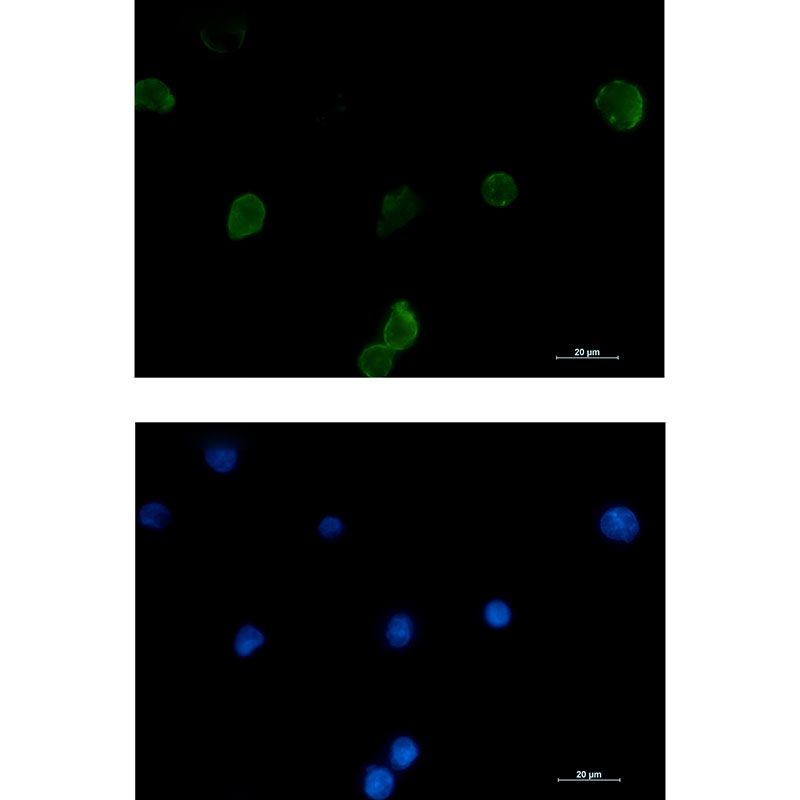
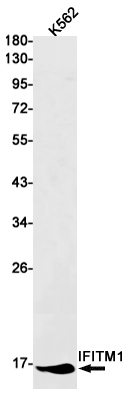
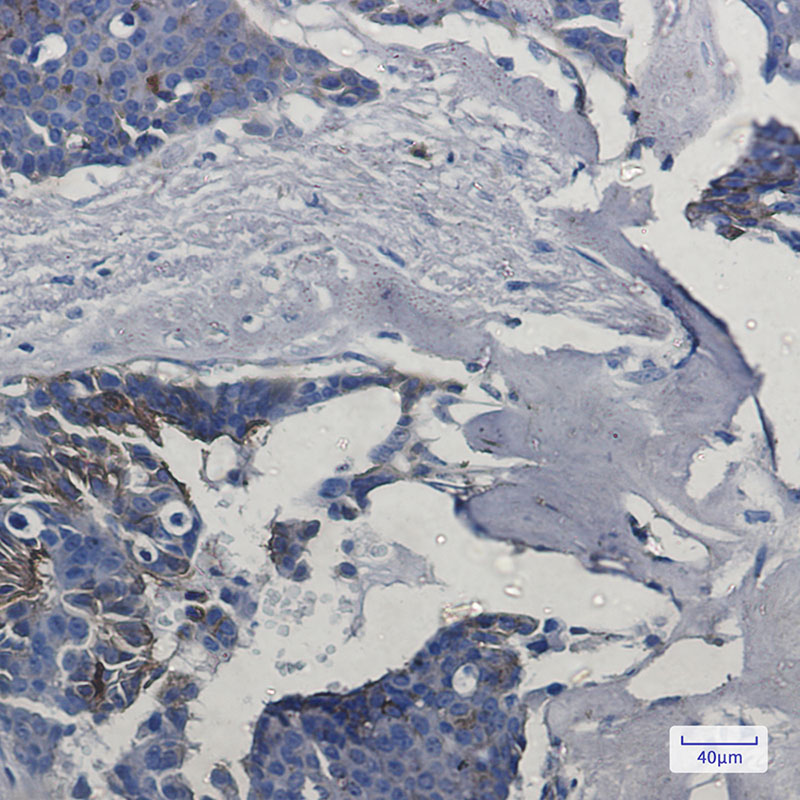
| Short Description | Rabbit monoclonal anti-IFITM1 for use in WB, IHC-F, IHC-P, ICC, IF and IP in Human samples. Datasheet included with dilution recommendations, and related reagents. |
| Applications | WB/IHC-F/IHC-P/ICC/IF/IP |
| Host | Rabbit |
| Reactivity | Human |
| Note | STRICTLY FOR FURTHER SCIENTIFIC RESEARCH USE ONLY (RUO). MUST NOT TO BE USED IN DIAGNOSTIC OR THERAPEUTIC APPLICATIONS. |
Product Properties
| Clonality | Monoclonal |
| Clone ID | R07-7F8 |
| Isotype | IgG |
| Conjugation | Unconjugated |
| Concentration | 0.3 mg/mL |
| Purification | Affinity Purified |
| Dilution Range | WB 1:500-1:1000IHC 1:50-1:100IF 1:50-1:200IP 1:20 |
| Formulation | 50mM Tris-Glycine (pH 7.4) , 0.15M NaCl, 40% Glycerol, 0.01% Sodium azide and 0.05% BSA |
| Storage Instruction | Store at 4°C short term. Aliquot and store at-20°C long term. Avoid freeze/thaw cycles. |
Target Information
| Gene Symbol | IFITM1 |
| Gene ID | 8519 |
| Uniprot ID | IFM1_HUMAN |
| Immunogen | A synthetic peptide of human IFITM1 |
Additional Info
| Tissue Specificity | Bone (at protein level). Levels greatly elevated in colon cancer, cervical cancer, esophageal cancer and ovarian cancer. Expressed in glioma cell lines. |
| Post Translational Modifications | Palmitoylation on membrane-proximal cysteines controls clustering in membrane compartments and antiviral activity. |
| Function | IFN-induced antiviral protein which inhibits the entry of viruses to the host cell cytoplasm, permitting endocytosis, but preventing subsequent viral fusion and release of viral contents into the cytosol. Active against multiple viruses, including influenza A virus, SARS coronaviruses (SARS-CoV and SARS-CoV-2), Marburg virus (MARV), Ebola virus (EBOV), Dengue virus (DNV), West Nile virus (WNV), human immunodeficiency virus type 1 (HIV-1) and hepatitis C virus (HCV). Can inhibit: influenza virus hemagglutinin protein-mediated viral entry, MARV and EBOV GP1,2-mediated viral entry and SARS-CoV and SARS-CoV-2 S protein-mediated viral entry. Also implicated in cell adhesion and control of cell growth and migration. Inhibits SARS-CoV-2 S protein-mediated syncytia formation. Plays a key role in the antiproliferative action of IFN-gamma either by inhibiting the ERK activation or by arresting cell growth in G1 phase in a p53-dependent manner. Acts as a positive regulator of osteoblast differentiation. In hepatocytes, IFITM proteins act in a coordinated manner to restrict HCV infection by targeting the endocytosed HCV virion for lysosomal degradation. IFITM2 and IFITM3 display anti-HCV activity that may complement the anti-HCV activity of IFITM1 by inhibiting the late stages of HCV entry, possibly in a coordinated manner by trapping the virion in the endosomal pathway and targeting it for degradation at the lysosome. |
| Protein Name | Interferon-Induced Transmembrane Protein 1Dispanin Subfamily A Member 2aDspa2aInterferon-Induced Protein 17Interferon-Inducible Protein 9-27Leu-13 AntigenCd Antigen Cd225 |
| Database Links | Reactome: R-HSA-198933Reactome: R-HSA-909733 |
| Cellular Localisation | Cell MembraneSingle-Pass Membrane ProteinLysosome Membrane |
| Alternative Antibody Names | Anti-Interferon-Induced Transmembrane Protein 1 antibodyAnti-Dispanin Subfamily A Member 2a antibodyAnti-Dspa2a antibodyAnti-Interferon-Induced Protein 17 antibodyAnti-Interferon-Inducible Protein 9-27 antibodyAnti-Leu-13 Antigen antibodyAnti-Cd Antigen Cd225 antibodyAnti-IFITM1 antibodyAnti-CD225 antibodyAnti-IFI17 antibody |
Information sourced from Uniprot.org