
![Anti-GPR183 nanobody [SAA0953] (STJN000202)](https://cdn11.bigcommerce.com/s-zso2xnchw9/images/stencil/124x110/products/200815/412997/STJN000202-SDS-PAGE-1__11401.1749232518.jpg?c=1 "Anti-GPR183 nanobody [SAA0953] (STJN000202)")
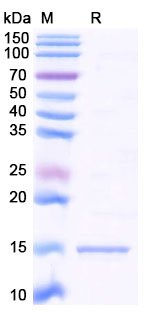
![Anti-GPR183 nanobody [SAA0953] (STJN000202)](https://cdn11.bigcommerce.com/s-zso2xnchw9/images/stencil/1280x1280/products/200815/412997/STJN000202-SDS-PAGE-1__11401.1749232518.jpg?c=1 "Anti-GPR183 nanobody [SAA0953] (STJN000202)")
Anti-GPR183 nanobody [SAA0953] (STJN000202)
SPECIFICATIONS
ClonalityMonoclonal
HostAlpaca
ConjugationUnconjugated
IsotypeVHH-8His-Cys-tag
General Information
| Short Description | Alpaca monoclonal nanobody anti-G-Protein Coupled Receptor 183 is suitable for use in ELISA research applications. |
| Applications | ELISA |
| Host | Alpaca |
| Reactivity | Human |
| Note | STRICTLY FOR FURTHER SCIENTIFIC RESEARCH USE ONLY (RUO). MUST NOT BE USED IN DIAGNOSTIC OR THERAPEUTIC APPLICATIONS. |
Product Properties
| Clonality | Monoclonal |
| Clone ID | SAA0953 |
| Isotype | VHH-8His-Cys-tag |
| Conjugation | Unconjugated |
| Concentration | 1 mg/mL |
| Purification | Purified by Nickel column. |
| Formulation | 0.01M PBS, pH 7.4. |
| Storage Instruction | Use a manual defrost freezer and avoid repeated freeze-thaw cycles. Store at 4°C short term (1-2 weeks). Store at-20°C 12 months. Store at-80°C long term. |
Target Information
| Gene Symbol | GPR183 |
| Gene ID | 1880 |
| Uniprot ID | GP183_HUMAN |
Additional Info
| Function | G-protein coupled receptor expressed in lymphocytes that acts as a chemotactic receptor for B-cells, T-cells, splenic dendritic cells, monocytes/macrophages and astrocytes. Receptor for oxysterol 7-alpha,25-dihydroxycholesterol (7-alpha,25-OHC) and other related oxysterols. Mediates cell positioning and movement of a number of cells by binding the 7-alpha,25-OHC ligand that forms a chemotactic gradient. Binding of 7-alpha,25-OHC mediates the correct localization of B-cells during humoral immune responses. Guides B-cell movement along the B-cell zone-T-cell zone boundary and later to interfollicular and outer follicular regions. Its specific expression during B-cell maturation helps position B-cells appropriately for mounting T-dependent antibody responses. Collaborates with CXCR5 to mediate B-cell migration.probably by forming a heterodimer with CXCR5 that affects the interaction between of CXCL13 and CXCR5. Also acts as a chemotactic receptor for some T-cells upon binding to 7-alpha,25-OHC ligand. Promotes follicular helper T (Tfh) cells differentiation by positioning activated T-cells at the follicle-T-zone interface, promoting contact of newly activated CD4 T-cells with activated dendritic cells and exposing them to Tfh-cell-promoting inducible costimulator (ICOS) ligand. Expression in splenic dendritic cells is required for their homeostasis, localization and ability to induce B- and T-cell responses: GPR183 acts as a chemotactic receptor in dendritic cells that mediates the accumulation of CD4(+) dendritic cells in bridging channels. Regulates migration of astrocytes and is involved in communication between astrocytes and macrophages. Promotes osteoclast precursor migration to bone surfaces. Signals constitutively through G(i)-alpha, but not G(s)-alpha or G(q)-alpha. Signals constitutively also via MAPK1/3 (ERK1/2). |
| Protein Name | G-Protein Coupled Receptor 183Epstein-Barr Virus-Induced G-Protein Coupled Receptor 2Ebi2Ebv-Induced G-Protein Coupled Receptor 2Hebi2 |
| Database Links | Reactome: R-HSA-373076Reactome: R-HSA-418594 |
| Cellular Localisation | Cell MembraneMulti-Pass Membrane Protein |
| Alternative Nanobody Names | Anti-G-Protein Coupled Receptor 183 nanobodyAnti-Epstein-Barr Virus-Induced G-Protein Coupled Receptor 2 nanobodyAnti-Ebi2 nanobodyAnti-Ebv-Induced G-Protein Coupled Receptor 2 nanobodyAnti-Hebi2 nanobodyAnti-GPR183 nanobodyAnti-EBI2 nanobody |
Information sourced from Uniprot.org