


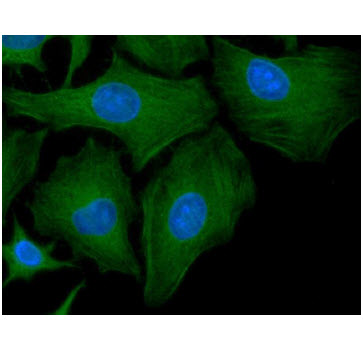
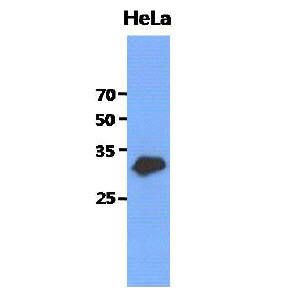

Anti-GCLM antibody (1-274aa) [AT2D12] (STJA0041629)
SPECIFICATIONS
ClonalityMonoclonal
HostMouse
ConjugationUnconjugated
IsotypeIgG1k
ImmunogenRecombinant human GCLM (1-274aa) purified from E. coli
General Information
| Short Description | Mouse monoclonal anti-GCLM (1-274aa) for use in ELISA, WB, ICC and IF in Human samples. Datasheet included with dilution recommendations, and related reagents. |
| Applications | ELISA/WB/ICC/IF |
| Host | Mouse |
| Reactivity | Human |
| Note | STRICTLY FOR FURTHER SCIENTIFIC RESEARCH USE ONLY (RUO). MUST NOT TO BE USED IN DIAGNOSTIC OR THERAPEUTIC APPLICATIONS. |
Product Properties
| Clonality | Monoclonal |
| Clone ID | AT2D12 |
| Isotype | IgG1k |
| Conjugation | Unconjugated |
| Concentration | 1 mg/mL |
| Purification | By protein-G affinity chromatography |
| Formulation | Liquid in phosphate-Buffered Saline (pH 7.4) with 0.02% Sodium Azide, 10% Glycerol |
| Storage Instruction | For short term storage, keep at +2C to +8C for up to 1 week. For long term storage, aliquot and store at-20C, and avoid repeat freeze-thaw cycles. |
Target Information
| Gene Symbol | GCLM |
| Gene ID | 2730 |
| Uniprot ID | GSH0_HUMAN |
| Accession Number | NP_002052 |
| Immunogen | Recombinant human GCLM (1-274aa) purified from E. coli |
| Immunogen Region | 1-274aa |
Additional Info
| Tissue Specificity | In all tissues examined. Highest levels in skeletal muscle. |
| Protein Name | Glutamate--Cysteine Ligase Regulatory SubunitGcs Light ChainGamma-Ecs Regulatory SubunitGamma-Glutamylcysteine Synthetase Regulatory SubunitGlutamate--Cysteine Ligase Modifier Subunit |
| Database Links | Reactome: R-HSA-174403Reactome: R-HSA-5578999Reactome: R-HSA-9818027 |
| Cellular Localisation | |
| Alternative Antibody Names | Anti-Glutamate--Cysteine Ligase Regulatory Subunit antibodyAnti-Gcs Light Chain antibodyAnti-Gamma-Ecs Regulatory Subunit antibodyAnti-Gamma-Glutamylcysteine Synthetase Regulatory Subunit antibodyAnti-Glutamate--Cysteine Ligase Modifier Subunit antibodyAnti-GCLM antibodyAnti-GLCLR antibody |
Information sourced from Uniprot.org