

Anti-GABBR1b antibody (N-Term) (STJA0005688)
SPECIFICATIONS
ClonalityPolyclonal
HostRabbit
ConjugationUnconjugated
IsotypeIgG
ImmunogenSynthetic peptide corresponding to amino acids from the N-terminal region of human GABABR1b protein
General Information
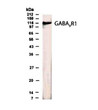
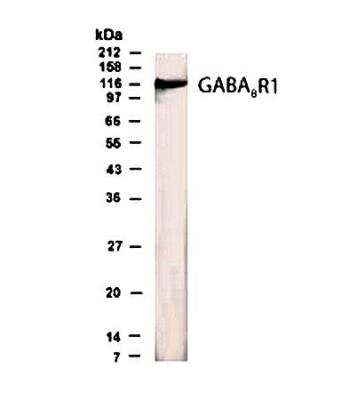
| Short Description | Rabbit polyclonal anti-GABABR1b (N-Term) for use in WB in Human, Mouse and Rat samples. Datasheet included with dilution recommendations, and related reagents. |
| Applications | WB |
| Host | Rabbit |
| Reactivity | Human/Mouse/Rat |
| Note | STRICTLY FOR FURTHER SCIENTIFIC RESEARCH USE ONLY (RUO). MUST NOT TO BE USED IN DIAGNOSTIC OR THERAPEUTIC APPLICATIONS. |
Product Properties
| Clonality | Polyclonal |
| Isotype | IgG |
| Conjugation | Unconjugated |
| Purification | Antigen Affinity Purified |
| Dilution Range | WB 1:500-1:1000 |
| Formulation | PBS + 0.02% NaN3 |
| Storage Instruction | Store at-20°C for up to 1 year from the date of receipt, and avoid repeat freeze-thaw cycles. |
Target Information
| Gene Symbol | GABBR1 |
| Gene ID | 2550 |
| Uniprot ID | GABR1_HUMAN |
| Immunogen | Synthetic peptide corresponding to amino acids from the N-terminal region of human GABABR1b protein |
| Immunogen Region | N-Term |
| Specificity | Reacts with the N-terminal region of human, mouse and rat GABABR1b protein. |
Additional Info
| Function | Component of a heterodimeric G-protein coupled receptor for GABA, formed by GABBR1 and GABBR2. Within the heterodimeric GABA receptor, only GABBR1 seems to bind agonists, while GABBR2 mediates coupling to G proteins. Ligand binding causes a conformation change that triggers signaling via guanine nucleotide-binding proteins (G proteins) and modulates the activity of down-stream effectors, such as adenylate cyclase. Signaling inhibits adenylate cyclase, stimulates phospholipase A2, activates potassium channels, inactivates voltage-dependent calcium-channels and modulates inositol phospholipid hydrolysis. Calcium is required for high affinity binding to GABA. Plays a critical role in the fine-tuning of inhibitory synaptic transmission. Pre-synaptic GABA receptor inhibits neurotransmitter release by down-regulating high-voltage activated calcium channels, whereas postsynaptic GABA receptor decreases neuronal excitability by activating a prominent inwardly rectifying potassium (Kir) conductance that underlies the late inhibitory postsynaptic potentials. Not only implicated in synaptic inhibition but also in hippocampal long-term potentiation, slow wave sleep, muscle relaxation and antinociception (Probable). Activated by (-)-baclofen, cgp27492 and blocked by phaclofen. Isoform 1E may regulate the formation of functional GABBR1/GABBR2 heterodimers by competing for GABBR2 binding. This could explain the observation that certain small molecule ligands exhibit differential affinity for central versus peripheral sites. |
| Protein Name | Gamma-Aminobutyric Acid Type B Receptor Subunit 1Gaba-B Receptor 1Gaba-B-R1Gaba-Br1Gababr1Gb1 |
| Database Links | Reactome: R-HSA-1296041Reactome: R-HSA-418594Reactome: R-HSA-420499Reactome: R-HSA-977444Reactome: R-HSA-997272 |
| Cellular Localisation | Cell MembraneMulti-Pass Membrane ProteinPostsynaptic Cell MembraneCell ProjectionDendriteColocalizes With Atf4 In Hippocampal Neuron Dendritic MembranesCoexpression Of Gabbr1 And Gabbr2 Is Required For Gabbr1 Maturation And Transport To The Plasma MembraneIsoform 1e: Secreted |
| Alternative Antibody Names | Anti-Gamma-Aminobutyric Acid Type B Receptor Subunit 1 antibodyAnti-Gaba-B Receptor 1 antibodyAnti-Gaba-B-R1 antibodyAnti-Gaba-Br1 antibodyAnti-Gababr1 antibodyAnti-Gb1 antibodyAnti-GABBR1 antibodyAnti-GPRC3A antibody |
Information sourced from Uniprot.org