

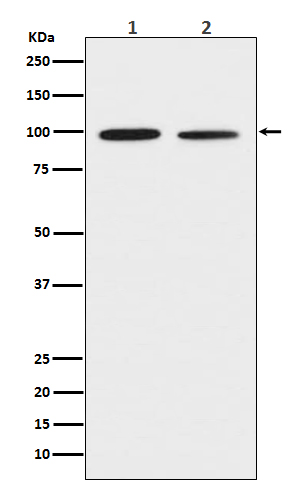

Anti-DDR2 antibody [R07-6B7] (STJA0036513)
SPECIFICATIONS
ClonalityMonoclonal
HostRabbit
ConjugationUnconjugated
IsotypeIgG
ImmunogenA synthesized peptide derived from human DDR2
General Information
| Short Description | Rabbit monoclonal anti-DDR2 for use in WB in Human, Mouse and Rat samples. Datasheet included with dilution recommendations, and related reagents. |
| Applications | WB |
| Host | Rabbit |
| Reactivity | Human/Mouse/Rat |
| Note | STRICTLY FOR FURTHER SCIENTIFIC RESEARCH USE ONLY (RUO). MUST NOT TO BE USED IN DIAGNOSTIC OR THERAPEUTIC APPLICATIONS. |
Product Properties
| Clonality | Monoclonal |
| Clone ID | R07-6B7 |
| Isotype | IgG |
| Conjugation | Unconjugated |
| Purification | Affinity Chromatography |
| Dilution Range | WB 1:500-1:1000 |
| Formulation | Rabbit IgG in phosphate buffered saline, pH 7.4, 150mM NaCl, 0.02% sodium azide and 50% glycerol. |
| Storage Instruction | Store at 4°C short term. Aliquot and store at-20°C long term. Avoid freeze/thaw cycles. |
Target Information
| Gene Symbol | DDR2 |
| Gene ID | 4921 |
| Uniprot ID | DDR2_HUMAN |
| Immunogen | A synthesized peptide derived from human DDR2 |
Additional Info
| Tissue Specificity | Detected in osteocytes, osteoblastic cells in subchondral bone, bone lining cells, tibia and cartilage (at protein level). Detected at high levels in heart and lung, and at low levels in brain, placenta, liver, skeletal muscle, pancreas, and kidney. |
| Post Translational Modifications | N-glycosylated. Tyrosine phosphorylated in response to collagen binding. Phosphorylated by SRC.this is required for activation and subsequent autophosphorylation on additional tyrosine residues. |
| Function | Tyrosine kinase involved in the regulation of tissues remodeling. It functions as a cell surface receptor for fibrillar collagen and regulates cell differentiation, remodeling of the extracellular matrix, cell migration and cell proliferation. Required for normal bone development. Regulates osteoblast differentiation and chondrocyte maturation via a signaling pathway that involves MAP kinases and leads to the activation of the transcription factor RUNX2. Regulates remodeling of the extracellular matrix by up-regulation of the collagenases MMP1, MMP2 and MMP13, and thereby facilitates cell migration and tumor cell invasion. Promotes fibroblast migration and proliferation, and thereby contributes to cutaneous wound healing. |
| Protein Name | Discoidin Domain-Containing Receptor 2Discoidin Domain Receptor 2Cd167 Antigen-Like Family Member BDiscoidin Domain-Containing Receptor Tyrosine Kinase 2Neurotrophic Tyrosine Kinase - Receptor-Related 3Receptor Protein-Tyrosine Kinase TktTyrosine-Protein Kinase Tyro10Cd Antigen Cd167b |
| Database Links | Reactome: R-HSA-3000171 |
| Cellular Localisation | Cell MembraneSingle-Pass Type I Membrane Protein |
| Alternative Antibody Names | Anti-Discoidin Domain-Containing Receptor 2 antibodyAnti-Discoidin Domain Receptor 2 antibodyAnti-Cd167 Antigen-Like Family Member B antibodyAnti-Discoidin Domain-Containing Receptor Tyrosine Kinase 2 antibodyAnti-Neurotrophic Tyrosine Kinase - Receptor-Related 3 antibodyAnti-Receptor Protein-Tyrosine Kinase Tkt antibodyAnti-Tyrosine-Protein Kinase Tyro10 antibodyAnti-Cd Antigen Cd167b antibodyAnti-DDR2 antibodyAnti-NTRKR3 antibodyAnti-TKT antibodyAnti-TYRO10 antibody |
Information sourced from Uniprot.org