


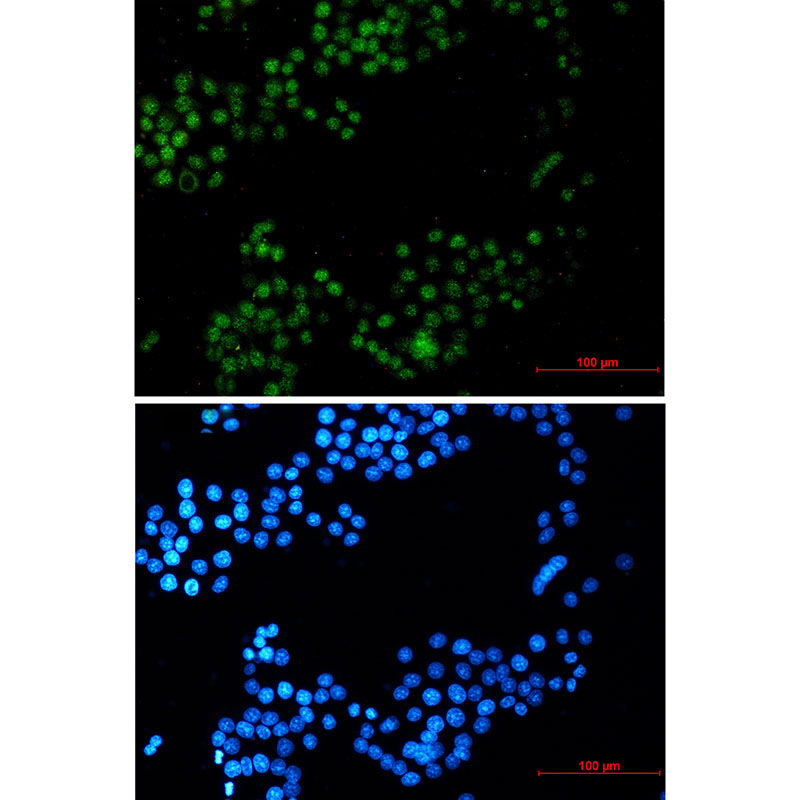
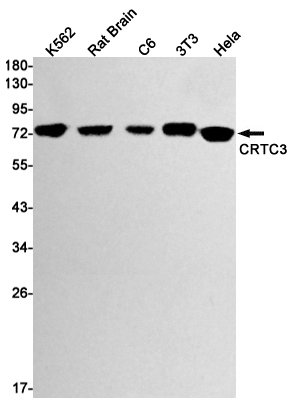

Anti-CRTC3 antibody [R07-4C9] (STJA0033844)
SPECIFICATIONS
ClonalityMonoclonal
HostRabbit
ConjugationUnconjugated
IsotypeIgG
ImmunogenA synthetic peptide of human CRTC3
General Information
| Short Description | Rabbit monoclonal anti-CRTC3 for use in WB, ICC and IF in Human, Mouse and Rat samples. Datasheet included with dilution recommendations, and related reagents. |
| Applications | WB/ICC/IF |
| Host | Rabbit |
| Reactivity | Human/Mouse/Rat |
| Note | STRICTLY FOR FURTHER SCIENTIFIC RESEARCH USE ONLY (RUO). MUST NOT TO BE USED IN DIAGNOSTIC OR THERAPEUTIC APPLICATIONS. |
Product Properties
| Clonality | Monoclonal |
| Clone ID | R07-4C9 |
| Isotype | IgG |
| Conjugation | Unconjugated |
| Concentration | 0.3 mg/mL |
| Purification | Affinity Purified |
| Dilution Range | WB 1:500-1:1000IF 1:50-1:200 |
| Formulation | 50mM Tris-Glycine (pH 7.4) , 0.15M NaCl, 40% Glycerol, 0.01% Sodium azide and 0.05% BSA |
| Storage Instruction | Store at 4°C short term. Aliquot and store at-20°C long term. Avoid freeze/thaw cycles. |
Target Information
| Gene Symbol | CRTC3 |
| Gene ID | 64784 |
| Uniprot ID | CRTC3_HUMAN |
| Immunogen | A synthetic peptide of human CRTC3 |
Additional Info
| Tissue Specificity | Predominantly expressed in B and T lymphocytes. Highest levels in lung. Also expressed in brain, colon, heart, kidney, ovary, and prostate. Weak expression in liver, pancreas, muscle, small intestine, spleen and stomach. |
| Post Translational Modifications | Phosphorylation/dephosphorylation states of Ser-273 are required for regulating transduction of CREB activity. CRTCs/TORCs are inactive when phosphorylated, and active when dephosphorylated at this site. May be phosphorylated at Ser-391 by MAPK3/ERK1 and/or MAPK1/ERK2 or by some cyclin-dependent kinases such as CDK1,CDK2 or CDK5. Following adenylyl cyclase activation, dephosphorylated at Ser-162 and Ser-273 resulting in its dissociation from 14-3-3 proteins probably promoting CRTC3 translocation into the nucleus. |
| Function | Transcriptional coactivator for CREB1 which activates transcription through both consensus and variant cAMP response element (CRE) sites. Acts as a coactivator, in the SIK/TORC signaling pathway, being active when dephosphorylated and acts independently of CREB1 'Ser-133' phosphorylation. Enhances the interaction of CREB1 with TAF4. Regulates the expression of specific CREB-activated genes such as the steroidogenic gene, StAR. Potent coactivator of PPARGC1A and inducer of mitochondrial biogenesis in muscle cells. Also coactivator for TAX activation of the human T-cell leukemia virus type 1 (HTLV-1) long terminal repeats (LTR). |
| Protein Name | Creb-Regulated Transcription Coactivator 3Transducer Of Regulated Camp Response Element-Binding Protein 3Torc-3Transducer Of Creb Protein 3 |
| Database Links | Reactome: R-HSA-2151201Reactome: R-HSA-400253Reactome: R-HSA-9707616 |
| Cellular Localisation | NucleusCytoplasmAppears To Be Mainly NuclearTranslocates To The Nucleus Following Adenylyl Cyclase Or Map Kinase Activation |
| Alternative Antibody Names | Anti-Creb-Regulated Transcription Coactivator 3 antibodyAnti-Transducer Of Regulated Camp Response Element-Binding Protein 3 antibodyAnti-Torc-3 antibodyAnti-Transducer Of Creb Protein 3 antibodyAnti-CRTC3 antibodyAnti-TORC3 antibody |
Information sourced from Uniprot.org