


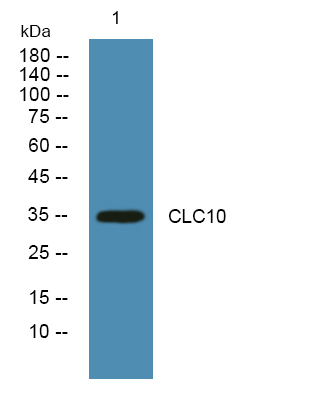
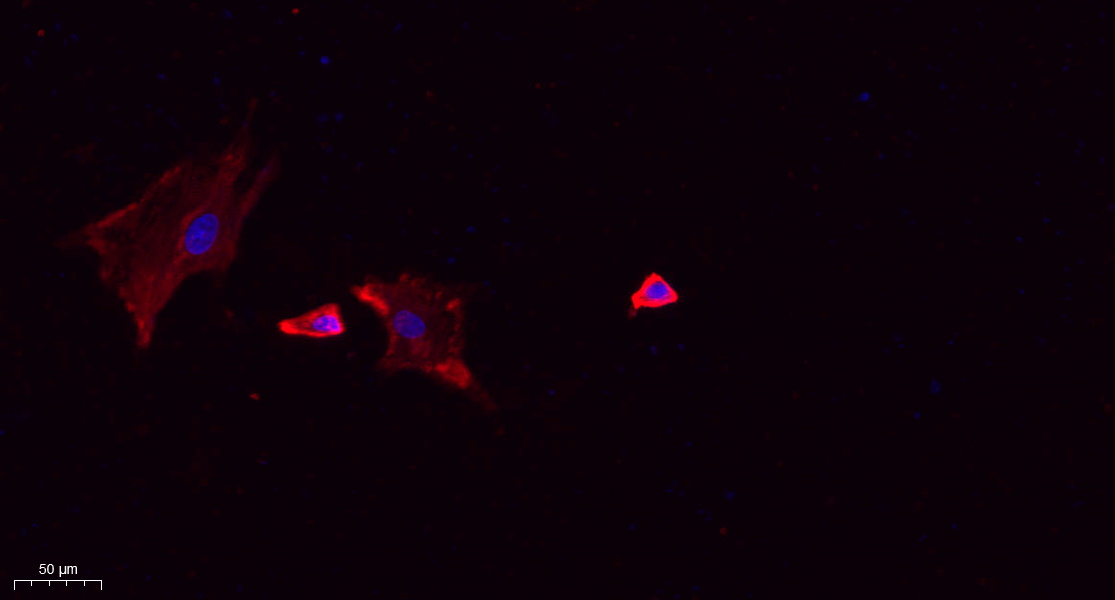

Anti-CLEC10A antibody (191-240 aa) (STJ192024)
SPECIFICATIONS
ClonalityPolyclonal
HostRabbit
ConjugationUnconjugated
IsotypeIgG
ImmunogenSynthesized peptide derived from part of the human protein at the amino acid range 191-240
General Information
| Short Description | Rabbit polyclonal anti-C-type lectin domain family 10 member A (191-240 aa) for use in WB, IF and ELISA in Human, Rat and Mouse samples. Datasheet included with dilution recommendations, and related reagents. |
| Applications | WB/IF/ELISA |
| Host | Rabbit |
| Reactivity | Human/Rat/Mouse |
| Note | STRICTLY FOR FURTHER SCIENTIFIC RESEARCH USE ONLY (RUO). MUST NOT TO BE USED IN DIAGNOSTIC OR THERAPEUTIC APPLICATIONS. |
Product Properties
| Clonality | Polyclonal |
| Isotype | IgG |
| Conjugation | Unconjugated |
| Concentration | 1 mg/mL |
| Purification | The antibody was affinity-purified from rabbit antiserum by affinity-chromatography using epitope-specific immunogen. |
| Dilution Range | WB 1:500-2000IF 1:100-300ELISA 1:5000-20000 |
| Formulation | Liquid in PBS containing 50% Glycerol and 0.02% Sodium Azide. |
| Storage Instruction | Store at-20°C for up to 1 year from the date of receipt, and avoid repeat freeze-thaw cycles. |
Target Information
| Gene Symbol | CLEC10A |
| Gene ID | 10462 |
| Uniprot ID | CLC10_HUMAN |
| Immunogen | Synthesized peptide derived from part of the human protein at the amino acid range 191-240 |
| Immunogen Region | 191-240 aa |
| Specificity | CLC10 Polyclonal Antibody detects endogenous levels of protein. |
Additional Info
| Function | C-type lectin receptor involved in recognition of N-acetylgalactosamine (GalNAc)-terminated glycans by myeloid antigen presenting cells (APCs). Binds in a Ca(2+)-dependent manner to alpha- and beta-linked GalNAc residues on glycoprotein and glycolipid antigens, including alphaGalNAc- and Galbeta1->3GalNAc-O-Ser/Thr also known as Tn and T antigens, LacdiNAc epitope GalNAcbeta1->4GlcNAc and its derivative GalNAcbeta1->4-(Fucalpha1->3)GlcNAc, O-linked core 5 and 6 glycans, and GM2 and GD2 gangliosides. Acts as a signaling receptor at the interface of APC-T cell interactions. On immature dendritic cells, recognizes Tn antigen-carrying PTPRC/CD45 receptor on effector T cells and downregulates PTRPN/CD45 phosphatase activity with an impact on T cell activation threshold, cytokine production and proliferation. Modulates dendritic cell maturation toward a tolerogenic phenotype leading to generation of regulatory CD4-positive T cell subset with immune suppressive functions. Acts as an endocytic pattern recognition receptor involved in antitumor immunity. During tumorigenesis, recognizes Tn antigens and its sialylated forms Neu5Ac-Tn and Neu5Gc-Tn expressed on tumor cell mucins. On immature dendritic cells, can internalize Tn-terminated immunogens and target them to endolysosomal compartment for MHC class I and II antigen presentation to CD8-positive and CD4-positive T cells, respectively. |
| Protein Name | C-Type Lectin Domain Family 10 Member AC-Type Lectin Superfamily Member 14Dc-Asialoglycoprotein ReceptorDc-AsgprMacrophage Galactose-Type LectinMglMacrophage Lectin 2Cd Antigen Cd301 |
| Database Links | Reactome: R-HSA-5621480 |
| Cellular Localisation | Cell MembraneSingle-Pass Type Ii Membrane ProteinEarly Endosome MembraneLysosome MembraneRecycles Between The Plasma Membrane And The Endolysosomal CompartmentUpon Antigen BindingInternalizes Via Endocytosis And Then Dissociates From Antigen At Acidic Ph Characteristic Of Endolysosomal Vesicles |
| Alternative Antibody Names | Anti-C-Type Lectin Domain Family 10 Member A antibodyAnti-C-Type Lectin Superfamily Member 14 antibodyAnti-Dc-Asialoglycoprotein Receptor antibodyAnti-Dc-Asgpr antibodyAnti-Macrophage Galactose-Type Lectin antibodyAnti-Mgl antibodyAnti-Macrophage Lectin 2 antibodyAnti-Cd Antigen Cd301 antibodyAnti-CLEC10A antibodyAnti-CLECSF13 antibodyAnti-CLECSF14 antibodyAnti-HML antibody |
Information sourced from Uniprot.org