
![Anti-CD369/CLEC7A nanobody [SAA1364] (STJN000326)](https://cdn11.bigcommerce.com/s-zso2xnchw9/images/stencil/124x110/products/200939/413121/STJN000326-SDS-PAGE-1__25058.1749232618.jpg?c=1 "Anti-CD369/CLEC7A nanobody [SAA1364] (STJN000326)")
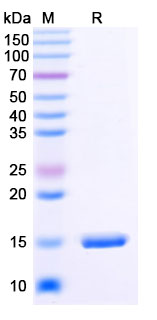
![Anti-CD369/CLEC7A nanobody [SAA1364] (STJN000326)](https://cdn11.bigcommerce.com/s-zso2xnchw9/images/stencil/1280x1280/products/200939/413121/STJN000326-SDS-PAGE-1__25058.1749232618.jpg?c=1 "Anti-CD369/CLEC7A nanobody [SAA1364] (STJN000326)")
Anti-CD369/CLEC7A nanobody [SAA1364] (STJN000326)
SPECIFICATIONS
ClonalityMonoclonal
HostAlpaca
ConjugationUnconjugated
IsotypeVHH-8His-Cys-tag
General Information
| Short Description | Alpaca monoclonal nanobody anti-C-Type Lectin Domain Family 7 Member A is suitable for use in ELISA and Immunofluorescence research applications. |
| Applications | ELISA/IF |
| Host | Alpaca |
| Reactivity | Human |
| Note | STRICTLY FOR FURTHER SCIENTIFIC RESEARCH USE ONLY (RUO). MUST NOT BE USED IN DIAGNOSTIC OR THERAPEUTIC APPLICATIONS. |
Product Properties
| Clonality | Monoclonal |
| Clone ID | SAA1364 |
| Isotype | VHH-8His-Cys-tag |
| Conjugation | Unconjugated |
| Concentration | 1 mg/mL |
| Purification | Purified by Nickel column. |
| Formulation | 0.01M PBS, pH 7.4. |
| Storage Instruction | Use a manual defrost freezer and avoid repeated freeze-thaw cycles. Store at 4°C short term (1-2 weeks). Store at-20°C 12 months. Store at-80°C long term. |
Target Information
| Gene Symbol | CLEC7A |
| Gene ID | 64581 |
| Uniprot ID | CLC7A_HUMAN |
Additional Info
| Post Translational Modifications | Phosphorylated on tyrosine residues in response to beta-glucan binding. |
| Function | Lectin that functions as a pattern recognizing receptor (PRR) specific for beta-1,3-linked and beta-1,6-linked glucans, which constitute cell wall constituents from pathogenic bacteria and fungi. Necessary for the TLR2-mediated inflammatory response and activation of NF-kappa-B: upon beta-glucan binding, recruits SYK via its ITAM motif and promotes a signaling cascade that activates some CARD domain-BCL10-MALT1 (CBM) signalosomes, leading to the activation of NF-kappa-B and MAP kinase p38 (MAPK11, MAPK12, MAPK13 and/or MAPK14) pathways which stimulate expression of genes encoding pro-inflammatory cytokines and chemokines. Enhances cytokine production in macrophages and dendritic cells. Mediates production of reactive oxygen species in the cell. Mediates phagocytosis of C.albicans conidia. Binds T-cells in a way that does not involve their surface glycans and plays a role in T-cell activation. Stimulates T-cell proliferation. Induces phosphorylation of SCIMP after binding beta-glucans. |
| Protein Name | C-Type Lectin Domain Family 7 Member ABeta-Glucan ReceptorC-Type Lectin Superfamily Member 12Dendritic Cell-Associated C-Type Lectin 1Dc-Associated C-Type Lectin 1Dectin-1Cd Antigen Cd369 |
| Database Links | Reactome: R-HSA-5607764 |
| Cellular Localisation | Cell MembraneSingle-Pass Type Ii Membrane ProteinIsoform 5: CytoplasmIsoform 6: CytoplasmIsoform 7: Cytoplasm |
| Alternative Nanobody Names | Anti-C-Type Lectin Domain Family 7 Member A nanobodyAnti-Beta-Glucan Receptor nanobodyAnti-C-Type Lectin Superfamily Member 12 nanobodyAnti-Dendritic Cell-Associated C-Type Lectin 1 nanobodyAnti-Dc-Associated C-Type Lectin 1 nanobodyAnti-Dectin-1 nanobodyAnti-Cd Antigen Cd369 nanobodyAnti-CLEC7A nanobodyAnti-BGR nanobodyAnti-CLECSF12 nanobodyAnti-DECTIN1 nanobodyAnti-UNQ539 nanobodyAnti-PRO1082 nanobody |
Information sourced from Uniprot.org