


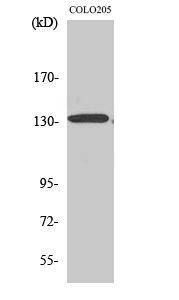
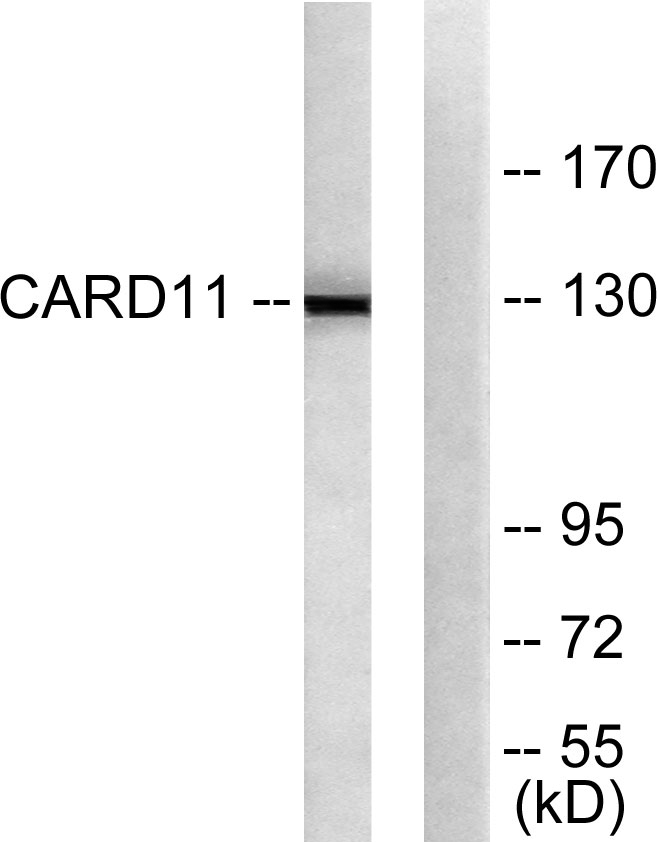
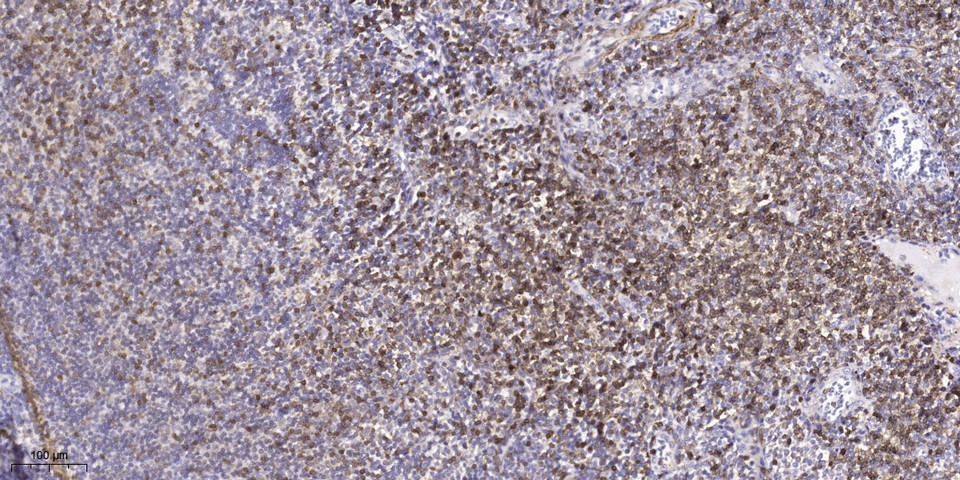

Anti-CARD11 antibody (10-59 aa) (STJ92000)
SPECIFICATIONS
ClonalityPolyclonal
HostRabbit
ConjugationUnconjugated
IsotypeIgG
ImmunogenThe antiserum was produced against synthesized peptide derived from the human CARD11 at the amino acid range 10-59
General Information
| Short Description | Rabbit polyclonal anti-Caspase recruitment domain-containing protein 11 (10-59 aa) for use in WB, IHC, IF and ELISA in Human and Mouse samples. Datasheet included with dilution recommendations, and related reagents. |
| Applications | WB/IHC/IF/ELISA |
| Host | Rabbit |
| Reactivity | Human/Mouse |
| Note | STRICTLY FOR FURTHER SCIENTIFIC RESEARCH USE ONLY (RUO). MUST NOT TO BE USED IN DIAGNOSTIC OR THERAPEUTIC APPLICATIONS. |
Product Properties
| Clonality | Polyclonal |
| Isotype | IgG |
| Conjugation | Unconjugated |
| Concentration | 1 mg/mL |
| Purification | The antibody was affinity-purified from rabbit antiserum by affinity-chromatography using epitope-specific immunogen. |
| Dilution Range | WB 1:500-1:2000IHC 1:100-1:300IF 1:200-1:1000ELISA 1:40000 |
| Formulation | Liquid in PBS containing 50% Glycerol, 0.5% BSA and 0.02% Sodium Azide. |
| Storage Instruction | Store at-20°C for up to 1 year from the date of receipt, and avoid repeat freeze-thaw cycles. |
Target Information
| Gene Symbol | CARD11 |
| Gene ID | 84433 |
| Uniprot ID | CAR11_HUMAN |
| Immunogen | The antiserum was produced against synthesized peptide derived from the human CARD11 at the amino acid range 10-59 |
| Immunogen Region | 10-59 aa |
| Specificity | CARD 11 Polyclonal Antibody detects endogenous levels of CARD 11 protein. |
Additional Info
| Post Translational Modifications | Phosphorylation at Ser-559, Ser-644 and Ser-652 by PRKCB and PRKCQ leads to a shift from an inactive to an active form that activates the NF-kappa-B signaling. |
| Function | Adapter protein that plays a key role in adaptive immune response by transducing the activation of NF-kappa-B downstream of T-cell receptor (TCR) and B-cell receptor (BCR) engagement. Transduces signals downstream TCR or BCR activation via the formation of a multiprotein complex together with BCL10 and MALT1 that induces NF-kappa-B and MAP kinase p38 (MAPK11, MAPK12, MAPK13 and/or MAPK14) pathways. Upon activation in response to TCR or BCR triggering, CARD11 homooligomerizes to form a nucleating helical template that recruits BCL10 via CARD-CARD interaction, thereby promoting polymerization of BCL10 and subsequent recruitment of MALT1: this leads to I-kappa-B kinase (IKK) phosphorylation and degradation, and release of NF-kappa-B proteins for nuclear translocation. Its binding to DPP4 induces T-cell proliferation and NF-kappa-B activation in a T-cell receptor/CD3-dependent manner. Promotes linear ubiquitination of BCL10 by promoting the targeting of BCL10 to RNF31/HOIP. Stimulates the phosphorylation of BCL10. Also activates the TORC1 signaling pathway. |
| Protein Name | Caspase Recruitment Domain-Containing Protein 11Card-Containing Maguk Protein 1Carma 1 |
| Database Links | Reactome: R-HSA-1169091Reactome: R-HSA-202424Reactome: R-HSA-2871837Reactome: R-HSA-5607764 |
| Cellular Localisation | CytoplasmMembrane RaftColocalized With Dpp4 In Membrane Rafts |
| Alternative Antibody Names | Anti-Caspase Recruitment Domain-Containing Protein 11 antibodyAnti-Card-Containing Maguk Protein 1 antibodyAnti-Carma 1 antibodyAnti-CARD11 antibodyAnti-CARMA1 antibody |
Information sourced from Uniprot.org