
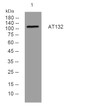


Anti-ATP13A2 antibody (56-106 aa) (STJ195852)
SPECIFICATIONS
ClonalityPolyclonal
HostRabbit
ConjugationUnconjugated
IsotypeIgG
ImmunogenSynthesized peptide derived from the human AT132 at the amino acid range 56-106
General Information
| Short Description | Rabbit polyclonal anti-Polyamine-transporting ATPase 13A2 (56-106 aa) for use in WB in Human and Mouse samples. Datasheet included with dilution recommendations, and related reagents. |
| Applications | WB |
| Host | Rabbit |
| Reactivity | Human/Mouse |
| Note | STRICTLY FOR FURTHER SCIENTIFIC RESEARCH USE ONLY (RUO). MUST NOT TO BE USED IN DIAGNOSTIC OR THERAPEUTIC APPLICATIONS. |
Product Properties
| Clonality | Polyclonal |
| Isotype | IgG |
| Conjugation | Unconjugated |
| Concentration | 1 mg/mL |
| Purification | The antibody was affinity-purified from rabbit antiserum by affinity-chromatography using epitope-specific immunogen. |
| Dilution Range | WB 1:500-2000 |
| Formulation | Liquid in PBS containing 50% Glycerol, 0.5% BSA and 0.02% Sodium Azide. |
| Storage Instruction | Store at-20°C for up to 1 year from the date of receipt, and avoid repeat freeze-thaw cycles. |
Target Information
| Gene Symbol | ATP13A2 |
| Gene ID | 23400 |
| Uniprot ID | AT132_HUMAN |
| Immunogen | Synthesized peptide derived from the human AT132 at the amino acid range 56-106 |
| Immunogen Region | 56-106 aa |
| Specificity | This antibody detects endogenous levels of AT132 at Human/Mouse |
Additional Info
| Post Translational Modifications | Autophosphorylated. Accumulates in an inactive autophosphorylated state and autophosphorylation is stimulated by phosphatidic acid and phosphatidylinositol 3,5-bisphosphate but not by Mn(2+) or Zn(2+). The presence of spermine results in a dose-dependent reduction in autophosphorylation. |
| Function | ATPase which acts as a lysosomal polyamine exporter with high affinity for spermine. Also stimulates cellular uptake of polyamines and protects against polyamine toxicity. Plays a role in intracellular cation homeostasis and the maintenance of neuronal integrity. Contributes to cellular zinc homeostasis. Confers cellular protection against Mn(2+) and Zn(2+) toxicity and mitochondrial stress. Required for proper lysosomal and mitochondrial maintenance. Regulates the autophagy-lysosome pathway through the control of SYT11 expression at both transcriptional and post-translational levels. Facilitates recruitment of deacetylase HDAC6 to lysosomes to deacetylate CTTN, leading to actin polymerization, promotion of autophagosome-lysosome fusion and completion of autophagy. Promotes secretion of exosomes as well as secretion of SCNA via exosomes. Plays a role in lipid homeostasis. |
| Protein Name | Polyamine-Transporting Atpase 13a2 |
| Database Links | Reactome: R-HSA-936837 |
| Cellular Localisation | Lysosome MembraneMulti-Pass Membrane ProteinLate Endosome MembraneEndosomeMultivesicular Body MembraneCytoplasmic VesicleAutophagosome Membrane |
| Alternative Antibody Names | Anti-Polyamine-Transporting Atpase 13a2 antibodyAnti-ATP13A2 antibodyAnti-PARK9 antibody |
Information sourced from Uniprot.org