


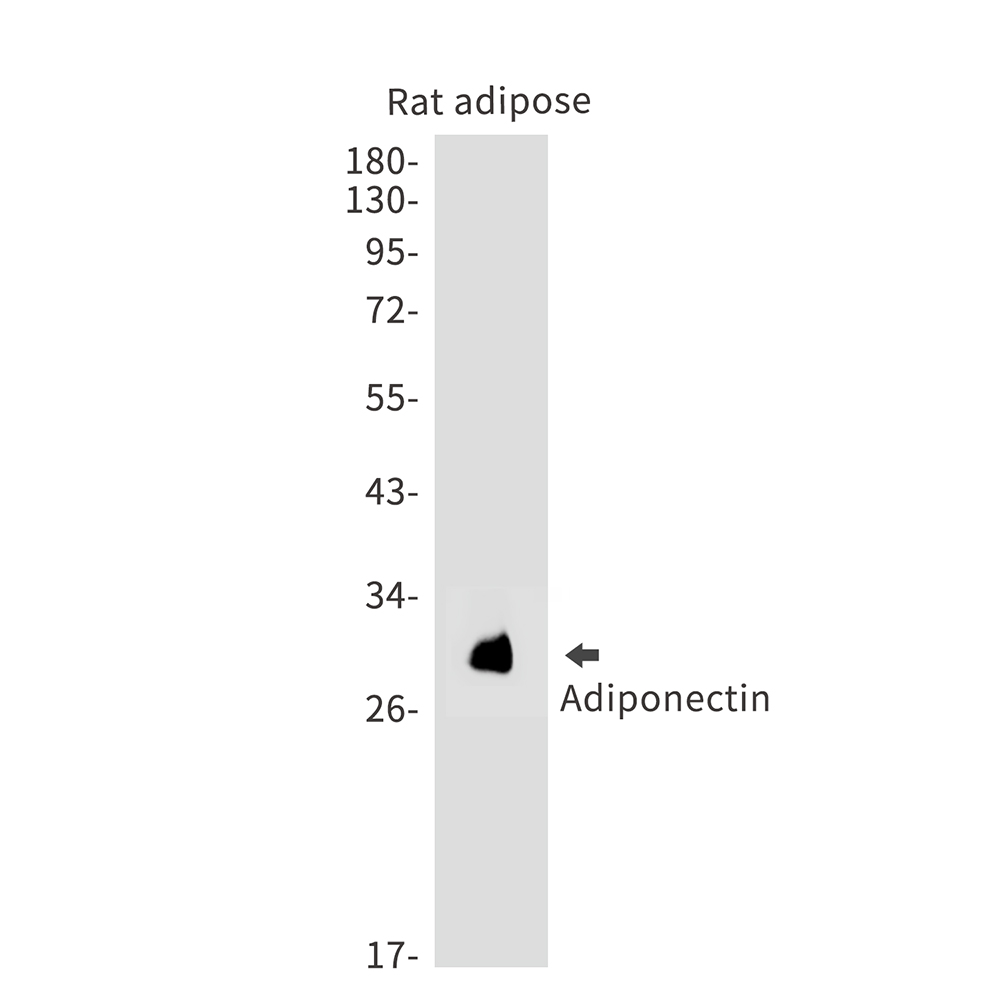
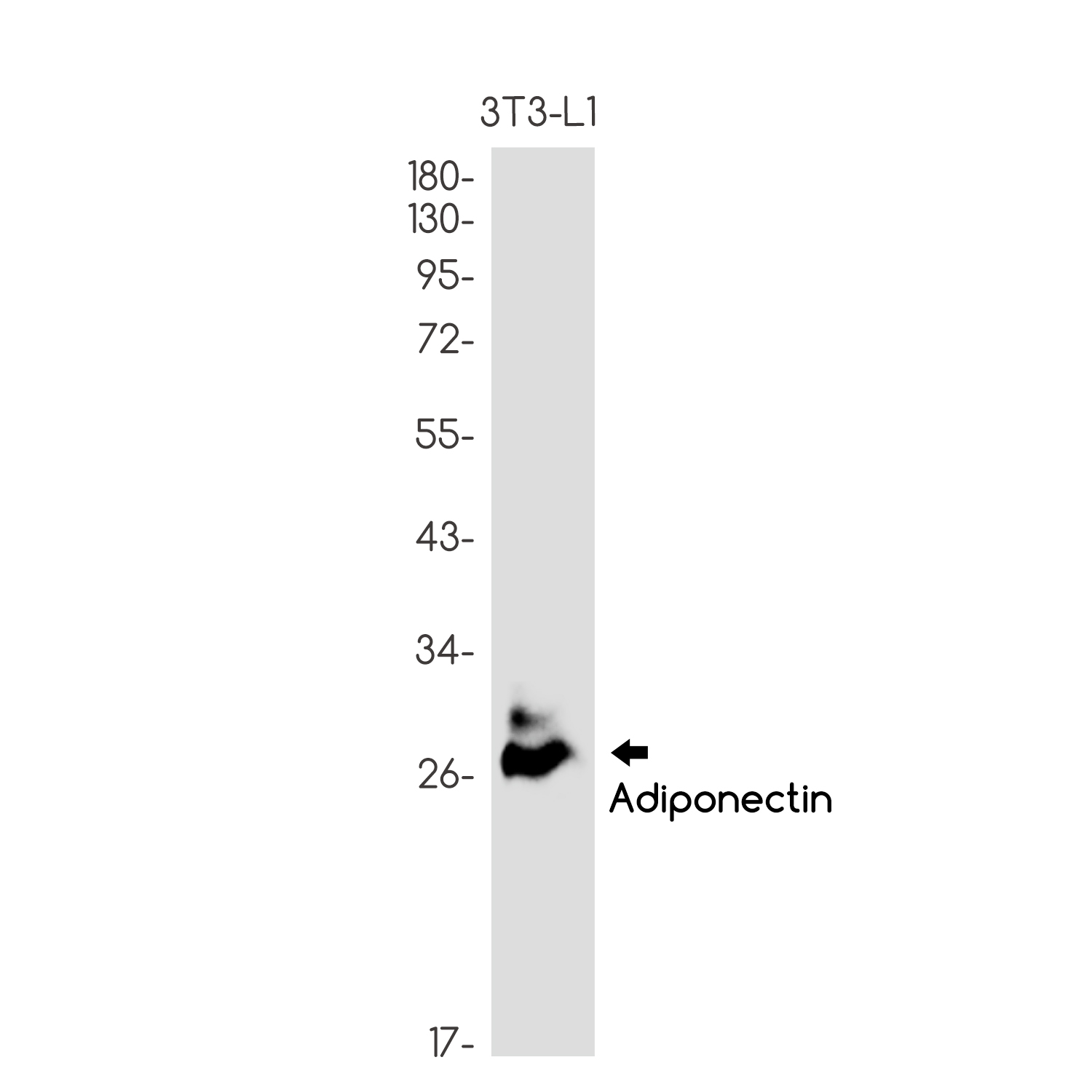

Anti-Adiponectin antibody [R09-2C1] (STJA0033983)
SPECIFICATIONS
ClonalityMonoclonal
HostRabbit
ConjugationUnconjugated
IsotypeIgG
ImmunogenRecombinant protein of mouse Adiponectin
General Information
| Short Description | Rabbit monoclonal anti-Adiponectin for use in WB, IHC-F, IHC-P, ICC and IF in Mouse and Rat samples. Datasheet included with dilution recommendations, and related reagents. |
| Applications | WB/IHC-F/IHC-P/ICC/IF |
| Host | Rabbit |
| Reactivity | Mouse/Rat |
| Note | STRICTLY FOR FURTHER SCIENTIFIC RESEARCH USE ONLY (RUO). MUST NOT TO BE USED IN DIAGNOSTIC OR THERAPEUTIC APPLICATIONS. |
Product Properties
| Clonality | Monoclonal |
| Clone ID | R09-2C1 |
| Isotype | IgG |
| Conjugation | Unconjugated |
| Concentration | 0.3 mg/mL |
| Purification | Affinity Purified |
| Dilution Range | WB 1:500-1:1000IHC 1:50-1:100IF 1:50-1:200 |
| Formulation | 50mM Tris-Glycine (pH 7.4) , 0.15M NaCl, 40% Glycerol, 0.01% Sodium azide and 0.05% BSA |
| Storage Instruction | Store at 4°C short term. Aliquot and store at-20°C long term. Avoid freeze/thaw cycles. |
Target Information
| Gene Symbol | Adipoq |
| Gene ID | 11450 |
| Uniprot ID | ADIPO_MOUSE |
| Immunogen | Recombinant protein of mouse Adiponectin |
Additional Info
| Tissue Specificity | Synthesized exclusively by adipocytes and secreted into plasma. |
| Post Translational Modifications | HMW complexes are more extensively glycosylated than smaller oligomers. Hydroxylation and glycosylation of the lysine residues within the collagen-like domain of adiponectin seem to be critically involved in regulating the formation and/or secretion of HMW complexes and consequently contribute to the insulin-sensitizing activity of adiponectin in hepatocytes. O-glycosylated. Not N-glycosylated O-linked glycans on hydroxylysine residues consist of Glc-Gal disaccharides bound to the oxygen atom of post-translationally added hydroxyl groups. O-linked glycosylation in the N-terminal is disialylated with the structure Neu5Acalpha2->8Neu5Acalpha2->3Gal. Sialylated by alpha 2,8-sialyltransferase III. Succination of Cys-39 by the Krebs cycle intermediate fumarate, which leads to S-(2-succinyl)cysteine residues, inhibits polymerization and secretion of adiponectin. Adiponectin is a major target for succination in both adipocytes and adipose tissue of diabetic mice. It was proposed that succination of proteins is a biomarker of mitochondrial stress and accumulation of Krebs cycle intermediates in adipose tissue in diabetes and that succination of adiponectin may contribute to the decrease in plasma adiponectin in diabetes. |
| Function | Important adipokine involved in the control of fat metabolism and insulin sensitivity, with direct anti-diabetic, anti-atherogenic and anti-inflammatory activities. Stimulates AMPK phosphorylation and activation in the liver and the skeletal muscle, enhancing glucose utilization and fatty-acid combustion. Antagonizes TNF-alpha by negatively regulating its expression in various tissues such as liver and macrophages, and also by counteracting its effects. Inhibits endothelial NF-kappa-B signaling through a cAMP-dependent pathway. May play a role in cell growth, angiogenesis and tissue remodeling by binding and sequestering various growth factors with distinct binding affinities, depending on the type of complex, LMW, MMW or HMW. |
| Protein Name | Adiponectin30 Kda Adipocyte Complement-Related ProteinAdipocyte Complement-Related 30 Kda ProteinAcrp30Adipocyte - C1q And Collagen Domain-Containing ProteinAdipocyte-Specific Protein Adipoq |
| Database Links | Reactome: R-MMU-163680 |
| Cellular Localisation | Secreted |
| Alternative Antibody Names | Anti-Adiponectin antibodyAnti-30 Kda Adipocyte Complement-Related Protein antibodyAnti-Adipocyte Complement-Related 30 Kda Protein antibodyAnti-Acrp30 antibodyAnti-Adipocyte - C1q And Collagen Domain-Containing Protein antibodyAnti-Adipocyte-Specific Protein Adipoq antibodyAnti-Adipoq antibodyAnti-Acdc antibodyAnti-Acrp30 antibodyAnti-Apm1 antibody |
Information sourced from Uniprot.org