
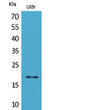


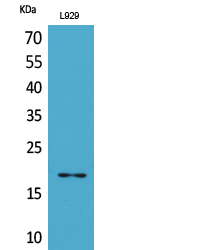
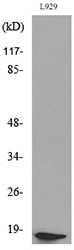
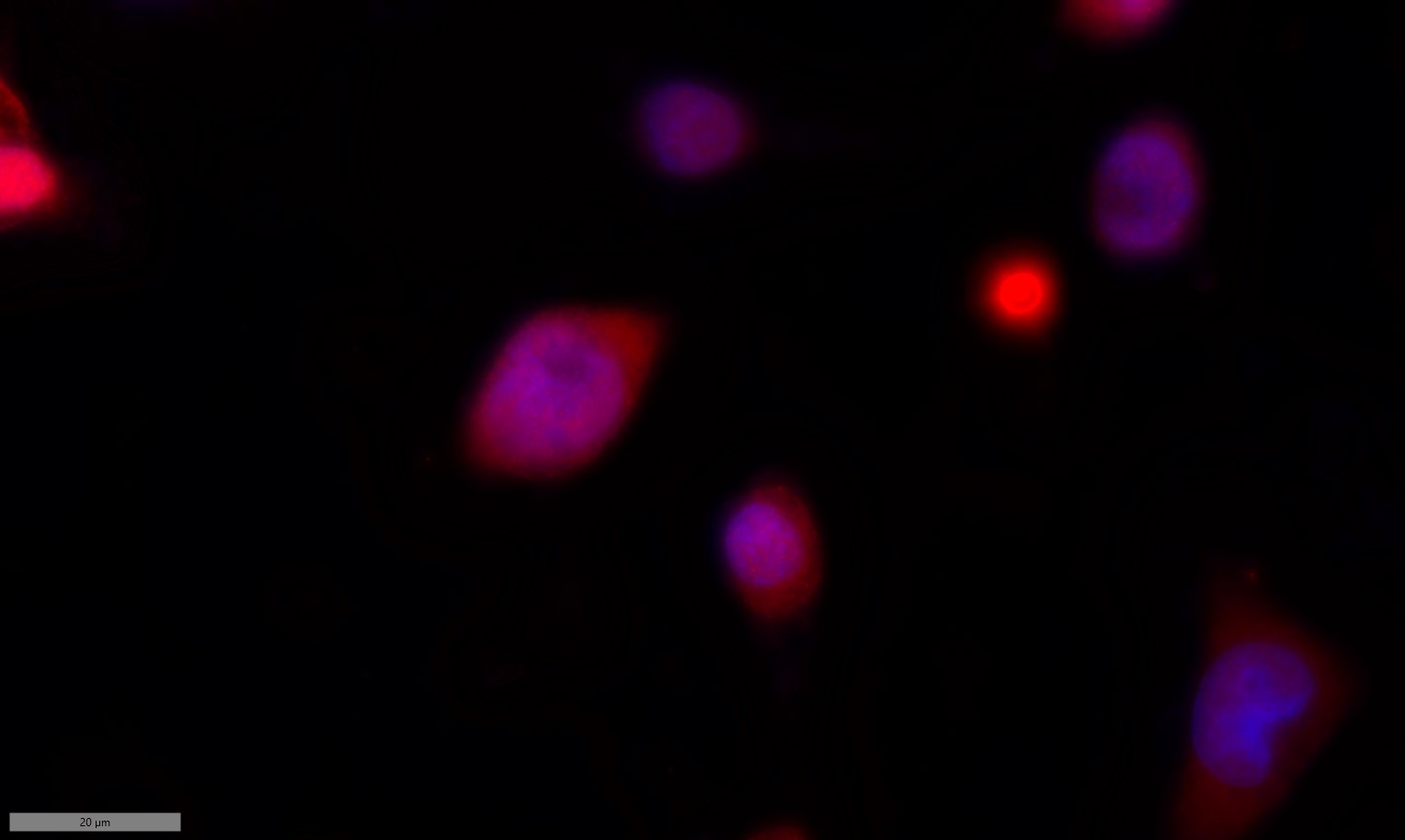

Anti-Acetyl-EIF5A2-K47 antibody (11-60 aa) (STJ90136)
SPECIFICATIONS
ClonalityPolyclonal
HostRabbit
ConjugationUnconjugated
IsotypeIgG
ImmunogenThe antiserum was produced against synthesized Acetyl-peptide derived from the human eIF5A around the Acetylation site of Lys47 at the amino acid range 11-60
General Information
| Short Description | Rabbit polyclonal anti-Acetyl-Eukaryotic translation initiation factor 5A-2-K47 (11-60 aa) for use in WB and ELISA in Human, Mouse and Rat samples. Datasheet included with dilution recommendations, and related reagents. |
| Applications | WB/ELISA |
| Host | Rabbit |
| Reactivity | Human/Mouse/Rat |
| Note | STRICTLY FOR FURTHER SCIENTIFIC RESEARCH USE ONLY (RUO). MUST NOT TO BE USED IN DIAGNOSTIC OR THERAPEUTIC APPLICATIONS. |
Product Properties
| Clonality | Polyclonal |
| Isotype | IgG |
| Conjugation | Unconjugated |
| Concentration | 1 mg/mL |
| Purification | The antibody was affinity-purified from rabbit antiserum by affinity-chromatography using epitope-specific immunogen. |
| Dilution Range | WB 1:500-1:2000ELISA 1:20000 |
| Formulation | Liquid in PBS containing 50% Glycerol, 0.5% BSA and 0.02% Sodium Azide. |
| Storage Instruction | Store at-20°C for up to 1 year from the date of receipt, and avoid repeat freeze-thaw cycles. |
Target Information
| Gene Symbol | EIF5A2 |
| Gene ID | 56648 |
| Uniprot ID | IF5A2_HUMAN |
| Immunogen | The antiserum was produced against synthesized Acetyl-peptide derived from the human eIF5A around the Acetylation site of Lys47 at the amino acid range 11-60 |
| Immunogen Region | 11-60 aa |
| Specificity | Acetyl-eIF5A/eIF5A2 (K47) Polyclonal Antibody detects endogenous levels of eIF5A/eIF5A2 protein only when acetylated at K47. |
Additional Info
| Post Translational Modifications | Lys-50 undergoes hypusination, a unique post-translational modification that consists in the addition of a butylamino group from spermidine to lysine side chain and leads to the formation of a hypusine residue. eIF-5As are the only known proteins to undergo this modification, which is essential for their function. |
| Function | Translation factor that promotes translation elongation and termination, particularly upon ribosome stalling at specific amino acid sequence contexts. Binds between the exit (E) and peptidyl (P) site of the ribosome and promotes rescue of stalled ribosome: specifically required for efficient translation of polyproline-containing peptides as well as other motifs that stall the ribosome. Acts as a ribosome quality control (RQC) cofactor by joining the RQC complex to facilitate peptidyl transfer during CAT tailing step. Also involved in actin dynamics and cell cycle progression, mRNA decay and probably in a pathway involved in stress response and maintenance of cell wall integrity. |
| Protein Name | Eukaryotic Translation Initiation Factor 5a-2Eif-5a-2Eif-5a2Eukaryotic Initiation Factor 5a Isoform 2 |
| Database Links | Reactome: R-HSA-204626 |
| Cellular Localisation | CytoplasmNucleusEndoplasmic Reticulum MembranePeripheral Membrane ProteinCytoplasmic SideHypusine Modification Promotes The Nuclear Export And Cytoplasmic Localization And There Was A Dynamic Shift In The Localization From Predominantly Cytoplasmic To Primarily Nuclear Under Apoptotic Inducing Conditions |
| Alternative Antibody Names | Anti-Eukaryotic Translation Initiation Factor 5a-2 antibodyAnti-Eif-5a-2 antibodyAnti-Eif-5a2 antibodyAnti-Eukaryotic Initiation Factor 5a Isoform 2 antibodyAnti-EIF5A2 antibody |
Information sourced from Uniprot.org