
Kits
Our range spans ELISA, CLIA and antibody pair kits for quantifying proteins, peptides and hormones in serum, plasma, cell lysate and tissue homogenate. Each format trades off sensitivity, dynamic range and assay time differently, so use the comparisons below to match a format and product to your sample type and target.
Kits by Format
Antibody pairs are carefully selected for optimal performance in sandwich immunoassays, including ELISA and lateral flow, with each pair including matched capture and detection antibodies validated for target specificity and sensitivity. ELISA kits are designed for precise quantification of proteins, cytokines and biomarkers, and include pre-coated plates and ready-to-use reagents for accuracy, reproducibility and ease of use across multiple sample types.
ELISA Kits
Pre-coated plates and ready-to-use reagents for quantifying proteins, cytokines and biomarkers across serum, plasma, cell lysate and tissue homogenate.
Browse ELISA Kits →CLIA Kits
Sub-pg/mL sensitivity and a wider dynamic range than standard ELISA, run on a luminometer for low-abundance targets and shorter assay times.
Browse CLIA Kits →Antibody Pairs
Matched capture and detection antibodies validated for target specificity and sensitivity, for building a custom sandwich immunoassay or lateral flow test.
Browse Antibody Pairs →Choosing a Kit
Compare sensitivity, dynamic range, sample volume, assay time and matrix compatibility across the three formats to find the right fit for your target and sample type.
| Format | Sensitivity (LOD) | Dynamic range | Sample volume | Assay time | Matrix compatibility |
|---|---|---|---|---|---|
| ELISA (sandwich) | Low pg/mL | ~2–3 logs | 50–100 µL | 3–5 h | Serum, plasma, CSF, supernatant |
| CLIA | Sub-pg/mL | ~3–4 logs | 20–50 µL | 2–3 h | As above, higher sensitivity |
| Antibody pairs | Format-dependent | Custom | Custom | Custom | Build your own assay |
Validation & QC
Each kit's Certificate of Analysis (COA) reports key performance metrics to confirm accuracy, precision and matrix compatibility. Use these values to set acceptance criteria, compare kits, and check for reproducible results across plates, operators and instruments. Click a metric for what it means and why it matters.
Spike & recovery 80–120%▾
Measures how accurately the assay recovers a known amount of analyte added to your sample matrix. Values outside this range point to matrix interference affecting accuracy.
Linearity of dilution R² ≥ 0.98▾
Confirms the assay reads proportionally as a sample is serially diluted (parallelism). Poor linearity means results are unreliable at some dilutions.
Intra/inter-assay CV ≤10% / ≤15%▾
Coefficient of variation within a single plate (intra) and across separate runs (inter). Lower CVs mean more reproducible results between replicates, operators and plates.
LOD / LOQ Kit-specific▾
The Limit of Detection and Limit of Quantification set the lowest concentration the kit can reliably detect and accurately measure. Check this against your expected sample concentration before ordering.
ELISA vs CLIA
ELISA and CLIA measure the same analytes but differ in detection chemistry, sensitivity and instrumentation. Use ELISA for routine quantification on a standard plate reader; choose CLIA when you need higher sensitivity, a wider dynamic range or a shorter assay time on a luminometer. Toggle a format to highlight its column.
| Feature | ELISA | CLIA |
|---|---|---|
| Sensitivity | Low pg/mL | Sub-pg/mL |
| Readout | Colorimetric (450 nm) | Chemiluminescent |
| Throughput | High (plate readers) | High (luminometers) |
| Total time | 3–5 h | 2–3 h |
Popular ELISA Kits
Cytokine and inflammation targets make up the most frequently ordered ELISA kits across the range, spanning both in vitro cytokine profiling and in vivo mouse disease models.
Popular Antibody Pairs
Matched capture and detection antibody pairs for building sandwich immunoassays against the most frequently requested cytokine and growth factor targets.
Featured CLIA Kits
Chemiluminescent immunoassay kits for cytokine targets that need sub-pg/mL sensitivity, most often for low-abundance detection in serum and plasma.
FAQs
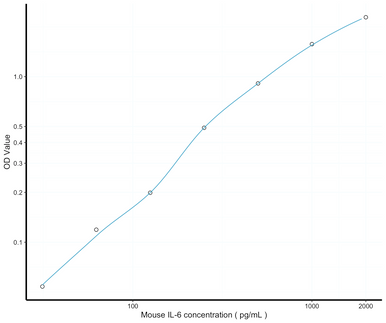
What should I check if my standard curve is non-linear? +
Re-prepare the standards, confirm the reader settings, keep incubations uniform and check wash stringency.
High background with serum samples? +
Increase blocking, dilute samples further, and use matrix-matched standards.
Can I run CLIA on an ELISA reader? +
No, CLIA needs a luminometer. Use ELISA if you only have an absorbance plate reader.
Need Help Picking a Kit?
Tell us your targets, sample matrix, species, instrument and throughput. We'll recommend kits and share QC details.
Talk to Us