
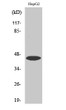
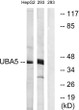

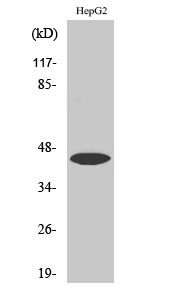
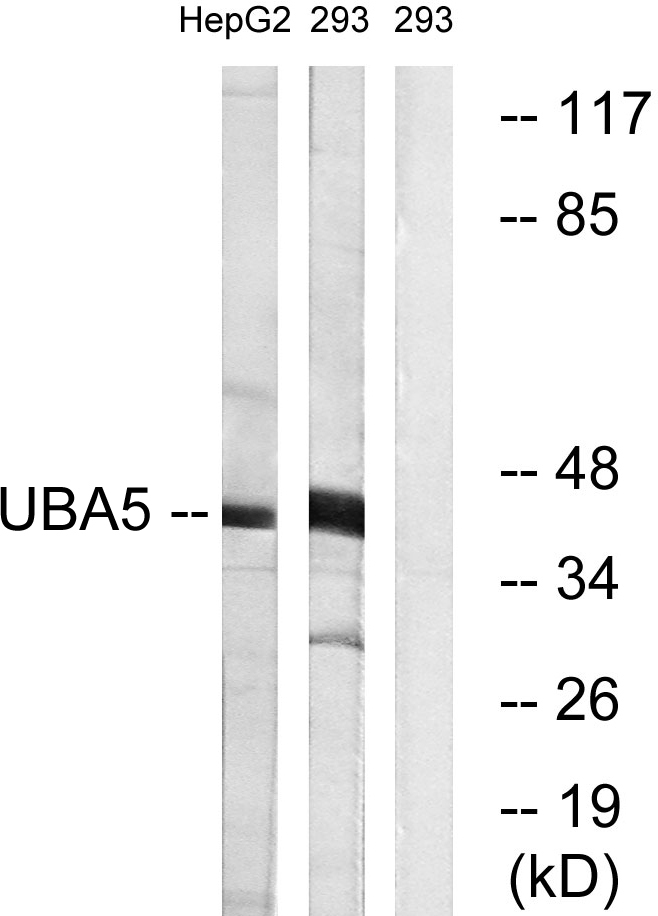
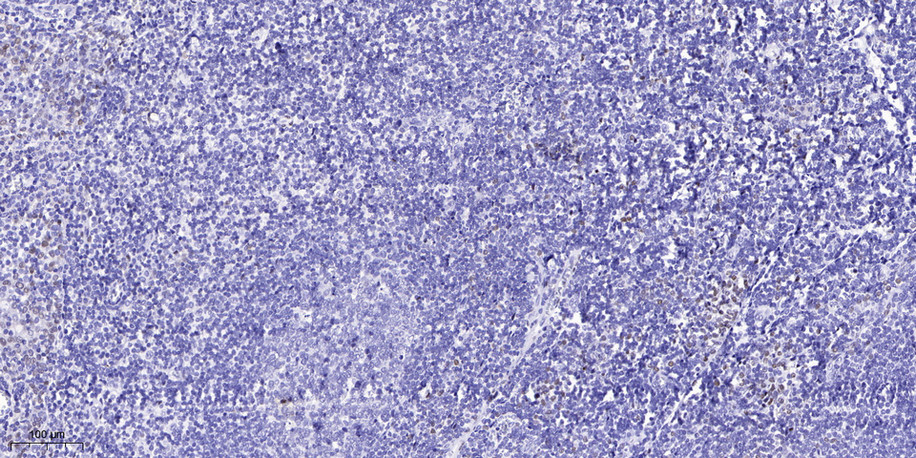

Anti-UBA5 antibody (281-330 aa) (STJ96160)
SPECIFICATIONS
ClonalityPolyclonal
HostRabbit
ConjugationUnconjugated
IsotypeIgG
ImmunogenThe antiserum was produced against synthesized peptide derived from the human UBA5 at the amino acid range 281-330
General Information
| Short Description | Rabbit polyclonal anti-Ubiquitin-like modifier-activating enzyme 5 (281-330 aa) for use in WB, IHC, IF and ELISA in Human, Mouse and Rat samples. Datasheet included with dilution recommendations, and related reagents. |
| Applications | WB/IHC/IF/ELISA |
| Host | Rabbit |
| Reactivity | Human/Mouse/Rat |
| Note | STRICTLY FOR FURTHER SCIENTIFIC RESEARCH USE ONLY (RUO). MUST NOT TO BE USED IN DIAGNOSTIC OR THERAPEUTIC APPLICATIONS. |
Product Properties
| Clonality | Polyclonal |
| Isotype | IgG |
| Conjugation | Unconjugated |
| Concentration | 1 mg/mL |
| Purification | The antibody was affinity-purified from rabbit antiserum by affinity-chromatography using epitope-specific immunogen. |
| Dilution Range | WB 1:500-1:2000IHC 1:100-1:300ELISA 1:5000IF 1:50-200 |
| Formulation | Liquid in PBS containing 50% Glycerol, 0.5% BSA and 0.02% Sodium Azide. |
| Storage Instruction | Store at-20°C for up to 1 year from the date of receipt, and avoid repeat freeze-thaw cycles. |
Target Information
| Gene Symbol | UBA5 |
| Gene ID | 79876 |
| Uniprot ID | UBA5_HUMAN |
| Immunogen | The antiserum was produced against synthesized peptide derived from the human UBA5 at the amino acid range 281-330 |
| Immunogen Region | 281-330 aa |
| Specificity | Uba5 Polyclonal Antibody detects endogenous levels of Uba5 protein. |
Additional Info
| Function | E1-like enzyme which specifically catalyzes the first step in ufmylation. Activates UFM1 by first adenylating its C-terminal glycine residue with ATP, and thereafter linking this residue to the side chain of a cysteine residue in E1, yielding a UFM1-E1 thioester and free AMP. Activates UFM1 via a trans-binding mechanism, in which UFM1 interacts with distinct sites in both subunits of the UBA5 homodimer. Trans-binding also promotes stabilization of the UBA5 homodimer, and enhances ATP-binding. Transfer of UFM1 from UBA5 to the E2-like enzyme UFC1 also takes place using a trans mechanism. Ufmylation plays a key role in various processes, such as ribosome recycling, response to DNA damage, interferon response or reticulophagy (also called ER-phagy). Ufmylation is essential for erythroid differentiation of both megakaryocytes and erythrocytes. |
| Protein Name | Ubiquitin-Like Modifier-Activating Enzyme 5Ubiquitin-Activating Enzyme 5Thifp1Ufm1-Activating EnzymeUbiquitin-Activating Enzyme E1 Domain-Containing Protein 1 |
| Database Links | Reactome: R-HSA-983168 |
| Cellular Localisation | CytoplasmNucleusEndoplasmic Reticulum MembraneGolgi ApparatusLocalizes Mainly In The CytoplasmWhile It Localizes To The Nucleus In Presence Of Sumo2Interaction With Gabarapl2 Promotes Localization To The Endoplasmic Reticulum Membrane |
| Alternative Antibody Names | Anti-Ubiquitin-Like Modifier-Activating Enzyme 5 antibodyAnti-Ubiquitin-Activating Enzyme 5 antibodyAnti-Thifp1 antibodyAnti-Ufm1-Activating Enzyme antibodyAnti-Ubiquitin-Activating Enzyme E1 Domain-Containing Protein 1 antibodyAnti-UBA5 antibodyAnti-UBE1DC1 antibody |
Information sourced from Uniprot.org