
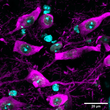


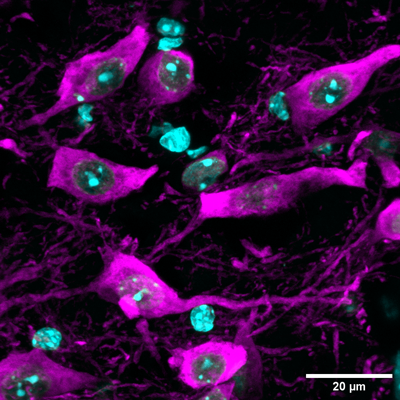
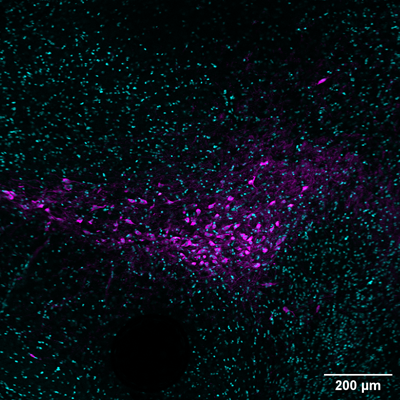


Anti-Tyrosine Hydroxylase antibody (STJA0040644)
SPECIFICATIONS
ClonalityPolyclonal
HostChicken
ConjugationUnconjugated
IsotypeIgY
ImmunogenSynthetic peptides
General Information
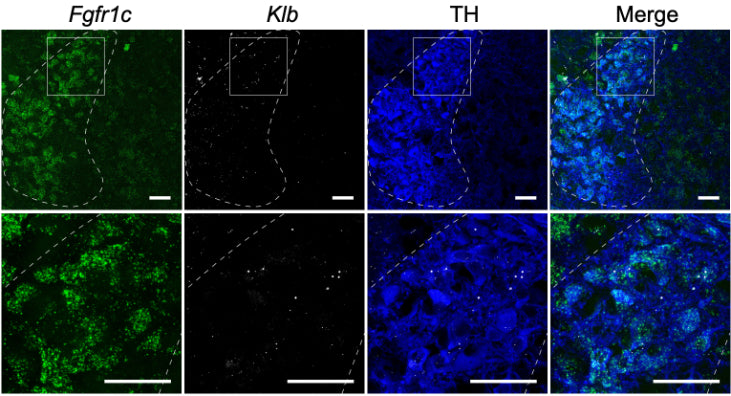
| Short Description | Chicken polyclonal anti-Tyrosine Hydroxylase for use in IHC, ICC and WB in Human, Mouse and Rat samples. Datasheet included with dilution recommendations, and related reagents. |
| Applications | IHC/ICC/WB |
| Host | Chicken |
| Reactivity | Human/Mouse/Rat |
| Note | STRICTLY FOR FURTHER SCIENTIFIC RESEARCH USE ONLY (RUO). MUST NOT TO BE USED IN DIAGNOSTIC OR THERAPEUTIC APPLICATIONS. |
Product Properties
| Clonality | Polyclonal |
| Isotype | IgY |
| Conjugation | Unconjugated |
| Concentration | 200 µg/mL |
| Purification | Affinity-Purified IgY |
| Dilution Range | WB 1:1000-1:2000IHC 1:1000-1:2000ICC 1:1000-1:2000 |
| Formulation | Phosphate-buffered (10 mM) isotonic (0.9%, w/v) saline (“PBS, pH 7.2) with sodium azide (0.02%, w/v) added as a preservative." |
| Storage Instruction | Store at 4°C in the dark. Under these conditions, the antibodies should have a shelf life of at least twelve months, provided they remain sterile. For longer term storage, aliquot and freeze to avoid freeze-thaw of the antibody. |
Target Information
| Gene Symbol | TH |
| Gene ID | 7054 |
| Uniprot ID | TY3H_HUMAN |
| Immunogen | Synthetic peptides |
| Immunogen Sequence | Human, Mouse, Rat |
Additional Info
| Post Translational Modifications | Phosphorylated on Ser-19, Ser-62 and Ser-71 by several protein kinases with different site specificities. Phosphorylation at Ser-62 and Ser-71 leads to an increase of TH activity. Phosphorylation at Ser-71 activates the enzyme and also counteracts the feedback inhibition of TH by catecholamines. Phosphorylation of Ser-19 and Ser-62 triggers the proteasomal degradation of TH through the ubiquitin-proteasome pathway. Phosphorylation at Ser-62 facilitates transport of TH from the soma to the nerve terminals via the microtubule network. Phosphorylation at Ser-19 induces the high-affinity binding to the 14-3-3 protein YWHAG.this interaction may influence the phosphorylation and dephosphorylation of other sites. Ser-19 increases the phosphorylation at Ser-71 in a hierarchical manner, leading to increased activity. |
| Function | Catalyzes the conversion of L-tyrosine to L-dihydroxyphenylalanine (L-Dopa), the rate-limiting step in the biosynthesis of catecholamines, dopamine, noradrenaline, and adrenaline. Uses tetrahydrobiopterin and molecular oxygen to convert tyrosine to L-Dopa. In addition to tyrosine, is able to catalyze the hydroxylation of phenylalanine and tryptophan with lower specificity. Positively regulates the regression of retinal hyaloid vessels during postnatal development. Isoform 5: Lacks catalytic activity. Isoform 6: Lacks catalytic activity. |
| Protein Name | Tyrosine 3-MonooxygenaseTyrosine 3-HydroxylaseTh |
| Database Links | Reactome: R-HSA-209905 |
| Cellular Localisation | CytoplasmPerinuclear RegionNucleusCell ProjectionAxonCytoplasmic VesicleSecretory VesicleSynaptic VesicleWhen Phosphorylated At Ser-19 Shows A Nuclear Distribution And When Phosphorylated At Ser-31 As Well At Ser-40 Shows A Cytosolic DistributionExpressed In Dopaminergic Axons And Axon Terminals |
| Alternative Antibody Names | Anti-Tyrosine 3-Monooxygenase antibodyAnti-Tyrosine 3-Hydroxylase antibodyAnti-Th antibodyAnti-TH antibodyAnti-TYH antibody |
Information sourced from Uniprot.org