

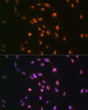

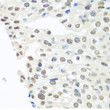


Anti-TARDBP antibody (1-100) (STJ115367)
SPECIFICATIONS
ClonalityPolyclonal
HostRabbit
ConjugationUnconjugated
IsotypeIgG
General Information
| Short Description | Rabbit polyclonal TARDBP (1-100) antibody for use in WB, IHC-P, IF, ICC and ELISA in human, mouse and rat samples. Datasheet included with dilution recommendations, and related reagents. |
| Applications | WB/IHC-P/IF/ICC/ELISA |
| Host | Rabbit |
| Reactivity | Human/Mouse/Rat |
| Note | STRICTLY FOR FURTHER SCIENTIFIC RESEARCH USE ONLY (RUO). MUST NOT TO BE USED IN DIAGNOSTIC OR THERAPEUTIC APPLICATIONS. |
Product Properties
| Clonality | Polyclonal |
| Isotype | IgG |
| Conjugation | Unconjugated |
| Concentration | Lot specific |
| Purification | Affinity purification |
| Dilution Range | WB:1:500-1:2000IHC-P:1:50-1:200IF/ICC:1:50-1:200ELISA:Recommended starting concentration is 1 Mu g/mL. Please optimize the concentration based on your specific assay requirements. |
| Formulation | PBS with 0.02% Sodium Azide, 50% Glycerol, pH 7.3. |
| Storage Instruction | Store at-20°C for up to 1 year from the date of receipt, and avoid repeat freeze-thaw cycles. |
Target Information
| Gene Symbol | TARDBP |
| Gene ID | 23435 |
| Uniprot ID | TADBP_HUMAN |
| Immunogen Region | 1-100 |
| Immunogen Sequence | MSEYIRVTEDENDEPIEIPS EDDGTVLLSTVTAQFPGACG LRYRNPVSQCMRGVRLVEGI LHAPDAGWGNLVYVVNYPKD NKRKMDETDASSAVKVKRAV |
| Specificity | Recombinant fusion protein containing a sequence corresponding to amino acids 1-100 of human TDP-43/TARDBP (NP_031401.1). |
Additional Info
| Tissue Specificity | Ubiquitously expressed. In particular, expression is high in pancreas, placenta, lung, genital tract and spleen. |
| Post Translational Modifications | Hyperphosphorylated in hippocampus, neocortex, and spinal cord from individuals affected with ALS and FTLDU. Phosphorylated upon cellular stress. Ubiquitinated in hippocampus, neocortex, and spinal cord from individuals affected with ALS and FTLDU. Cleaved to generate C-terminal fragments in hippocampus, neocortex, and spinal cord from individuals affected with ALS and FTLDU. |
| Function | RNA-binding protein that is involved in various steps of RNA biogenesis and processing. Preferentially binds, via its two RNA recognition motifs RRM1 and RRM2, to GU-repeats on RNA molecules predominantly localized within long introns and in the 3'UTR of mRNAs. In turn, regulates the splicing of many non-coding and protein-coding RNAs including proteins involved in neuronal survival, as well as mRNAs that encode proteins relevant for neurodegenerative diseases. Plays a role in maintaining mitochondrial homeostasis by regulating the processing of mitochondrial transcripts. Also regulates mRNA stability by recruiting CNOT7/CAF1 deadenylase on mRNA 3'UTR leading to poly(A) tail deadenylation and thus shortening. In response to oxidative insult, associates with stalled ribosomes localized to stress granules (SGs) and contributes to cell survival. Also participates in the normal skeletal muscle formation and regeneration, forming cytoplasmic myo-granules and binding mRNAs that encode sarcomeric proteins. Plays a role in the maintenance of the circadian clock periodicity via stabilization of the CRY1 and CRY2 proteins in a FBXL3-dependent manner. Negatively regulates the expression of CDK6. Regulates the expression of HDAC6, ATG7 and VCP in a PPIA/CYPA-dependent manner. |
| Protein Name | Tar Dna-Binding Protein 43Tdp-43 |
| Database Links | |
| Cellular Localisation | NucleusCytoplasmStress GranuleMitochondrionContinuously Travels In And Out Of The NucleusLocalizes To Stress Granules In Response To Oxidative StressA Small Subset Localizes In Mitochondria |
| Alternative Antibody Names | Anti-Tar Dna-Binding Protein 43 antibodyAnti-Tdp-43 antibodyAnti-TARDBP antibodyAnti-TDP43 antibody |
Information sourced from Uniprot.org