


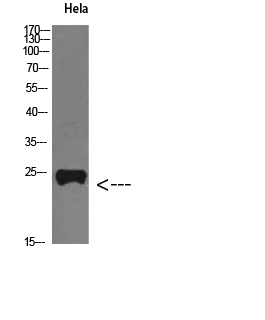
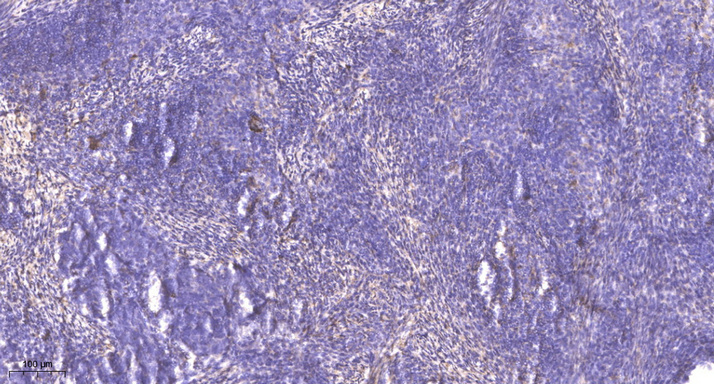

Anti-PTHLH antibody (101-150 aa) (STJ98621)
SPECIFICATIONS
ClonalityPolyclonal
HostRabbit
ConjugationUnconjugated
IsotypeIgG
ImmunogenThe antiserum was produced against synthesized peptide derived from the Internal region of human PTHLH at the amino acid range 101-150
General Information
| Short Description | Rabbit polyclonal anti-Parathyroid hormone-related protein; PTHrP38-94; Osteostatin (101-150 aa) for use in WB and IHC in Human, Rat and Mouse samples. Datasheet included with dilution recommendations, and related reagents. |
| Applications | WB/IHC |
| Host | Rabbit |
| Reactivity | Human/Rat/Mouse |
| Note | STRICTLY FOR FURTHER SCIENTIFIC RESEARCH USE ONLY (RUO). MUST NOT TO BE USED IN DIAGNOSTIC OR THERAPEUTIC APPLICATIONS. |
Product Properties
| Clonality | Polyclonal |
| Isotype | IgG |
| Conjugation | Unconjugated |
| Concentration | 1 mg/mL |
| Purification | The antibody was affinity-purified from rabbit antiserum by affinity-chromatography using epitope-specific immunogen. |
| Dilution Range | WB 1:500-2000IHC-P 1:50-300 |
| Formulation | Liquid in PBS containing 50% Glycerol, 0.5% BSA and 0.02% Sodium Azide. |
| Storage Instruction | Store at-20°C for up to 1 year from the date of receipt, and avoid repeat freeze-thaw cycles. |
Target Information
| Gene Symbol | PTHLH |
| Gene ID | 5744 |
| Uniprot ID | PTHR_HUMAN |
| Immunogen | The antiserum was produced against synthesized peptide derived from the Internal region of human PTHLH at the amino acid range 101-150 |
| Immunogen Region | 101-150 aa |
| Specificity | PTH-rP Polyclonal Antibody detects endogenous levels of PTH-rP |
Additional Info
| Post Translational Modifications | There are 3 principal secretory forms, called PTHrP1-36, PTHrP38-94, and osteostatin (PTHrP107-139) arising from endoproteolytic cleavage of the initial translation product. Each of these secretory forms is believed to have one or more of its own receptors that mediates the normal paracrine, autocrine and endocrine actions. |
| Function | Neuroendocrine peptide which is a critical regulator of cellular and organ growth, development, migration, differentiation and survival and of epithelial calcium ion transport. Acts by binding to its receptor, PTH1R, activating G protein-coupled receptor signaling. Regulates endochondral bone development and epithelial-mesenchymal interactions during the formation of the mammary glands and teeth. Required for skeletal homeostasis. Promotes mammary mesenchyme differentiation and bud outgrowth by modulating mesenchymal cell responsiveness to BMPs. Up-regulates BMPR1A expression in the mammary mesenchyme and this increases the sensitivity of these cells to BMPs and allows them to respond to BMP4 in a paracrine and/or autocrine fashion. BMP4 signaling in the mesenchyme, in turn, triggers epithelial outgrowth and augments MSX2 expression, which causes the mammary mesenchyme to inhibit hair follicle formation within the nipple sheath. Promotes colon cancer cell migration and invasion in an integrin alpha-6/beta-1-dependent manner through activation of Rac1. Osteostatin: Potent inhibitor of osteoclastic bone resorption. |
| Protein Name | Parathyroid Hormone-Related ProteinPth-RpPthrpParathyroid Hormone-Like ProteinPlp Cleaved Into - Pthrp1-36 - Pthrp38-94 - OsteostatinPthrp107-139 |
| Database Links | Reactome: R-HSA-373080Reactome: R-HSA-418555 |
| Cellular Localisation | SecretedCytoplasmNucleus |
| Alternative Antibody Names | Anti-Parathyroid Hormone-Related Protein antibodyAnti-Pth-Rp antibodyAnti-Pthrp antibodyAnti-Parathyroid Hormone-Like Protein antibodyAnti-Plp Cleaved Into - Pthrp1-36 - Pthrp38-94 - Osteostatin antibodyAnti-Pthrp107-139 antibodyAnti-PTHLH antibodyAnti-PTHRP antibody |
Information sourced from Uniprot.org