


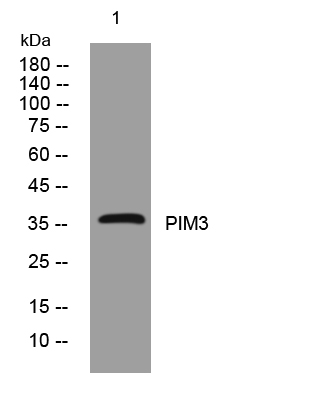
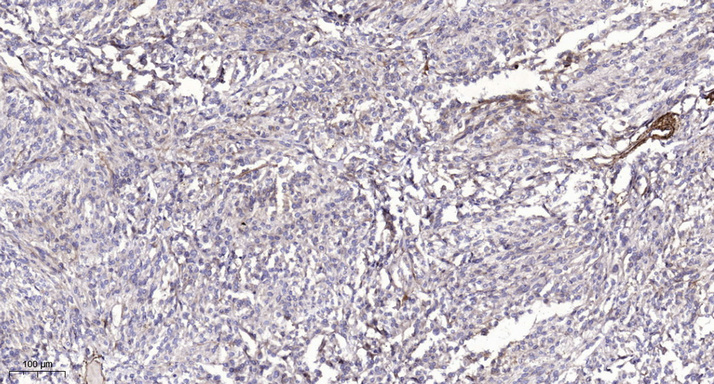

Anti-PIM3 antibody (102-152 aa) (STJ196090)
SPECIFICATIONS
ClonalityPolyclonal
HostRabbit
ConjugationUnconjugated
IsotypeIgG
ImmunogenSynthesized peptide derived from the human PIM3 at the amino acid range 102-152
General Information
| Short Description | Rabbit polyclonal anti-Serine/threonine-protein kinase pim-3 (102-152 aa) for use in WB and IHC in Human, Mouse and Rat samples. Datasheet included with dilution recommendations, and related reagents. |
| Applications | WB/IHC |
| Host | Rabbit |
| Reactivity | Human/Mouse/Rat |
| Note | STRICTLY FOR FURTHER SCIENTIFIC RESEARCH USE ONLY (RUO). MUST NOT TO BE USED IN DIAGNOSTIC OR THERAPEUTIC APPLICATIONS. |
Product Properties
| Clonality | Polyclonal |
| Isotype | IgG |
| Conjugation | Unconjugated |
| Concentration | 1 mg/mL |
| Purification | The antibody was affinity-purified from rabbit antiserum by affinity-chromatography using epitope-specific immunogen. |
| Dilution Range | WB 1:500-2000IHC-P 1:50-300 |
| Formulation | Liquid in PBS containing 50% Glycerol, 0.5% BSA and 0.02% Sodium Azide. |
| Storage Instruction | Store at-20°C for up to 1 year from the date of receipt, and avoid repeat freeze-thaw cycles. |
Target Information
| Gene Symbol | PIM3 |
| Gene ID | 415116 |
| Uniprot ID | PIM3_HUMAN |
| Immunogen | Synthesized peptide derived from the human PIM3 at the amino acid range 102-152 |
| Immunogen Region | 102-152 aa |
| Specificity | This antibody detects endogenous levels of PIM3 at Human/Mouse/Rat |
Additional Info
| Post Translational Modifications | Ubiquitinated, leading to proteasomal degradation. Phosphorylated. Interaction with PPP2CA promotes dephosphorylation. |
| Function | Proto-oncogene with serine/threonine kinase activity that can prevent apoptosis, promote cell survival and protein translation. May contribute to tumorigenesis through: the delivery of survival signaling through phosphorylation of BAD which induces release of the anti-apoptotic protein Bcl-X(L), the regulation of cell cycle progression, protein synthesis and by regulation of MYC transcriptional activity. Additionally to this role on tumorigenesis, can also negatively regulate insulin secretion by inhibiting the activation of MAPK1/3 (ERK1/2), through SOCS6. Involved also in the control of energy metabolism and regulation of AMPK activity in modulating MYC and PPARGC1A protein levels and cell growth. |
| Protein Name | Serine/Threonine-Protein Kinase Pim-3 |
| Database Links | |
| Cellular Localisation | Cytoplasm |
| Alternative Antibody Names | Anti-Serine/Threonine-Protein Kinase Pim-3 antibodyAnti-PIM3 antibody |
Information sourced from Uniprot.org