


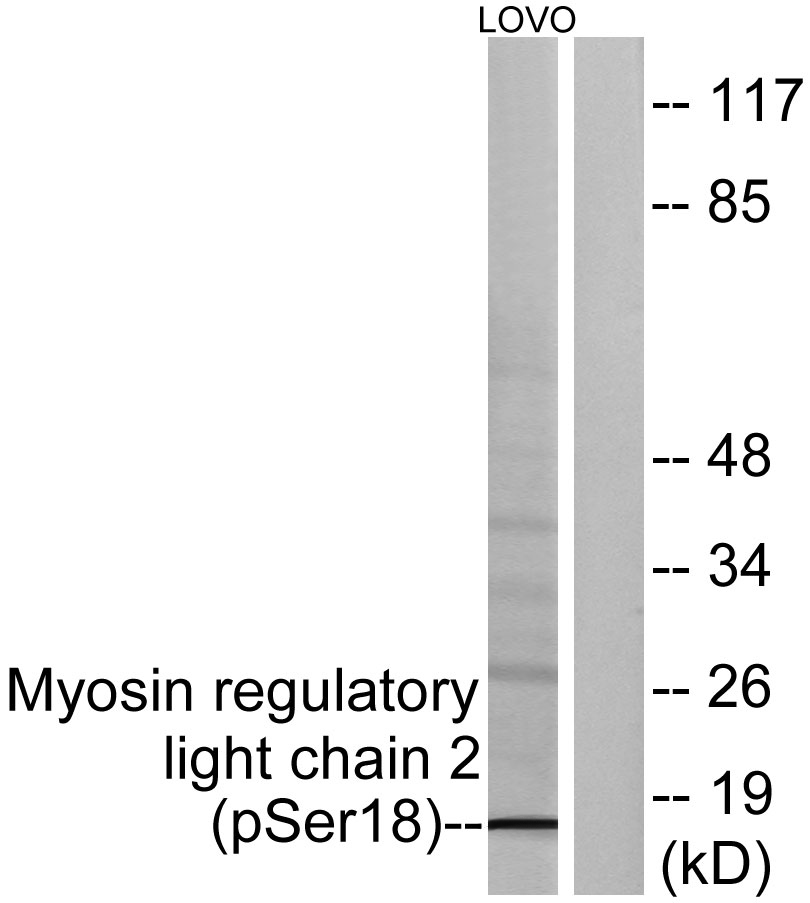
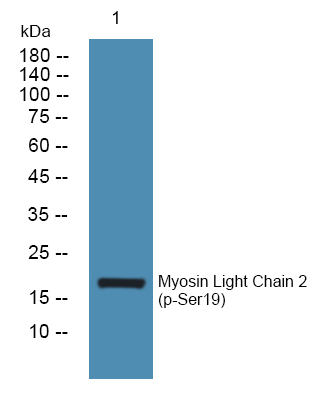
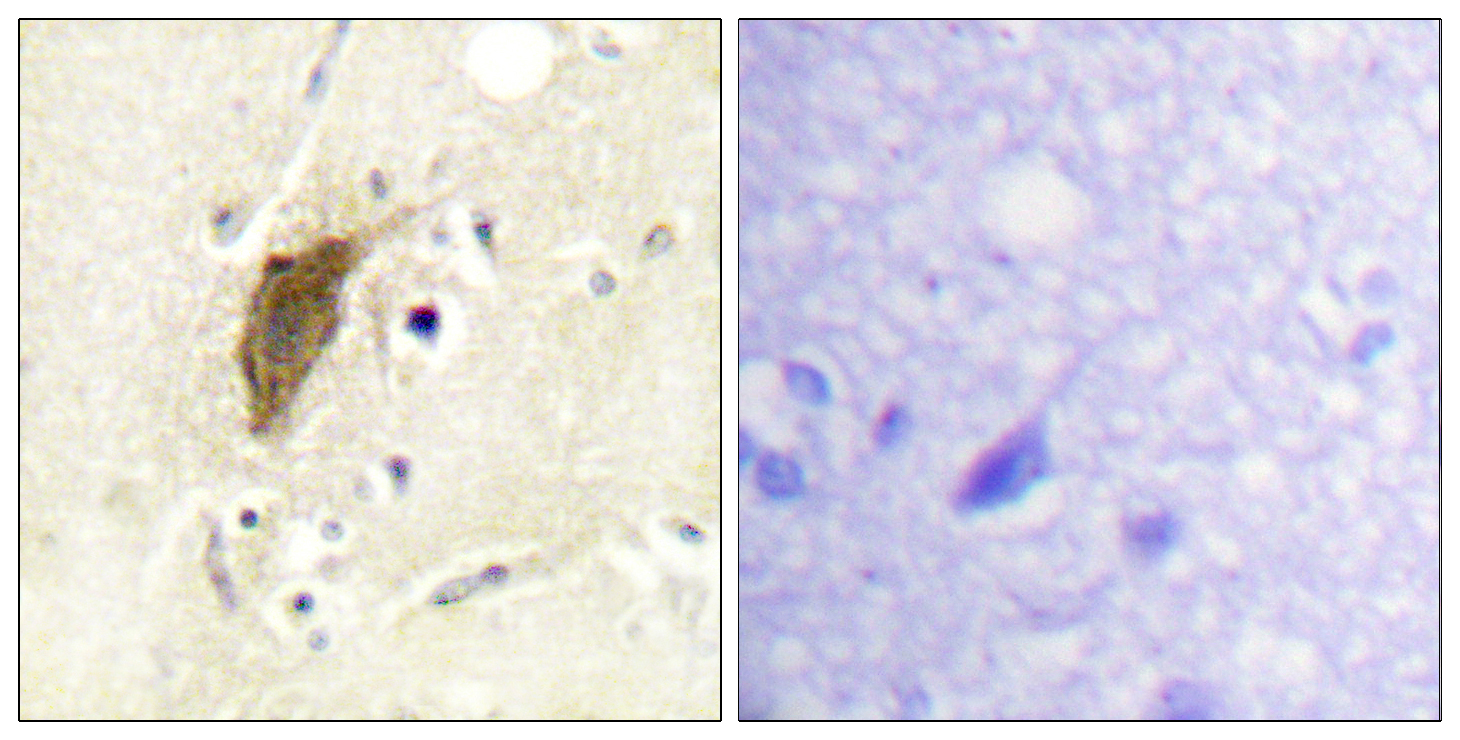


Anti-Phospho-MYL9-Ser18 antibody (3-52 aa) (STJ91061)
SPECIFICATIONS
ClonalityPolyclonal
HostRabbit
ConjugationUnconjugated
IsotypeIgG
ImmunogenThe antiserum was produced against synthesized peptide derived from the human Myosin regulatory light chain 2 around the phosphorylation site of Ser18 at the amino acid range 3-52
General Information
| Short Description | Rabbit polyclonal anti-Phospho-Myosin regulatory light polypeptide 9-Ser18 (3-52 aa) for use in WB, IHC, IF and ELISA in Human, Mouse and Rat samples. Datasheet included with dilution recommendations, and related reagents. |
| Applications | WB/IHC/IF/ELISA |
| Host | Rabbit |
| Reactivity | Human/Mouse/Rat |
| Note | STRICTLY FOR FURTHER SCIENTIFIC RESEARCH USE ONLY (RUO). MUST NOT TO BE USED IN DIAGNOSTIC OR THERAPEUTIC APPLICATIONS. |
Product Properties
| Clonality | Polyclonal |
| Isotype | IgG |
| Conjugation | Unconjugated |
| Concentration | 1 mg/mL |
| Purification | The antibody was affinity-purified from rabbit antiserum by affinity-chromatography using epitope-specific immunogen. |
| Dilution Range | WB 1:500-1:2000IHC 1:100-1:300IF 1:200-1:1000ELISA 1:20000 |
| Formulation | Liquid in PBS containing 50% Glycerol, 0.5% BSA and 0.02% Sodium Azide. |
| Storage Instruction | Store at-20°C for up to 1 year from the date of receipt, and avoid repeat freeze-thaw cycles. |
Target Information
| Gene Symbol | MYL9 |
| Gene ID | 10398 |
| Uniprot ID | MYL9_HUMAN |
| Immunogen | The antiserum was produced against synthesized peptide derived from the human Myosin regulatory light chain 2 around the phosphorylation site of Ser18 at the amino acid range 3-52 |
| Immunogen Region | 3-52 aa |
| Specificity | Phospho-MRLC2 (S20) Polyclonal Antibody detects endogenous levels of MRLC2 protein only when phosphorylated at S20. |
Additional Info
| Post Translational Modifications | Phosphorylation increases the actin-activated myosin ATPase activity and thereby regulates the contractile activity. It is required to generate the driving force in the migration of the cells but not necessary for localization of myosin-2 at the leading edge. Phosphorylation is required for myotube formation. Phosphorylated by DAPK3.DAPK3-mediated phosphorylation is inhibited by LUZP1. |
| Function | Myosin regulatory subunit that plays an important role in regulation of both smooth muscle and nonmuscle cell contractile activity via its phosphorylation. Implicated in cytokinesis, receptor capping, and cell locomotion. In myoblasts, may regulate PIEZO1-dependent cortical actomyosin assembly involved in myotube formation. |
| Protein Name | Myosin Regulatory Light Polypeptide 920 Kda Myosin Light ChainLc20Mlc-2cMyosin RlcMyosin Regulatory Light Chain 2 - Smooth Muscle IsoformMyosin Regulatory Light Chain 9Myosin Regulatory Light Chain Mrlc1 |
| Database Links | Reactome: R-HSA-3928663Reactome: R-HSA-416572Reactome: R-HSA-445355Reactome: R-HSA-5625740Reactome: R-HSA-5625900Reactome: R-HSA-5627117Reactome: R-HSA-5627123Reactome: R-HSA-8936459 |
| Cellular Localisation | CytoplasmCytoskeletonCell CortexColocalizes With F-ActinMyh9 And Piezo1 At The Actomyosin Cortex In Myoblasts |
| Alternative Antibody Names | Anti-Myosin Regulatory Light Polypeptide 9 antibodyAnti-20 Kda Myosin Light Chain antibodyAnti-Lc20 antibodyAnti-Mlc-2c antibodyAnti-Myosin Rlc antibodyAnti-Myosin Regulatory Light Chain 2 - Smooth Muscle Isoform antibodyAnti-Myosin Regulatory Light Chain 9 antibodyAnti-Myosin Regulatory Light Chain Mrlc1 antibodyAnti-MYL9 antibodyAnti-MLC2 antibodyAnti-MRLC1 antibodyAnti-MYRL2 antibody |
Information sourced from Uniprot.org