



Anti-Phospho-Anti-Phosphotyrosine-p-Tyr antibody (STJA0041341)
SPECIFICATIONS
ClonalityPolyclonal
HostRabbit
ConjugationUnconjugated
IsotypeIgG
ImmunogenAnti-Phosphotyrosine was generated from a panel of phosphotyrosine-containing peptide immunogens designed from human protein sequences. All peptide sequences used are highly conserved phosphotyrosine motifs.
General Information
| Short Description | Rabbit polyclonal anti-Phospho-anti-Phosphotyrosine-p-Tyr for use in ELISA, WB, ICC and IP in Chicken, Human, Mouse and Rat samples. Datasheet included with dilution recommendations, and related reagents. |
| Applications | ELISA/WB/ICC/IP |
| Host | Rabbit |
| Reactivity | Chicken/Human/Mouse/Rat |
| Note | STRICTLY FOR FURTHER SCIENTIFIC RESEARCH USE ONLY (RUO). MUST NOT TO BE USED IN DIAGNOSTIC OR THERAPEUTIC APPLICATIONS. |
Product Properties
| Clonality | Polyclonal |
| Isotype | IgG |
| Conjugation | Unconjugated |
| Purification | Antigen Affinity Purified |
| Dilution Range | WB 1:1000ICC 1:100IP 1:100 |
| Formulation | PBS + 1 mg/ml BSA, 0.05% NaN3 and 50% glycerol |
| Storage Instruction | Storage at-20°C is recommended, as aliquots may be taken without freeze/thawing due to presence of 50% glycerol. Stable for at least 1 year at-20°C. |
Target Information
| Immunogen | Anti-Phosphotyrosine was generated from a panel of phosphotyrosine-containing peptide immunogens designed from human protein sequences. All peptide sequences used are highly conserved phosphotyrosine motifs. |
| Immunogen Sequence | Many |
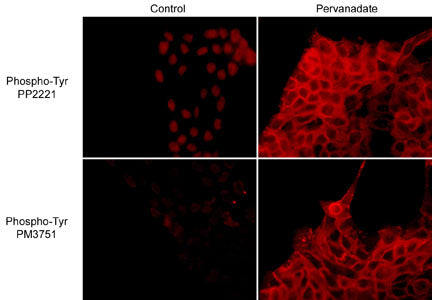
| Specificity | This antibody detects phosphotyrosine-containing proteins on SDS-PAGE immunoblots of EGF treated A431 cells, as well as pervanadate treated A431, HeLa, Jurkat, and endothelial cells. |
Additional Info
| Background | Our Anti-Phosphotyrosine rabbit polyclonal phosphospecific primary antibody from PhosphoSolutions is produced in-house. It detects chicken, human, mouse, and rat Anti-Phosphotyrosine and is antigen affinity purified. It is great for use in ELISA, WB, ICC, IP. |
Information sourced from Uniprot.org