






Anti-OLIG2 antibody (STJA0003732)
SPECIFICATIONS
ClonalityPolyclonal
HostRabbit
ConjugationUnconjugated
IsotypeIgG
ImmunogenRecombinant mouse Olig2.
General Information
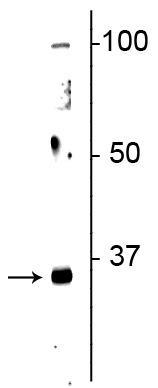
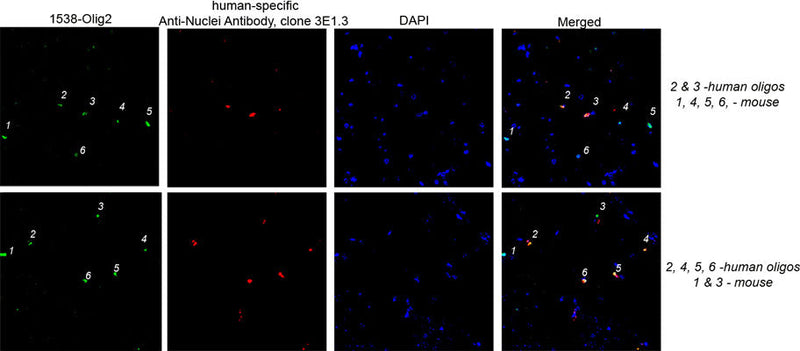
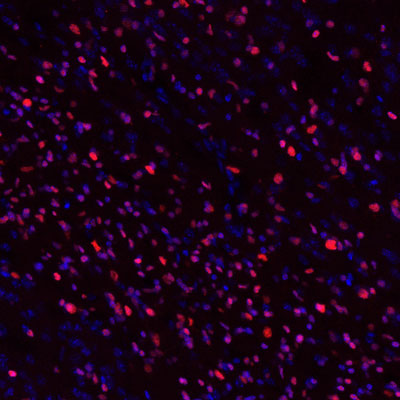
| Short Description | Rabbit polyclonal anti-Olig2 for use in WB, IHC, ICC and IP in Human, Mouse and Rat samples. Datasheet included with dilution recommendations, and related reagents. |
| Applications | WB/IHC/ICC/IP |
| Host | Rabbit |
| Reactivity | Human/Mouse/Rat |
| Note | STRICTLY FOR FURTHER SCIENTIFIC RESEARCH USE ONLY (RUO). MUST NOT TO BE USED IN DIAGNOSTIC OR THERAPEUTIC APPLICATIONS. |
Product Properties
| Clonality | Polyclonal |
| Isotype | IgG |
| Conjugation | Unconjugated |
| Purification | This antibody was protein a purified. |
| Dilution Range | WB 1:3000IHC 1:200-1:1000ICC 1:1000IP 1:500-1:1000 |
| Formulation | 100 µl in 100 mM Glycine, 200 mM Tris, pH 8.0 |
| Storage Instruction | Store at-20°C for up to 1 year from the date of receipt, and avoid repeat freeze-thaw cycles. |
Target Information
| Gene Symbol | Olig2 |
| Gene ID | 50913 |
| Uniprot ID | OLIG2_MOUSE |
| Immunogen | Recombinant mouse Olig2. |
Additional Info
| Tissue Specificity | Expressed specifically in the brain. |
| Function | Required for oligodendrocyte and motor neuron specification in the spinal cord, as well as for the development of somatic motor neurons in the hindbrain. Functions together with ZNF488 to promote oligodendrocyte differentiation. Cooperates with OLIG1 to establish the pMN domain of the embryonic neural tube. Antagonist of V2 interneuron and of NKX2-2-induced V3 interneuron development. |
| Protein Name | Oligodendrocyte Transcription Factor 2Oligo2 |
| Database Links | |
| Cellular Localisation | NucleusCytoplasmThe Nls Contained In The Bhlh Domain Could Be Masked In The Native Form And Translocation To The Nucleus Could Be Mediated By Interaction Either With Class E Bhlh Partner Protein Or With Nkx2-2 |
| Alternative Antibody Names | Anti-Oligodendrocyte Transcription Factor 2 antibodyAnti-Oligo2 antibodyAnti-Olig2 antibody |
Information sourced from Uniprot.org